Again, I have been ignoring the blog for a while, something which I swore I will not do. I am overwhelmed with things, to be completely honest. Then I decided to expand the blog, again. Since most of what I do and what I think are art-related, I am keeping now a diary of sorts here. Getting back to Manila after the holidays meant I am slammed with work from teaching as well as my graduate classes. On the upside, I am also welcomed with some post-holiday gifts. This put a smile on my face as I now keep simple things from friends, memorabilia of their affection that drowns the tension away.
On my first day back in grad school, I was immediately welcomed not with one, but with two gifts.
This is my turquoise bracelet from Monette, to match my necklace… She says this is a truth stone, and she felt like I needed it. And I do!
This foldable bag is from Jeff. It’s a good shopping bag, to reduce our carbon footprint. Also serves as a good book bag. I just dragged 6 hardbound books from Shopping Center yesterday with it.
Then came my planner dilemma. The planner that I wanter from Fully Booked disappeared. I was thinking on getting this anyway but I didn’t want to consume the extra coffee needed. Well, Dj gave me this one instead.
Unfortunately, the planner wasn’t what I thought it would be. The paper was a tad too thin and it’s a bit heavy. Also, there are a lot of look-alikes which I really hate. Dj didn’t mind anyway. He was betting for a Moleskine as well.
Speaking of planners, Fred gave me one as well. It’s a really colorful, pretty planner from PETA. You don’t see a lot of this.
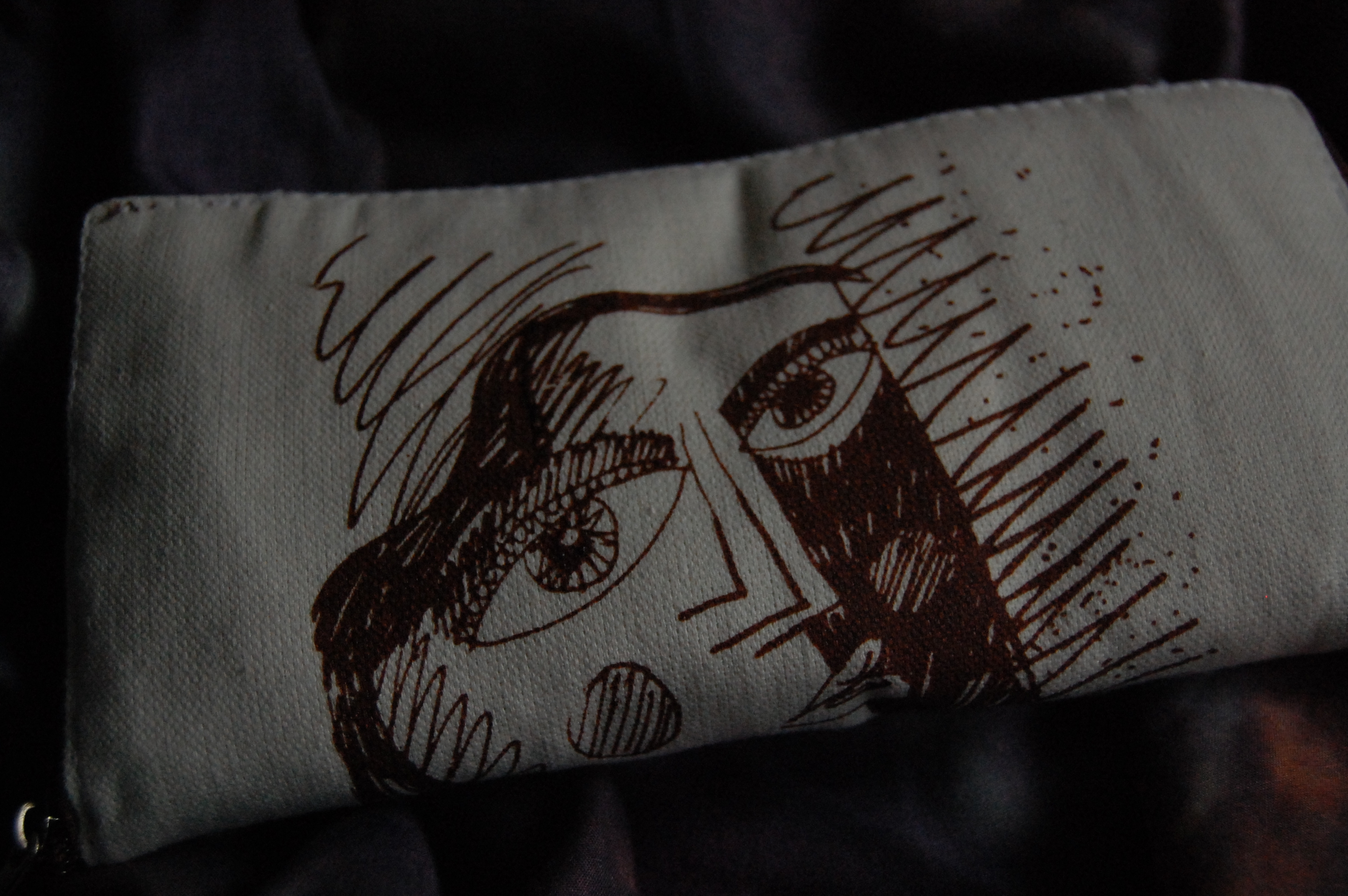
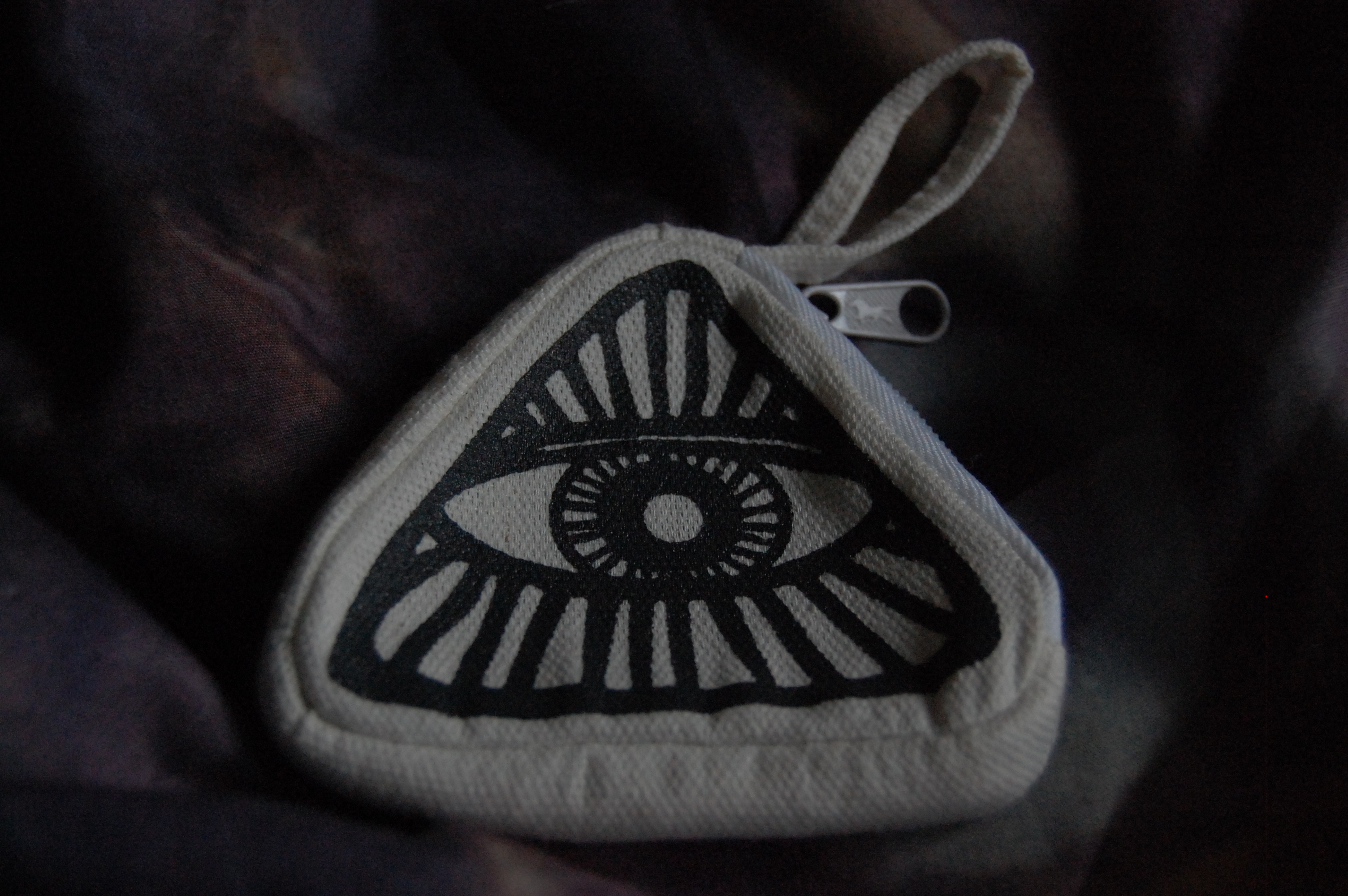
Finally, I got this coin purse from Mark. Really loving this Boy Agimat! coin purse which he designed. More on Mark Salvatus’ artwork here. Currently using this coin purse right now. Hope it brings me luck.
Simple cheers that make our day. Then, I continue on with studying and teaching. This is it for now on a Diary of a Grad student. I have to go back to Immanuel Kant’s Critique of Judgement. I am re-reading him for my thesis preparation. I hope to write again soon. A lot of books and art events to write about!
In their late 20’s, Rizal wrote Noli Me Tangere, Luna painted the Spoilarium and Bonifacio started the armed revolution. Those of us in our late 20’s today, what are we doing with our lives? We go on Facebook and Twitter, we chat, we over-pay for our coffees, we drink and party. A lot of us are forced to work in call centers and other outbound services that pay a tad better than other workplaces. What are we really achieving?
This musing is paraphrased from and inspired by an Ambeth Ocampo quote that spread in Facebook some time ago. I can’t remember his exact words. But it went on something like that. I am in my late 20’s. Though I have never worked in a call center or any corporation for that matter, I understand the sentiment. It’s not just because young people want much money that they go to those workplaces, sometimes (or most times), it’s just the work that is available. At least it is the work that is largely available with a good pay. I’m a teacher and I also have some research projects, I have to say that friends in corporations have more financial stability compared to myself. In today’s society, we do need money to survive. To get money, we need jobs, and the jobs that are widely available are in fact, call center jobs.
Maybe someday, the government will help Filipinos in the creation of jobs. No, not outsourcing from foreign companies but developing local industries for our citizens. They can develop local agriculture in the provinces. We can think of ways to create jobs, so we can stop exporting Filipinos; and start to create a self-sustaining Philippines. Maybe when this happen, we can have more time, energy and resources to develop the arts. Maybe then, we can inspire more people to be like Jose Rizal.
We commemorate Rizal Day every December 30. There are a lot of arguments on his being declared as a National Hero, as well as the colonial agenda behind it. Nevertheless, his words are imprinted in us. He wrote the great Filipino novel, yet to be surpassed. I found a Facebook post once, computing the costs of Rizal’s education and travels; it is substantial, to say the least. But his relatively comfortable life and his opportunities to travel the world and educate himself does not make him any less of a hero. I have great respect for the revolutionaries, of course. Yet, there is something about fiction that immortalizes an age, just like what Rizal did with his Noli Me Tangere and El Filibusterismo. Through his text, his writings, his letter and his poetry, we shall never forget. What he left us should be substantial enough to remind us of our history.
We should nurture the arts. Jose Rizal is proof enough of it.
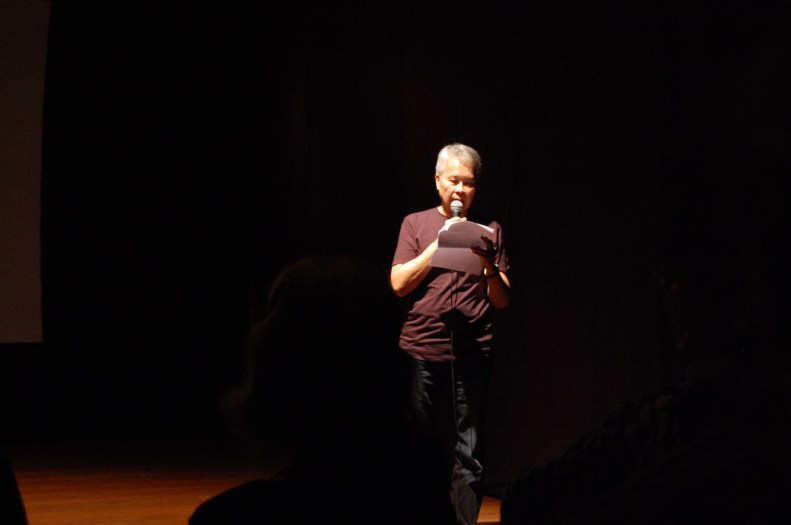
This reminds me of the last event I attended for 2011–2HOG: tula-dula-musika-pelikula last December 14 at PETA Theatre. Renato (Butch) Santos, as I find out through Google is a retired banker turned Palanca-winning poet. He pushes and explores the Filipino language in the creation of poetry. Though current usage such as jejemon and text renditions makes a lot of us cringe, he manipulates it into his poetry and makes it relevant to the Filipino youth. This is the challenge of art today, how can we make it relevant for Filipinos today?
2HOG is not just poetry, but inter-media performance. PETA called it cinepoetry or moving poems. The poems were written by Butch Santos while the performance was directed by Maribel Legarda. The visual inter-play was no doubt on the theatrical side–the movements, voices and general acting is larger than life. Such performance will not be out-of-place in a theatrical space. It feels like the actors and the poetry are trying to break out of the screen into the on-looking audience.
Though there are quieter moments in the short performance, it is not made to be subtle. This is among the events that I wish I was able to show my students. Poetry has become detached to the Filipino youth, hearing it and seeing it move would help them appreciate the experience. Uploading it to YouTube is also an excellent idea. As a teacher, I know how difficult it is to get a printed text and convince a student to actually read it. But if it’s in YouTube, it can certainly be a different conversation entirely. (See the cinepoems in Youtube here.) Butch Santos even announced the link during the event, his username is Ewanlangatbpngkuwan.
Yet, the experience of being there, despite the smallish crowd is something else entirely. The mood, the live music, the inter-play of the senses cannot re-created online. At least, not yet. I think that we need more performances of this kind to inspire the youth. Creating and performing should re-claim its place in the spotlight. Rizal was killed for his daring. Today’s artists are killed by a lack of support. If these performances could be made widely available, the public may then re-evaluate the role of art in their lives and perhaps may inspire them to think of what they can do for our country.
Butch Santos was a banker for most of his life, but it did not stop him from being a poet. Neither should the call center industry stop our youth from being artists. As seen numerous times before, the internet is not a place to be limited, rather, it is a place to push boundaries. It was a struggle for Rizal to publish his work, it is no struggle for us to publish ours now. Granted, the accepted avenues may still be difficult to get to, but the advent of internet technology helps us break that barrier. The challenge now is to create something of value with the medium we are provided. 2HOG is just a start.
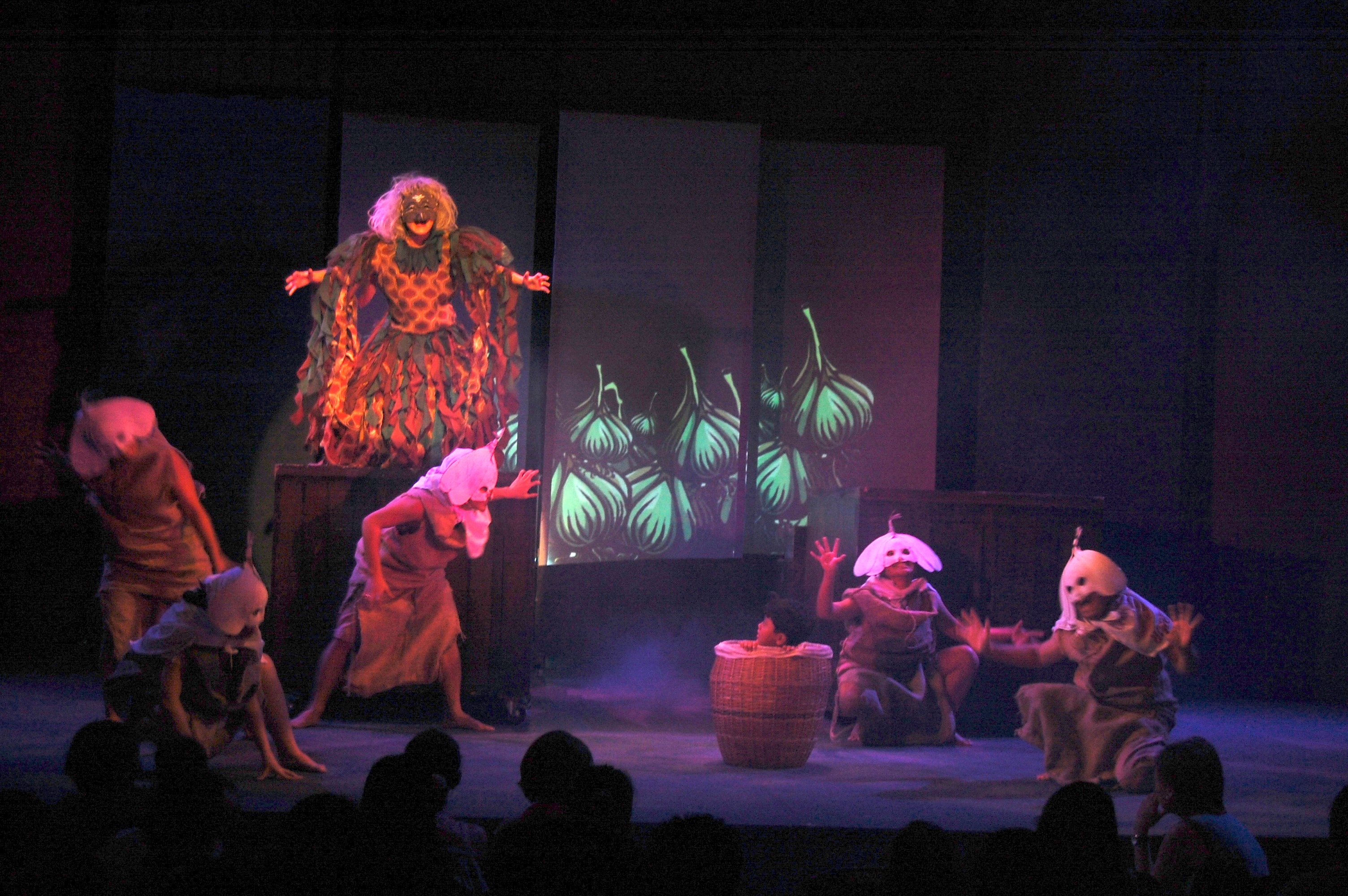
Here are some photos that I have taken during the event.
I still hope we can create more spaces for the arts, as well as nurture artists and future artists, so more events like this can be possible for more people. In time, we can see another great Filipino novel of Noli Me Tangere‘s proportion. It may not necessarily be in print but in inter-media such as this.
Christmas celebrations are mostly real. At least, as far as I’ve experienced it with my family. Christmas Eve was the first time I thought of this article, after I read this from Rolando Tolentino’s tweet “ang pasko ang pinakamatagumpay na fantasy production ng bansa: gumawa ng bubble na masaya, kumonsumo para sumaya kahit sa dami ng trahedya.” In the midst of tragedy and consumerism, do we really have the spirit of Christmas? Or is it simply a part of a grand fantasy production? My Christmas song for this year is actually, Final Fantasy X’s To Zanarkand. (It lifts my spirit up, thinking that Brandon Sanderson finished the first draft of A Memory of Light. But that is a story for another time.) The news is uplifting, and the best part of Christmas, as far as I can see, is that it uplifts people.
Yet, I still can’t get rid of the voice in my head that all of this isn’t really real. The decorations, the supposed “happiness” and celebrations. It’s all marred with fantasy and consumerism. The malls are filled with people buying things on “sale”, they even extend their hours to accommodate all the Christmas shoppers. Admittedly, for a number of times, I am one of those shoppers who like clothes, shoes, bags and accessories. Though as the years pass by, I find it more and more taxing to go to malls during the holidays. As I don’t have a car, there is always a long line to commute. From what I see, even if I do have a car, there’s just plain too much traffic jams and parking areas are crowded and expensive. Do we really understand the “Spirit of Christmas?”
We’ve all heard “peace on earth and goodwill to men” bit. (Ehem, what about women?) But another complication is the basis of Christmas itself. The birth of Jesus? “Peace on earth and goodwill to men” is really more acceptable. Biblically, if there really is a Jesus, it’s very doubtful that he was born in the dead of winter. From the description, and even from traditional beliefs and stories, this birth is more probable during spring or summer. Most certainly not during winter. It is very likely that various winter solstice celebrations are appropriated for Christian practices, similar to other Christianized feast days. This alleged birth of Christ is not based on an actual computation but on a Papal declaration. (Read more on The History of Christmas and Christmas at History.com.) Christmas celebration as we know it is first a fantasy production of the church to Christianize “pagan” practices and inculcate religious practices to the people.
With all these inaccuracies, I need to ask again, is Christmas really real? Or is it really one big fantasy production? After all, it is a creation and production of a Christian church. Yet, I have been celebrating Christmas all my life, and I have to say that it is real, at least, as real as you want it to be. Children are happy, families are bonding and there is a spirit of happiness and sharing. If such things are sincere, I have to say that Christmas is in fact, real. But not necessarily in the Christian sense of the celebration.
After the church, the next institution to capitalize on Christmas celebrations are the corporations. The fantasy production of the market created the need to spend money and purchase to celebrate the holiday season. We now have this need to buy things, then buy more things, and then buy and buy more things. It’s an impulse that a lot of us have. To say otherwise is hypocrisy. We can control this impulsive need, but to say that we don’t feel it is unbelievable. We can’t help it after being bombarded with images and expectations of purchase. That is how we celebrate–buy abundant food, buy expensive gifts and buy the entire Christmas experience. We have created our of Christmas fantasies based on the commercial market.
This forceful expectation results in a lot of sadness and ennui. There are expectations that Christmas should be happy and magical, otherwise the season becomes depressing for a lot of people. Falling short of such magical expectations is an incredible let down. Where the magic of Christmas? Or does it even exist? I was going down the road of questioning the magic of the season until I saw the Christmas decorations made by my nephews and nieces. It’s simple, yet sincere. They do not have the expectations that us, adults have. These children just feel it, not force it. They do not have the sense of creating a fantasy production. They see the fantasy but they do not yet have the impulse to create and buy it. Yet, it is us who creates the expectations for them until they learn to have such expectations for themselves. As they grow older, such expectations become disappointments. There is no matching the fantasy production of religious and commercial advertisements.
Maybe at its core, Christmas, as we know it, isn’t real. It is a big trap of a fantasy production that we fall into. But for some reason, this time of the year has been celebrated even before the birth of Christ. There are still sincere celebrations going around. As I said, families are bonding, children are playing and there is still a sense of happiness for a lot of people. Maybe there is still something to it worth investigating. We just need to be conscious on not falling into traps that make Christmas a source of ennui and depression rather than a source of happiness and hope. Being happy and expecting happiness are two very different things.
**On that note, there are a number of engagement videos going around Facebook. Part of me was thinking magic and romance of the season, while a part of me is also questioning if this is also a part of fantasy productions that cause disappointment and disillusionment for a lot of people. What do you think of it?
We heard that phrase numerous times in our lifetime. True to a certain extent. Yet, a thousand words may still remain silent on certain truths.
Sendong typhoon sent netizens into a frenzy. The power of social media manifested again. In a short time, various organizations collected millions of Pesos to help citizens of Iligan and Cagayan de Oro. This is one of the best aspects of social media. Yet, there is one aspect that has been bothering me for some time. And I have no answers to the questions and issues that I will bring up.
In posting tragic images, where do we draw the line? Yes, tragic images touch us, it brings to the worlds the pain and suffering that the Filipinos underwent because of this typhoon. But, is it right to share, propagate and immortalize these images? These are private sufferings of the people of Iligan and Cagayan De Oro. Social media and even our traditional media (TV and newspapers in particular) use and re-use these tragic images, without permission from the people represented in their worst suffering. If we can ask them, would they want us to spread images of their despair?
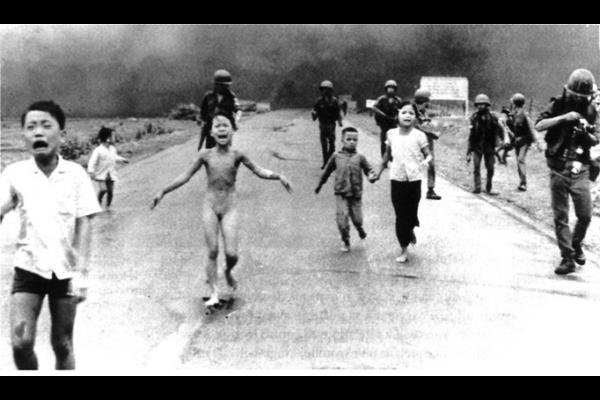
Historically, photography has always been a powerful medium in moving the world. The image by Nick Ut of the Napalm Attack in Vietnam is one of the most powerful images in photography’s history. It was also one of the images that swayed public opinion in going against Vietnam War, which eventually added pressure to end the war. Images are just that powerful.
Napalm Attack by Nick Ut, 1972
I have always been impressed with this photograph. But I view this photograph under the telos of history. I now realize, as tragic photos and videos haunt us left and right, that there are certain ethical concerns which documenting tragedies and sufferings overlook. Before, there was always a certain period of time that distances us from viewing a photograph. Even if it was just a day or so, a photograph was historicized. Now, with the immediacy of publishing photographs, tragic photos rub us the wrong way. We know that these people are not so far from us, and are suffering right at this moment. Is it right to photograph them as we do? And share these photographs as we are all guilty of?
Kim Phuc, the girl from the Napalm Attack, was fortunate. She lived. They found her a couple of years ago, alive and happy, presently living in Canada. She formed a friendly attachment with the photojournalist, Nick Ut. But not all stories are that fortunate.
This brings me to Vulture Stalking a Child by Kevin Carter. This image was just as powerful as Napalm Attack. But it was received very differently by the public. This photo was published in The New York Times in 1993 and won Carter a Pulitzer Prize in 1994. The success did not silence the critics of Carter. He stated that it took him 20 minutes to get the settings correctly and his critics took that negatively as he did not help the child while doing this. A few months after winning the Pulitzer prize, he committed suicide.
In a way, his guilt is our guilt. A lot of us, do not help, a lot of us just view. We take photographs and share it everywhere, to everyone we can reach. Voyeuristically, we look at such tragedies and we feel better about our own situations. The child became an iconic image of the suffering and starvation in Sudan. Yet, such image and immortalization did not help the child, or anyone for that matter. It encapsulated suffering and isolated it. It was a tragedy on so many levels. And we continue that tragedy.
Vulture Stalking a Child by Kevin Carter
I remember these images as I watch TV and see photos and videos about Sendong on the internet. We, Filipinos, are voracious in our appetites for such tragic and graphic images. Photographs of dead children are shared and propagated in social media and labelled as “share if you care” or something to that effect. Do you really care if you share such images? In the long run, do we not cause more hurt and pain to these people–seeing their families, friends and loved ones dead or broken by the typhoon?
We might get donations due to pity extracted by these images, but for how long? In time, do we not grow numb as we aestheticize tragedies? This is not a tragic play, we do not watch it, we experience it in the present. We should give them dignity in their suffering. Are we really helping them as we represent and immortalize their tragedies?
As I said, I have no answers to the questions and issues that I am posing. But it is worth thinking about. We go on, we rebuild and grow from this tragedy. Yet, are we really growing as a nation? Images are powerful and these are the images that we are creating for ourselves. We need to think about on where do we go from here.
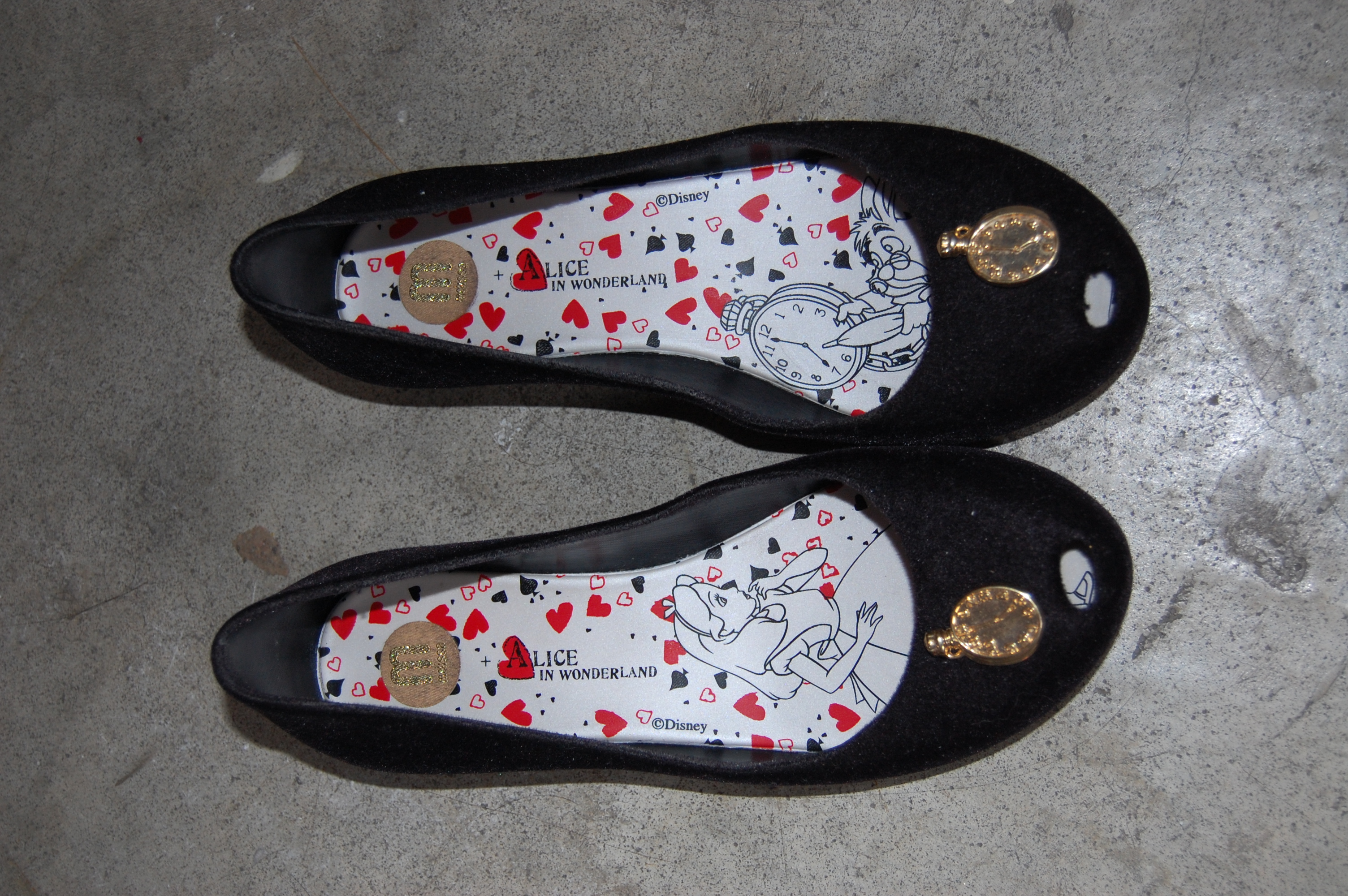
Playing the flaneur. I put on my Alice in Wonderland shoes to go down the rabbit hole.
And for this, I receive a gift. A reward of Russian cookies.
I have never attended Parangal sa Mag-aaral. I’ve received this award a number of times as an undergrad. But I took it for granted.
Now, I want to attend it, at least once. So I did.
Fred was an awardee too. Great coincidence.
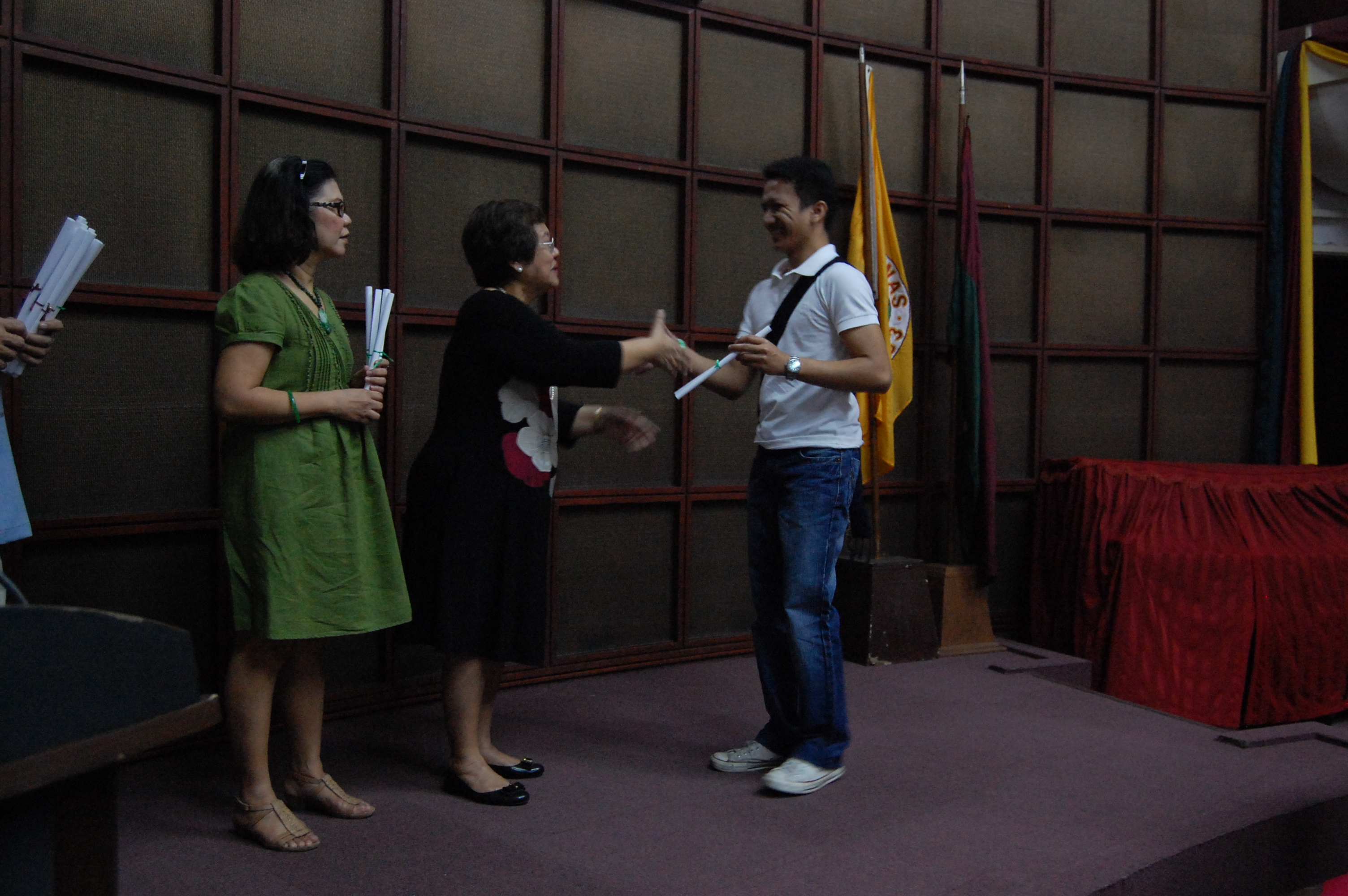
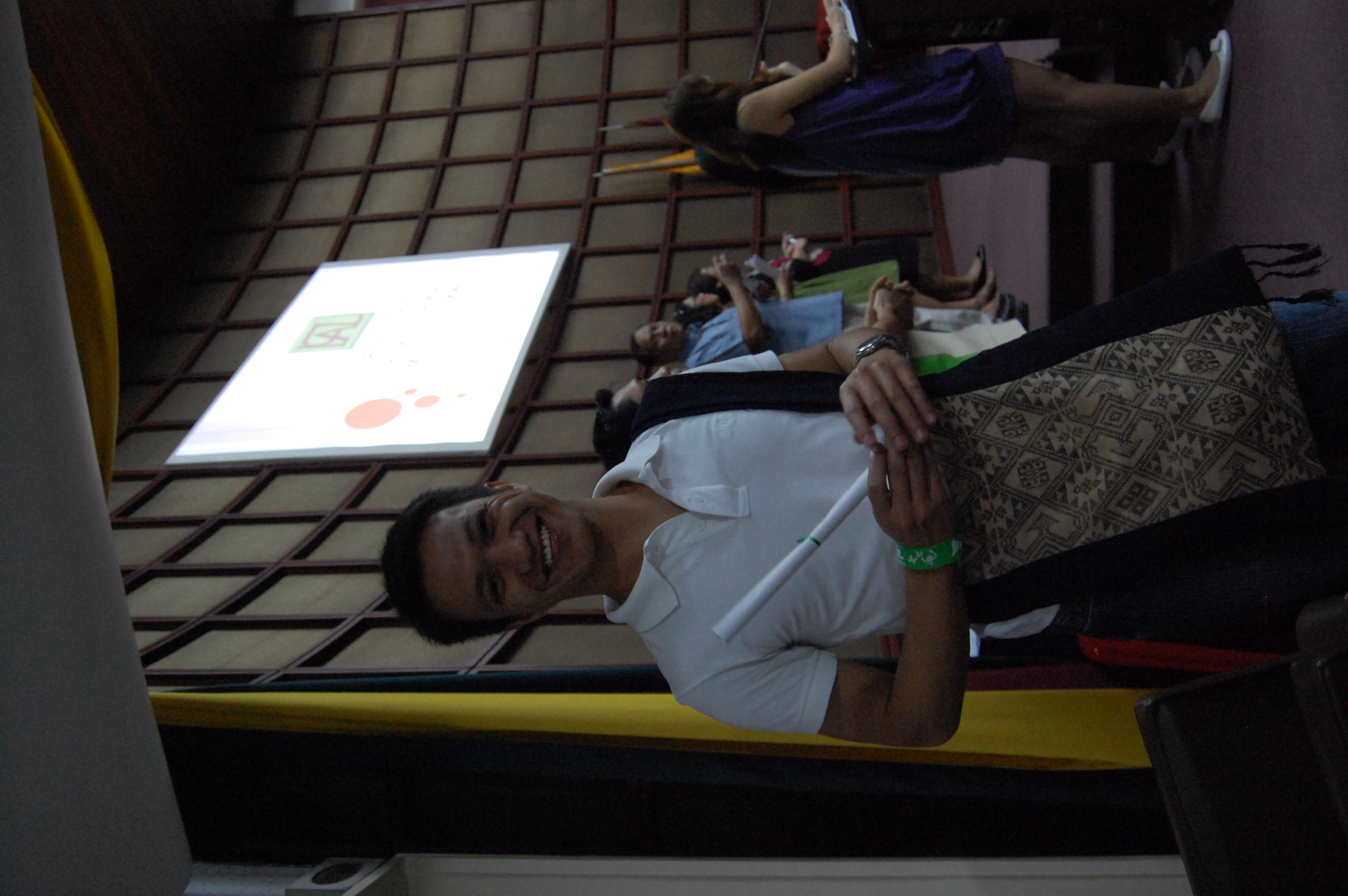
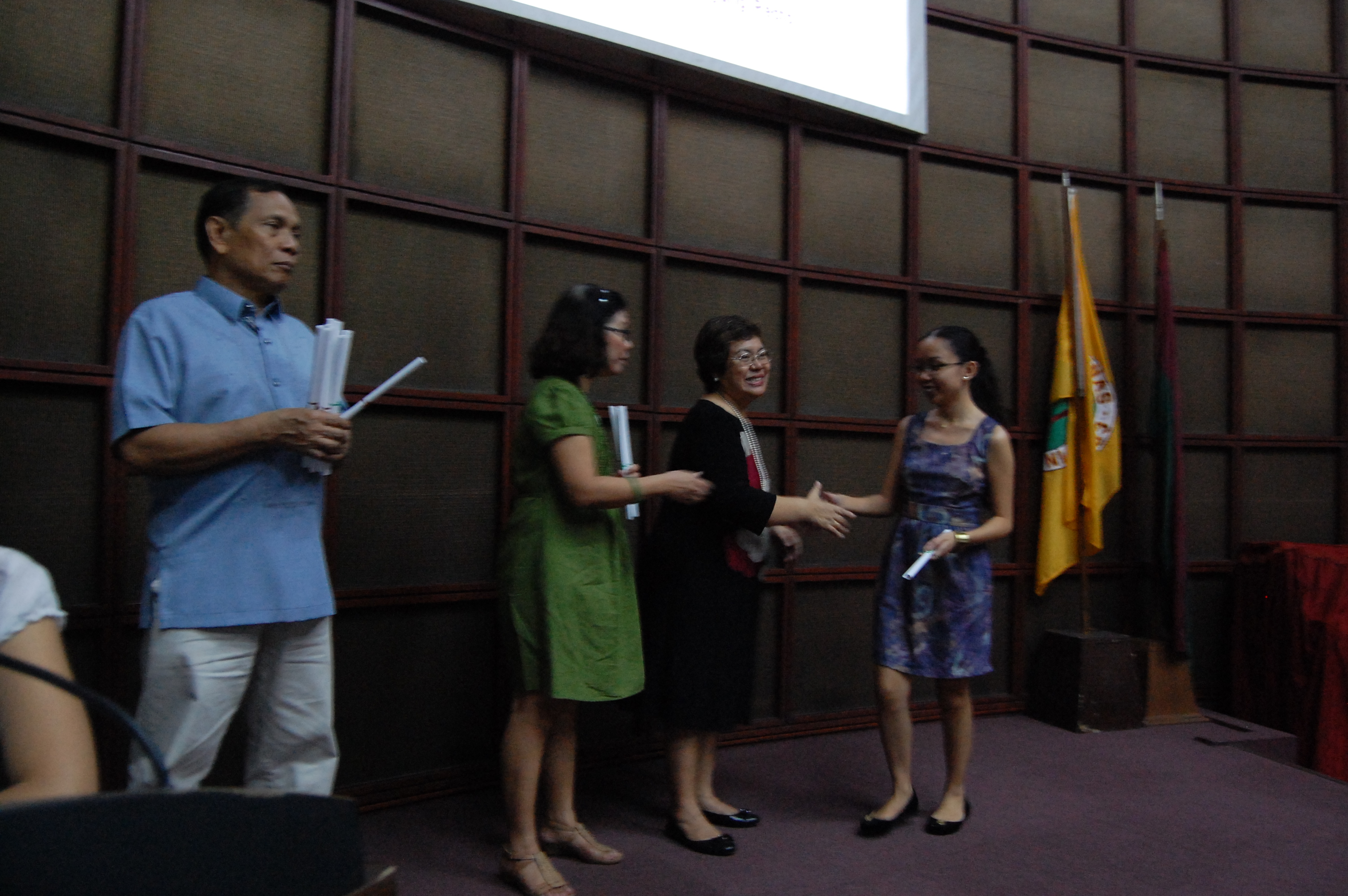
We even took the traditional shots.
And they took it of me too.
University Scholar for 2nd Semester AY 2010-2011 and 1st Semester 2011-2012. I’m quite proud of it. I worked hard and sacrificed a lot.
1.0 average for two consecutive semesters. Not bragging, just simply happy about it. I found something that I want to do, I have to do. The real certificate is still at the Secretariat, as usual.
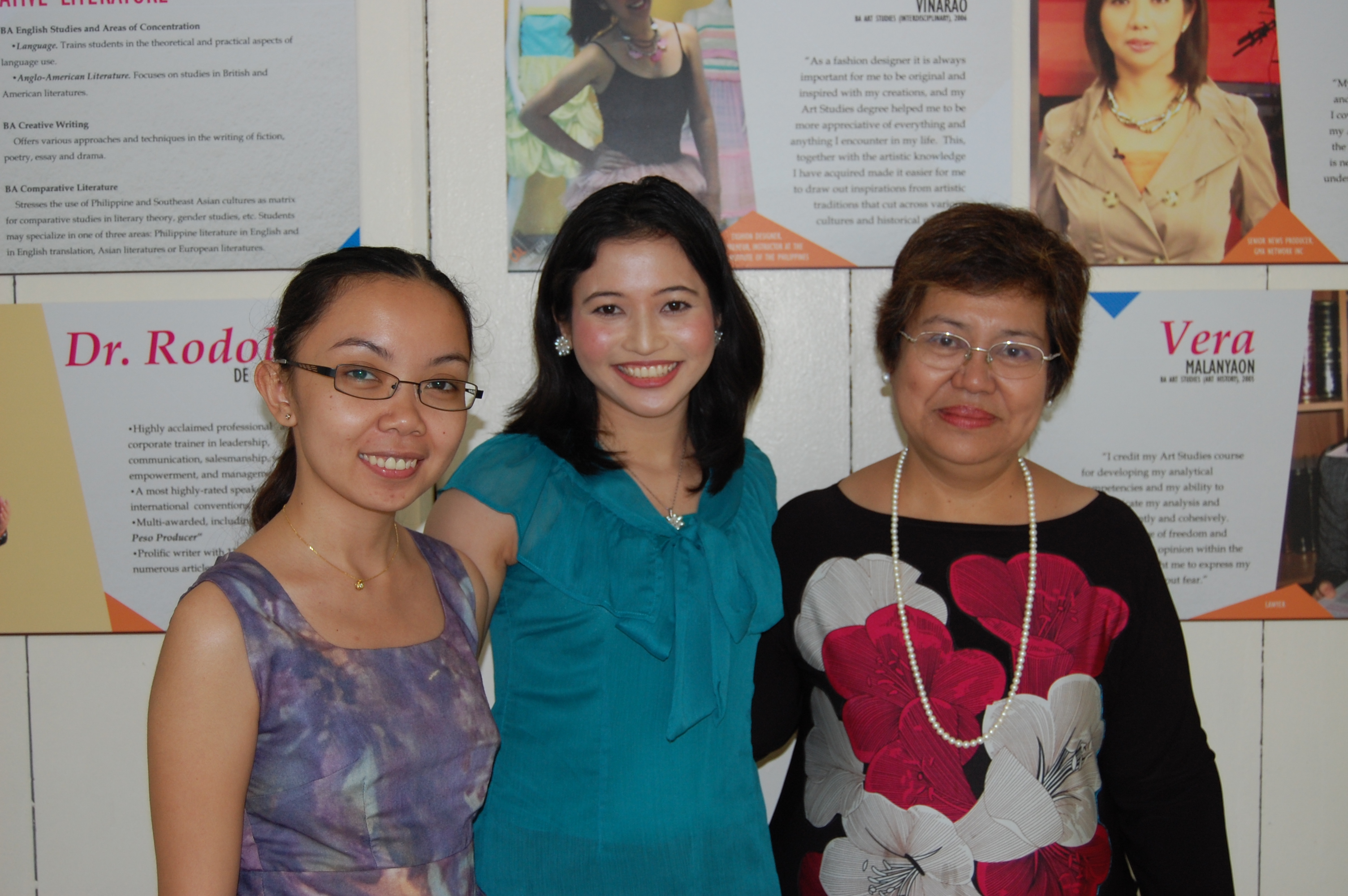
ASS (Art Studies Society) orgmate Vera was there as well. She’s a bar passer. Again, another shot, this time, with the College Dean, Elena Mirano.
This would not be fun without supportive friends. Claire and Jeff, LOVE them.
My boys…
Riding in cars, with Fleetwood Mac.
Friuli’s Maguinhawa.
Italian food and conversations.
Then more Fleetwood Mac.
Coffee and studying at ROC.
And bashing fashion magazines.
Alice in Wonderland and her rabbit hole.
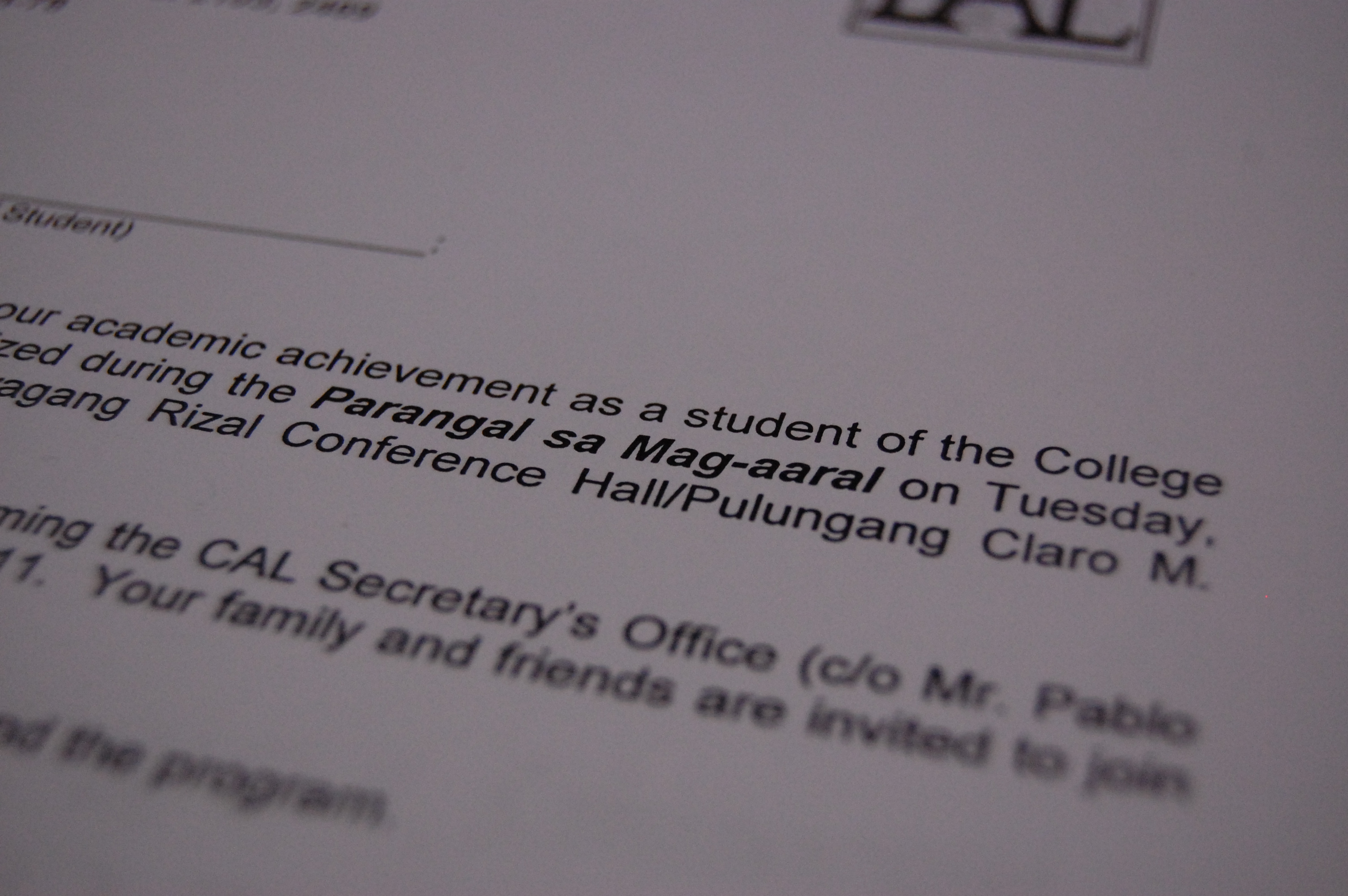
Parangal sa Mag-aaral is an annual ceremony done during College week. This is first and only one I ever attended. I usually just get my certificate after. But I learned that its best not to let experiences pass you by. There is always something more to discover. I had fun.
I realize that I have been neglecting my blog for a little bit. Sometimes, life just overruns us. Though we should not make a habit of letting this happen. There are simply too much to write about and we cannot afford any more slacking. The most touching, endearing and bothersome series of events is on children. There are days like today, where you would like to become a child again. You would love to just snuggle in bed and celebrate the cold days of Christmas. Then again, looking at the state children suffer from today, you would wonder how much is wrong in today’s society. It’s not always ice cream day for children.
I keep on getting inspired by Google Doodles a lot these days. The most recent one to inspire me is on Mark Twain’s 176th birthday. Again, it’s very nostalgic. Growing up in the 90s, I often went home to Tagalized cartoons, including Tom Sawyer and Huckleberry Finn. As a child, the depth of these stories were lost to me. I only saw the fun and the jokes. Growing up, I realized that these stories say a lot more than children’s fun and games. It’s a fight about slavery and oppression. The most recent issue faced by these novels are on the sanitation. The early cartoons I have seen are already sanitized, we do not have the word nigger in Tagalog. But, if you take that word out, how can you teach the implication of that word? How would you feel what they suffered by sanitizing the bad things? Children, early on, should be made aware. That’s why these novels are so effective, the discourse is carried out by children, but the issues are not necessarily youthful. Children may be young and innocent, but they are not stupid. Removing the word nigger is not protecting them, it is making them unaware about sensitive issues that they are actually capable if handling, if they are taught well.
But then, there is the issue of teaching our children well. Mark Twain’s birthday coincided with Andres Bonifacio’s birthday. Sadly, his birthday is not as well celebrated or talked about as Jose Rizal’s. Yes, November 30 is a holiday. But, really, it did not trend on Twitter, there aren’t that much on Facebook and I’m the only one who brought it up in my Google+ network. Barely any of our children are taught our revolutionary leader’s true story. True, his life is taught, yet, it is an incomplete and sanitized story. Jose Rizal is a hero, I am not saying otherwise. But Andres Bonifacio is just as great, if not greater. He also deserves our attention. The fact that the his heroic life is ended in murder is heart-breaking. Then, for this story to remain untold is painful.
I cannot claim to own these accounts, but here is a video posted in Youtube about The Story of Andres Bonifacio and Emilio Aguinaldo as well as the written accounts on The Assassination of Andres Bonifacio and Antonio Luna. Power corrupts. Then and now. A colleague tried teaching this topic in an international school and she got into trouble because this side of the story is not published in official textbooks. Again, our children’s education should not be sanitized, instead, they should be more aware in a level that they would understand.
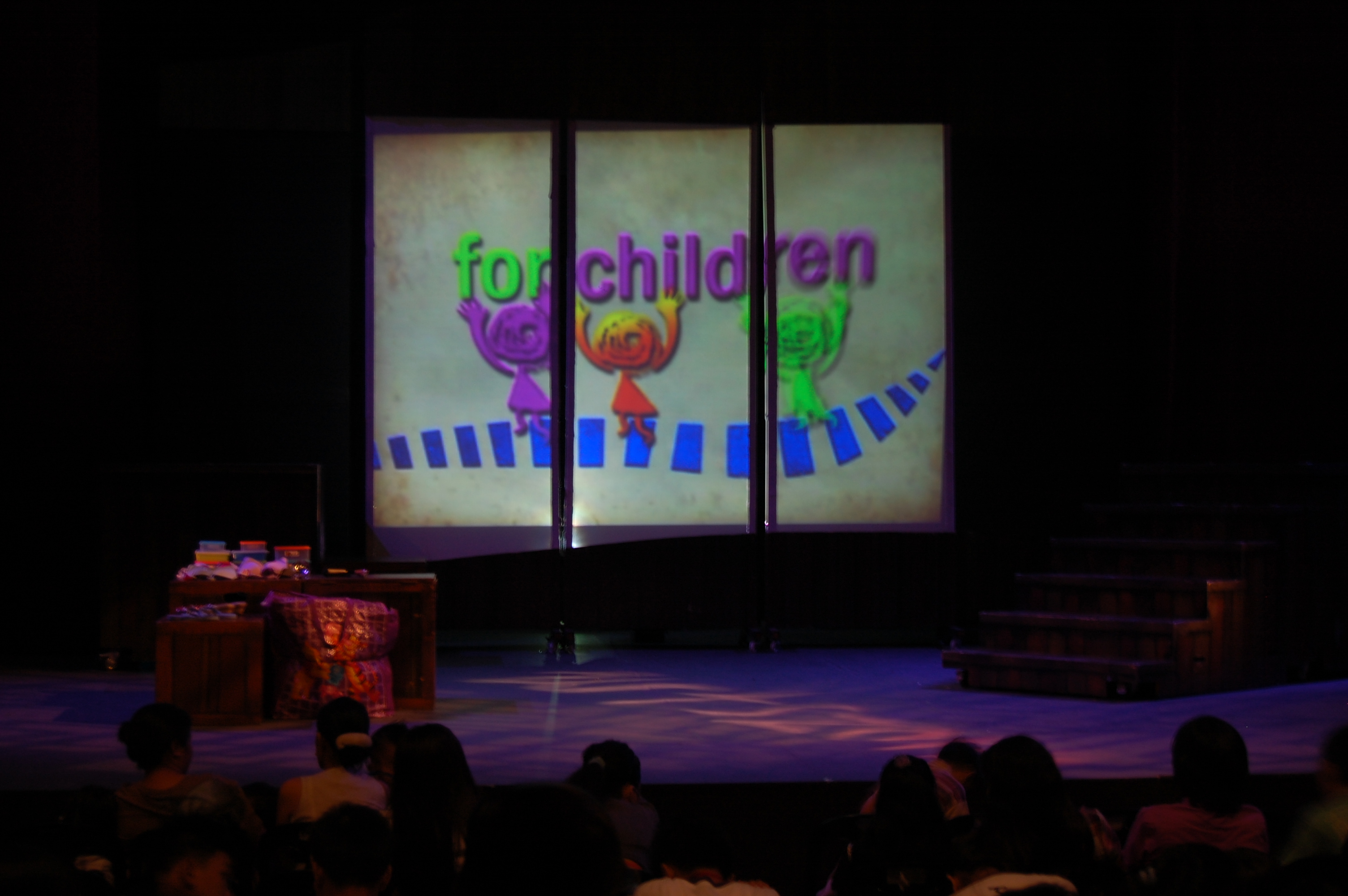
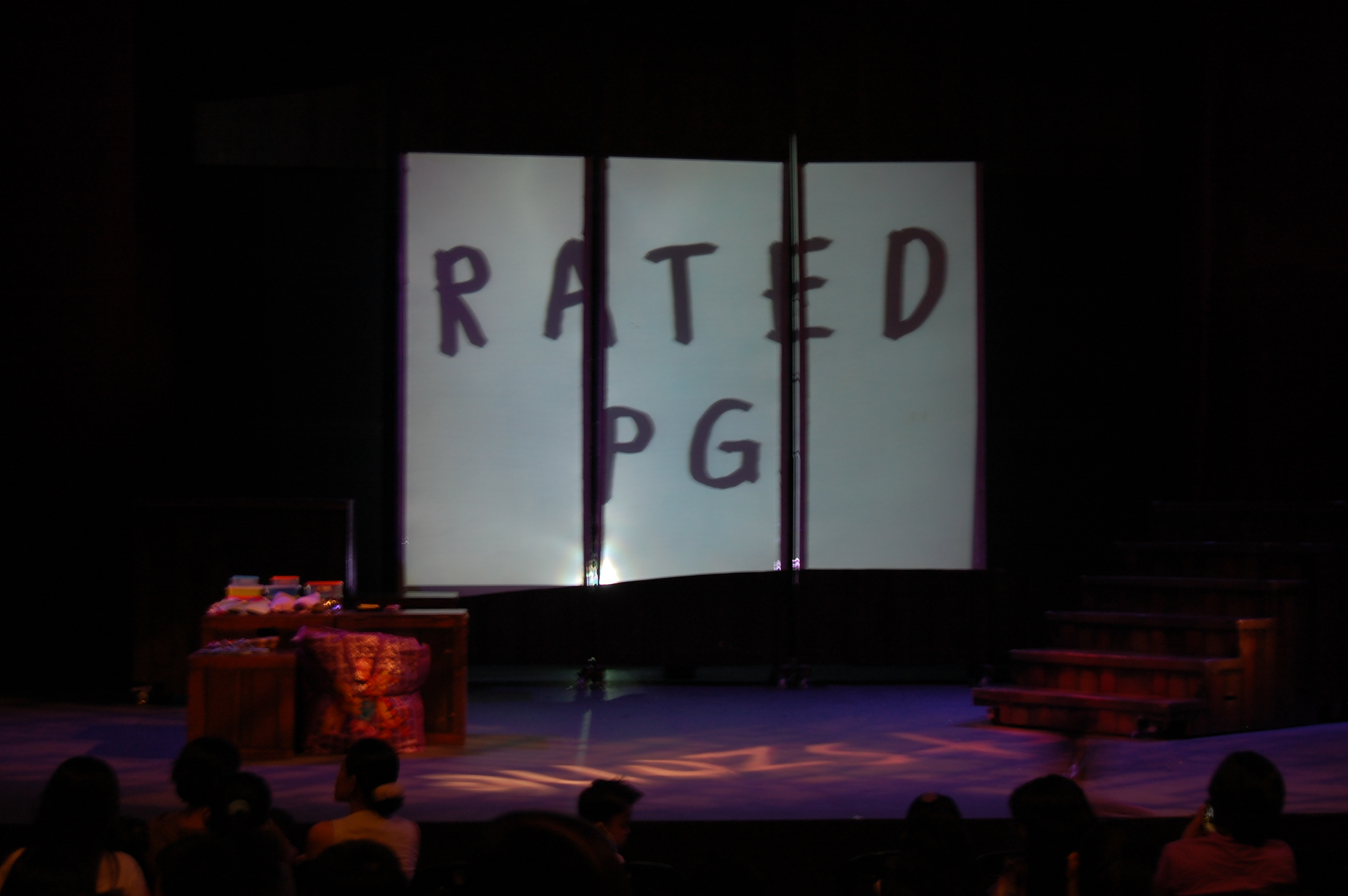
This reminds me of a play that I recently saw at PETA. They re-staged Rated: PG from their 42nd Season. On the way, Cy and I were already talking about the world children live in today. There is something very wrong when you here a little girl voice saying rather loudly, “Putang ina mo, para kang tanga! Punta ka nga dito!” It has been bothering me for quite some time, it’s an innocent little girl voice. Then, again, we talked about education (Cy, taking an MA in Math Education). He says that there are circumstances when teachers swear inside classrooms, and there are circumstances when those things are necessary. A few years ago, I would be vehemently against that, until I saw and heard children in informal settlements.
What can we do for them? I, for one, have lived in a very sheltered environment. Of course, my mother brought me up to be independent, thus for most of my adult life (even college), I have been living outside of the family home. There were times that I needed financial assistance, but it never stopped me from living on my own. My mother is very supportive of that. But that is not necessarily the case for most children. Some, though raised, lacked independence. While others, are not even taken cared of well. Can we ever create a “safety zone” for them? This conversation is almost the perfect set-up as we, once again, took a tricycle to PETA.
Children should feel safest in their own homes. But that is not the case for a lot of them. These issues were hashed out in numerous levels in Rated: PG. It is a particular conflict in the Philippines. Our parents were mostly brought up by the stick. In our society, it was normal to hit, slap and beat children. It has been accepted as a routine form of discipline. It is an incredibly violent concept and for the first act of the play, they hashed out all these issues. For a while, I was actually wondering how they would resolve all the issues that they brought forward (not exactly, but they tied it well, eventually). These are sensitive issues, and though most of the youth are open to the concept, a lot of adult in the audience are still firm believers of punishment.
It’s a good thing that I saw the play with an education major. He educated me about the progressive school. I can’t be sure if the writers and producers of the play are informed about it, but they echo it throughout the play. They talked bout the issue of rewards and punishment, as it applies in the Filipino setting. How will lessons take? Through rewards? punishments? beatings? Or as they settled on–through talking, lots and lots of talking, and on education. Having a progressive school is nice, but of course, it would be difficult to achieve in reality.
The Filipino family set-up is also explored. Often, children are left with their grandparents while the parents are working. The treatment, though, is problematic, as the grandparent is given a negative light. Yet, there is truth in the narrative. Using myths and lore to discipline children is quite unique in the Philippines. But, it is not just the grandparents who does that. As Filipino parents are displaced through diaspora, they become increasingly dependent on the extended family. Thus, the treatment of the grandparent rubs the wrong way.
There is also the issue of the dynamics between mothers and fathers and their roles for the family. Though it was not entirely resolved, there is the solid attempt. The Filipino family is still balancing the fluid and changing roles in contemporary life. Again, the progressive school is strong. Hopefully, children, when they grow up may attempt such philosophy and move away from the reward/punishment model that the Philippines have. They encourage the voice of the children to be heard and in the end, that is one of the most important things.
One of the really unique aspects of the play that I enjoyed is the debriefing at the end. They made sure that they got the message across, especially as the majority of the audience are minors. As I said earlier, children are more open to adult concepts, and many adults are not. Several adults insist on pamamalo, still, which is incredibly sad, especially after watching a play like Rated PG. And still on a sadder note is a child that was made to stand up and say that “it depends” on the situation. Then, his mother, claiming to be a teacher, monopolized the session, saying that beating is justified given certain circumstances. Of her monologue, the worst aspect is her justification of violence as punishment–that because the child committed the “wrong” repeatedly, that they did it in the bedroom, that they prayed after and the child understood that it is right by Jesus, and that her child still enjoys her company more than his friends. Unwittingly, she taught her child that violence is good, that Jesus justifies violence and that parents are better than friends. Making her child compare the love of parents between the love of friends is very wrong, given that in the future, the child will need his friends more than his parents (in certain circumstances). That the love should not be compared, that it should be given. Unfortunately, we cannot change everyone, but certainly, we can be the change that we want to see.
I saw this image in the list of the Most Powerful Images of 2011:
A U.S. Army soldier takes five with an Afghan boy during a patrol in Pul-e Alam, a town in Logar province, eastern Afghanistan. (Reuters / Umit Bektas)
This may be taken as a propaganda photo, yet I still like it. Cliche, yes, but children are still our future. We should simply treat them and educate them well. It may be through Mark Twain, Andres Bonifacio or theatre that we educate them, but what we do, for the most part, educates them. Being a child does not necessarily mean eating ice cream, playing and waiting for Santa Claus. Many children are deprived on the childhood we often get nostalgic about. I am no expert, I don’t even have a child. But I was a child once, and my childhood is one of the very fortunate childhoods. I had my own sufferings, but my environment and my loved ones helped me get through it. I healed and I had fun. Not every child can say that. I was very lucky. In my own way, as I write, I hope I can spread the luck some more.
**I hope to write a series about this issue. I was among the netizens fighting agains WW on the issue of child abuse. This now evolved into Para sa mga Bata group and movement. Then, I am also a believer in fairy tales, no matter how gruesome their sources. Hopefully, I’ll be able to write another part in this story.
Contradictions. What can you expect when you merge street music and Shakespeare? Do you even consider it? What I discover is that there are gems in contradictions. My friend (Cyrus) and I should know. We arrived in style (so to speak)–a rusty tricycle ride to a clean, white and elegant facade of PETA Theater in New Manila, filled with nice cars no less. But no matter, the adventure of contradictions thus began.
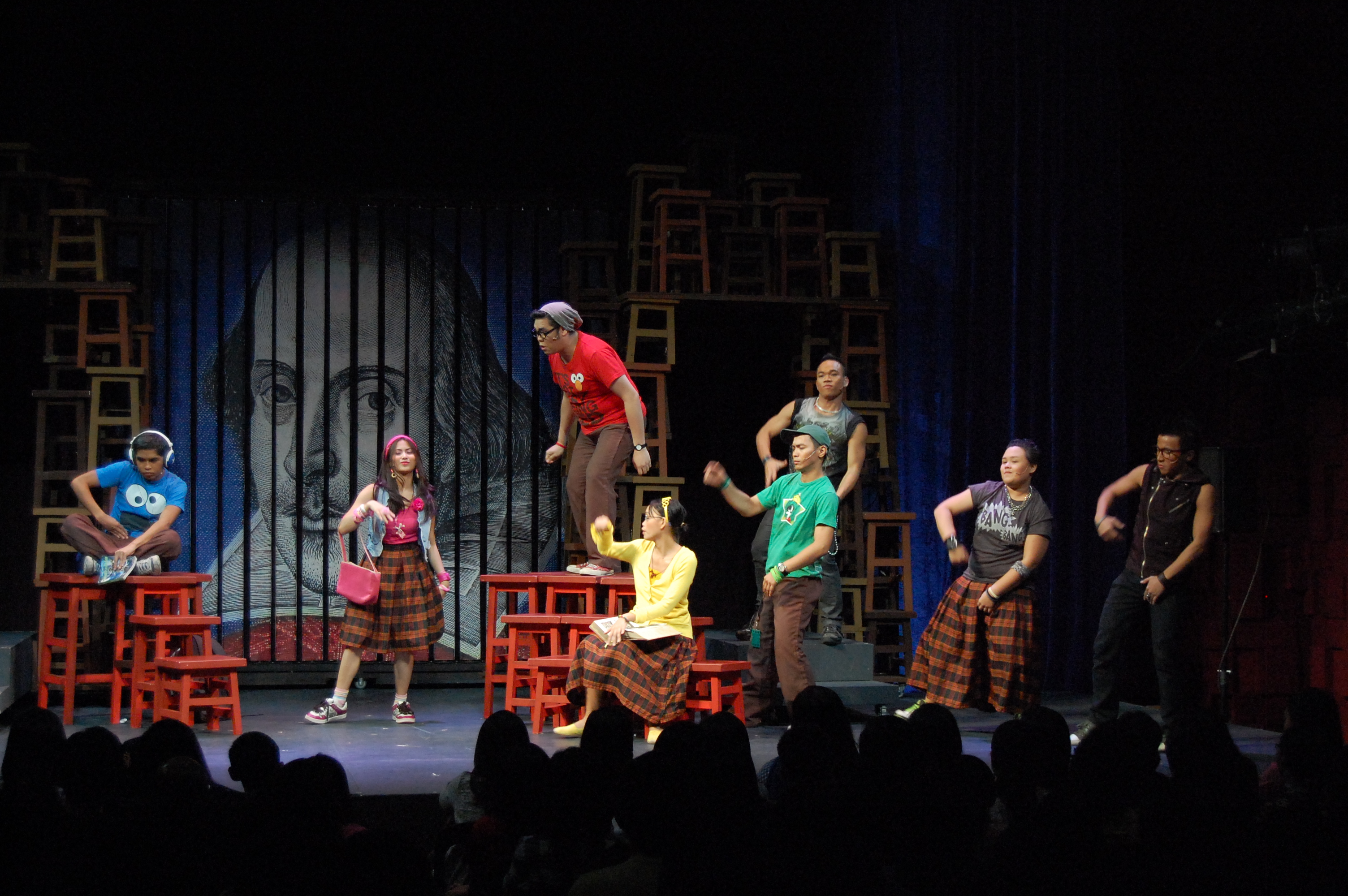
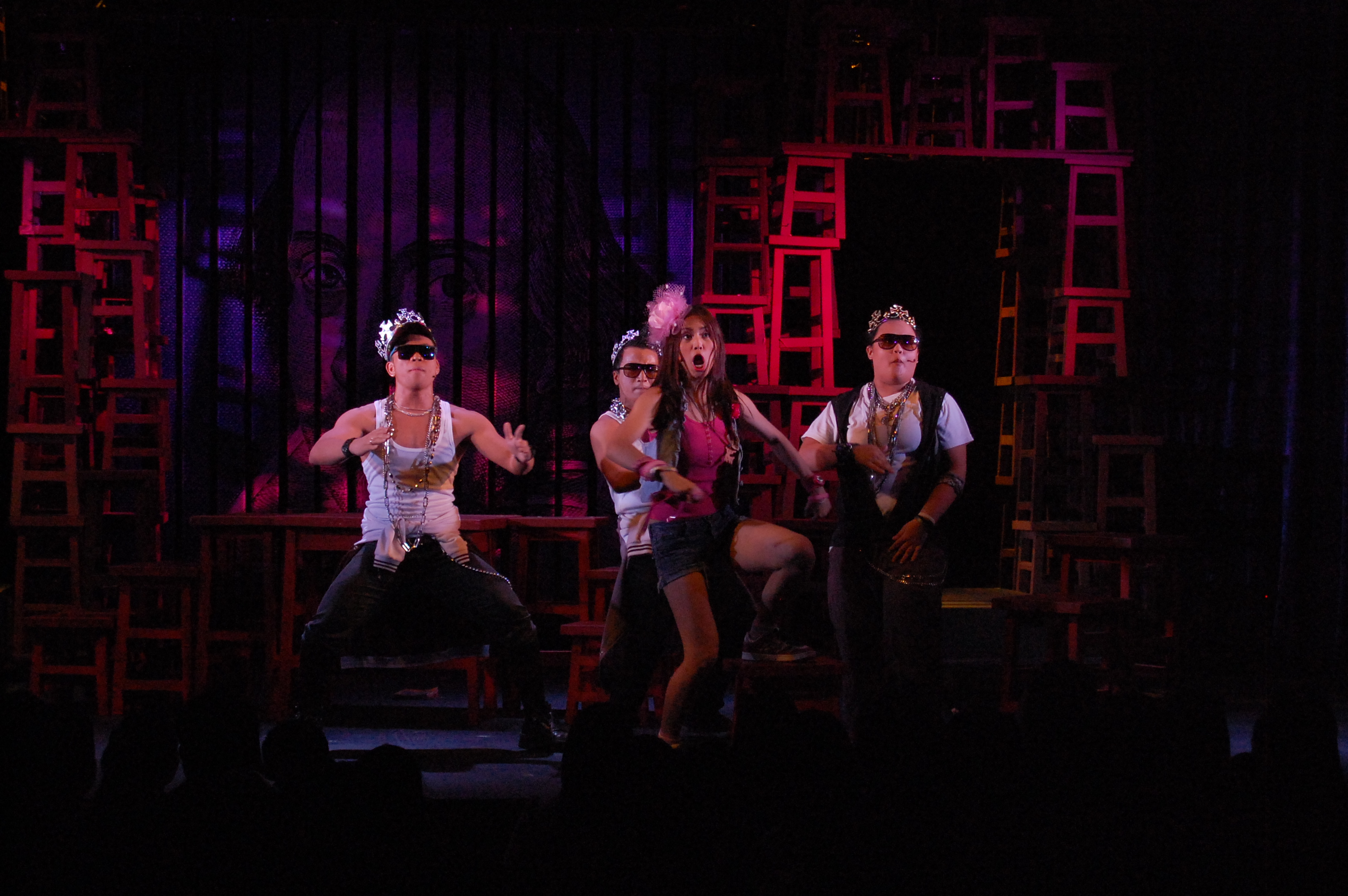
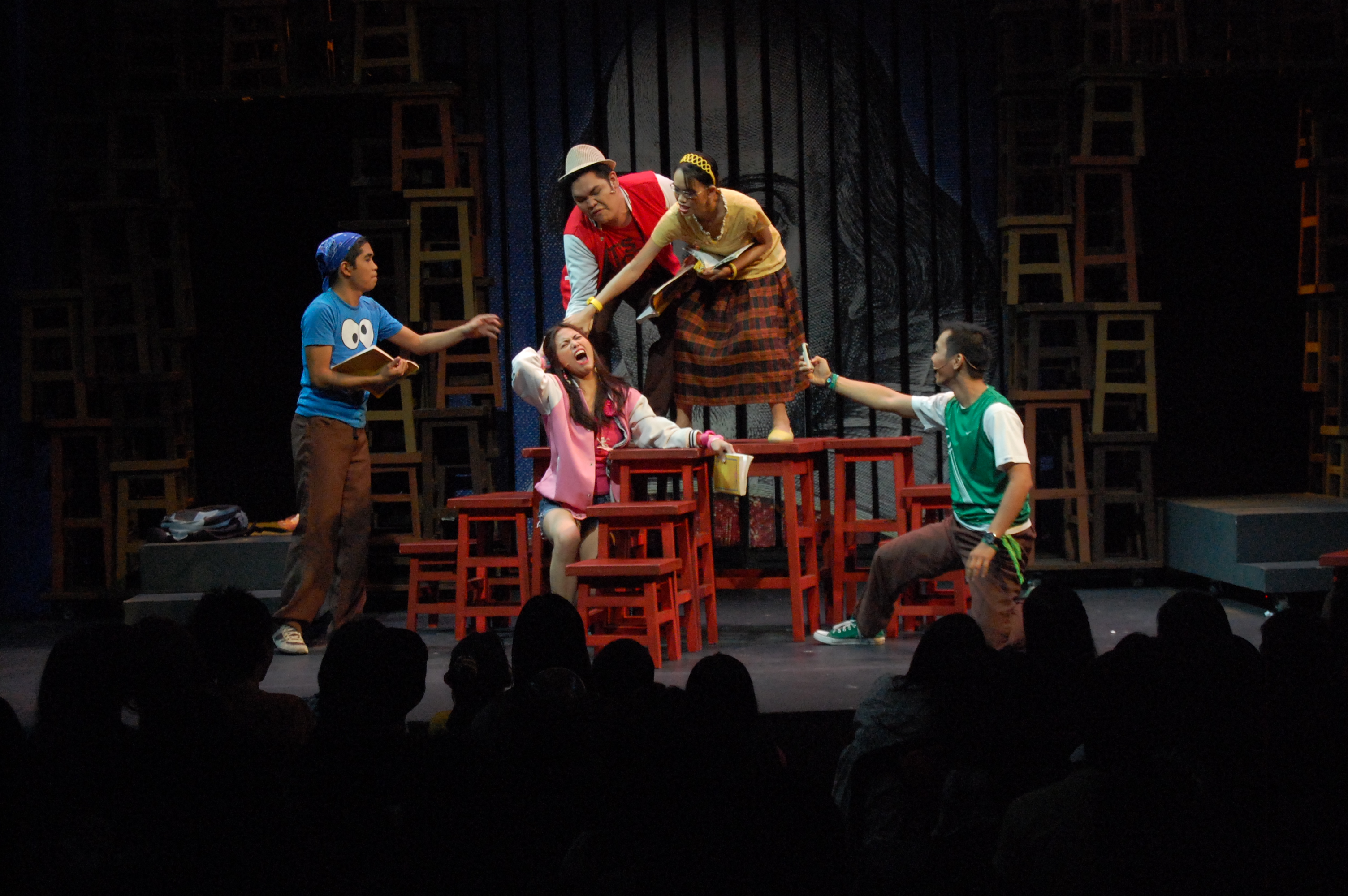
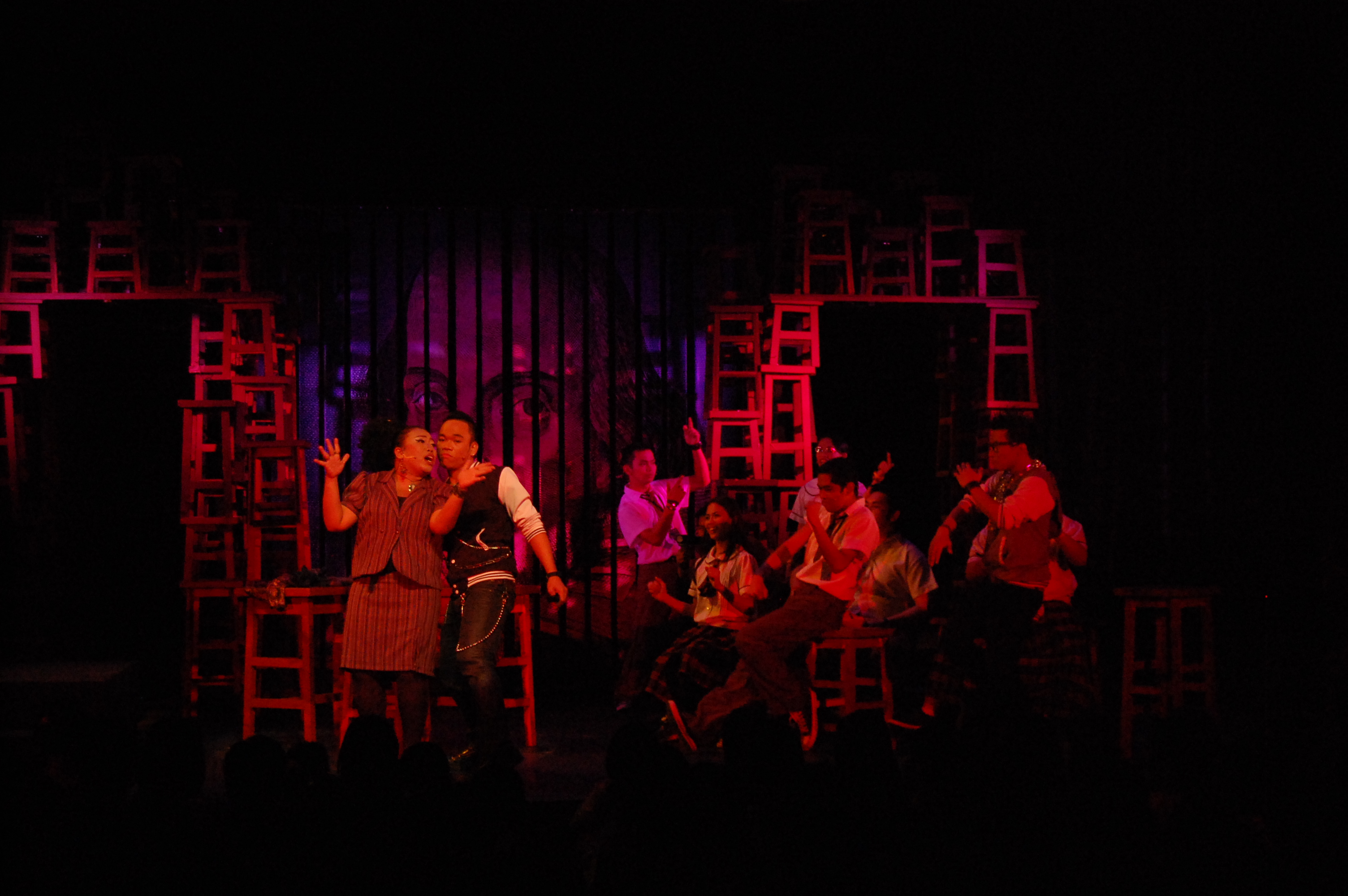
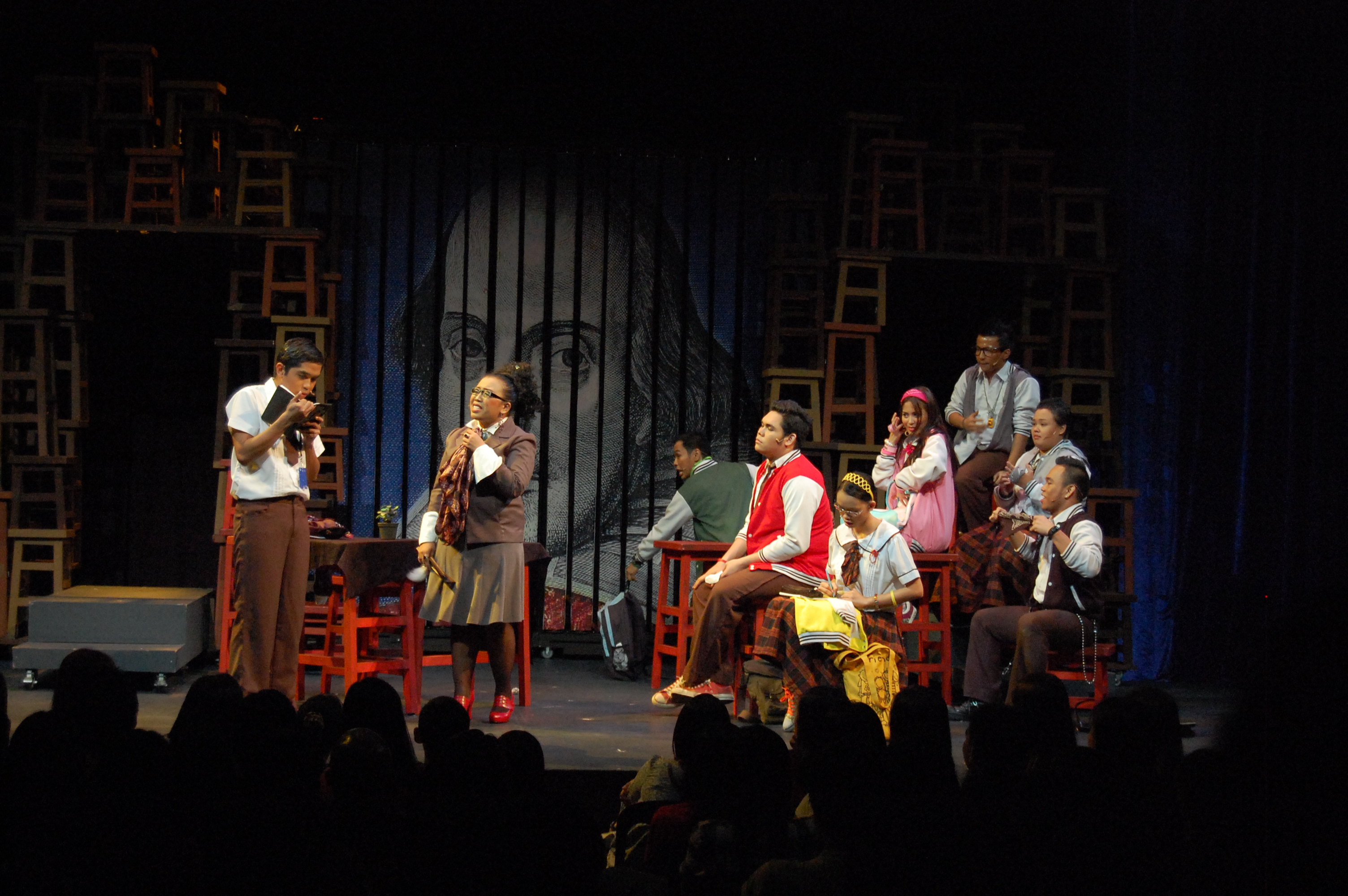
William, a play that was much reported and written about is an exciting revelation. Shakespeare has been done so many times, in innumerable ways, that it is rare to be surprised by just another interpretation. But that’s just it,William, is not just another interpretation. Rap, hip-hop and flip-top are the dominating forms, but these are seamlessly combined with Shakespearean plots, that an unaware audience might not notice. This is a gem for the Bard’s fans, as the stories and references unfold right before their eyes. William spoke, both to the high schoolers that needed a Shakespeare 101 and to Shakespeare aficionados in the audience; no one was left out, there is something for everyone.
Filipino life and Shakespeare? Yes, definitely. William, both the bard and PETA’S play is anything but predictable. Who would have expected that Shylock’s monologue from The Merchant of Venice, could help express the sentiments of Richard Austria, a gay teenager who is newly “out” in society? Or that Claudius’ guilt from Hamlet would translate into the jock, TJ Domingo’s guilt for “outing” his friend Richard and his sufferings from his abusive father? Another surprise is the appropriation of Marc Anthony‘s famous speech for the campaign of the push-over nerd, Erwin Castro, as he also tries to redeem is gay friend Richard. Famous monologues from famous plays appropriated in unique ways to reflect issues from the Filipino teenage life.
Easy to miss but jewels when you catch them are plot references from Shakespeare’s famous plays. The main love plot is very reminiscent of A Midsummer Night’s Dream as two pairs of couples find each other through the help of fate. The play also ended in a party, A Midsummer Night’s Prom that tied down the play neatly, as well as reflecting teenage life. Everyone ended up with their respective partners in the end. Also, the play will not be perfect without its mean, yet lovable, hip-hopping villains. Again, easy to miss, is its reference to the the three witches of Macbeth. Bugoy, Buchoy and Strawberry are the villains that would tie-up or open-up a scene with their hip-hop and flip-top. These three love making fun out of everyone, especially of the nerd, Erwin and the newly-”out” gay, Richard.
One memorable song is a hip-hop rendition of What’s in a name? Instead of the typical love story of Romeo and Juliet, the play focused on Juliet alone, and not in finding romance. Instead, Juliet finds herself, independent of any Romeo. Sophia Reyes, the Juliet of the group, started out as a nouveau riche, love struck teenager. She grew up and grew to love herself, embracing her romantic Juliet but going beyond the romance and reaching a transformed independent Juliet, who loves her own name, her heritage and even her countryside accent.
William, surprisingly, for a play meant for high students, also delivers a very strong position against gender discrimination. Though set in high school, without any overt sexual connotations, the play dealt with gender positions, again, very reminiscent of the Bard’s style. Mentioned before are the frustrations of Richard in a high school setting as he is bullied by his classmates because of his gender. The usage of some Shakespearean characters, though could be a bit anti-lesbian on some parts, still challenges traditional gender roles of society, just as the Bard did in his own time. Portia’s cross-dressing to defend Basanio from Shylock in The Merchant of Venice as well as Viola’s story in Twelfth Night were referenced as the characters look into their own gender positions. Though the term lesbian was thrown about in a bit unflattering tone, the basic message against gender discrimination cannot be missed.
The role of Shakespeare in education is very important for everyone. The very core of the play is education, and educate it does. Ms. Martinez, the weird and theatrical teacher struggles to bring Shakespeare to her students. From the boring and incomprehensible iambic pentameter, she shows her audience how Shakespeare can be made relevant to everyday life. The play itself shows how valuable Shakespeare can be in the analysis of Filipino life. The Bard, crosses language and nation as his works are interpreted and made relevant to everyday life. At the end, everyone is infected with “Shakespearitis” and every event in their life is referenced to the Bard’s work. Its an eye-opening transformation for everyone.
It is a rare event, that I can experience laughter and cheers in a small, intimate theatre, filled with high school students and a few adults and aficionados. The audience, clapped and reacted at almost every scene. They gave a number of “awww”s for romantic moments and even dead silence during the heavy monologues. The applause in the finale must have been heart-warming for everyone, especially coming from students that rarely reads Shakespeare in the contemporary technological world.
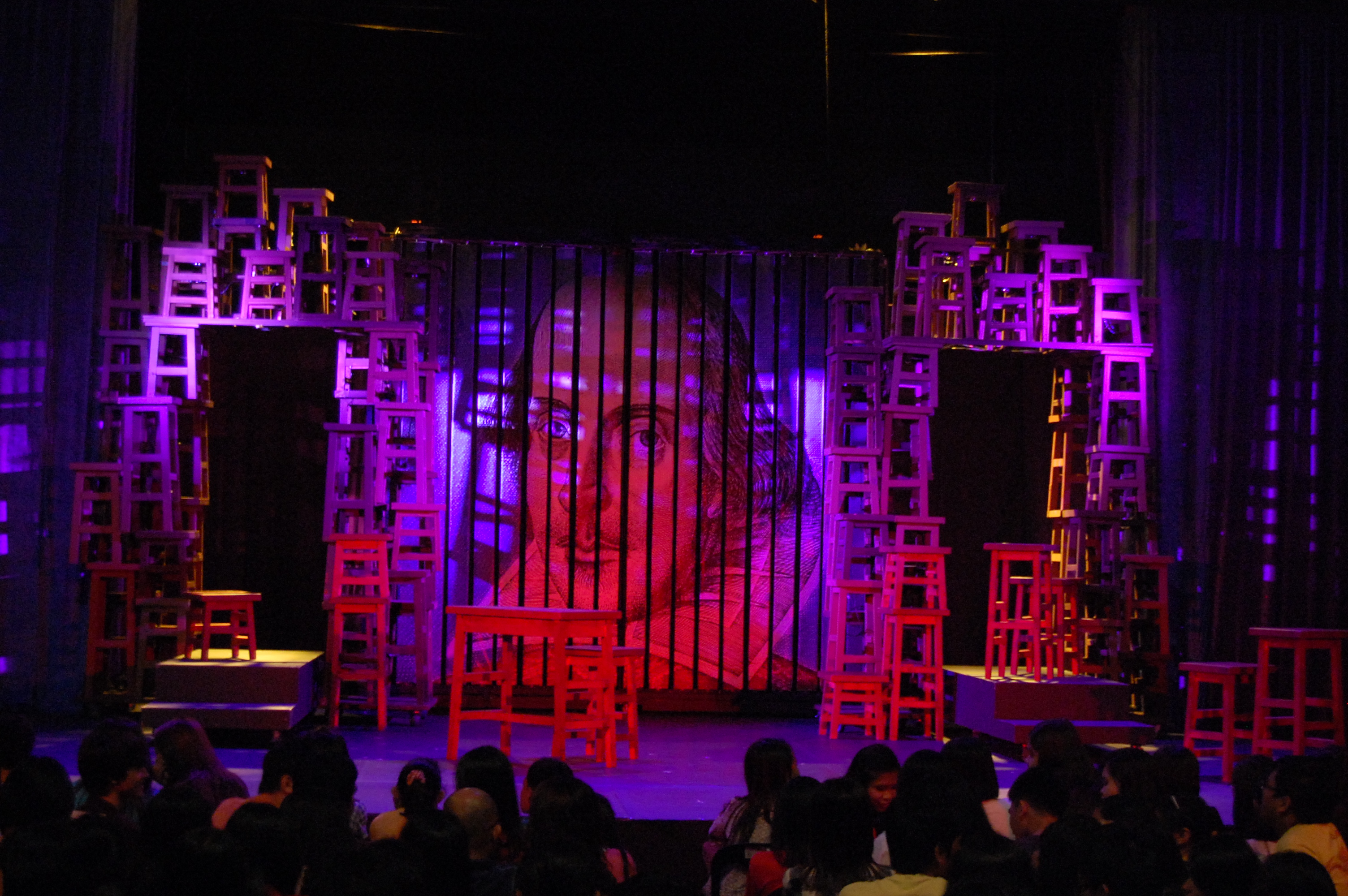
Transformation. As the background changes into a pop-art version of Shakespeare’s portrait, the finale wraps up William in another hip-hop song. Mostly, in the Filipino language, it expresses the relevance of the Bard in everyday life, and how much the youth of today can still learn from him. The Shakespearean topic has not been exhausted, even after all this time. PETA’s William is a proof of that. Shakespeare is relevant to students, teachers, theatre fans and practically everyone. If you look close enough, you can find William in your everyday life and, yourself, reminiscent of Shakespearean characters.
Who is Daguerre? He was the inventor of the Daguerreotype. No, it is not the first camera. But, it is the first commercially successful camera. It is also a first in the fixing a permanent image on a plate, using a wet-plate process. The Daguerreotype was largely popular for portraiture, thus, the inspiration for the Google Doodle.
So, in honor of his birthday, I also unearthed by DSLR, which I have ignored for sometime because of my disappointment with a failed experiment on nude photography. The actual studio session with Jim Paredes was a success, I never thought I could photograph the body like that. But as my SD card was corrupted by some mysterious force of the universe, I was disheartened. An entire afternoon of studio work disappeared. Today, though, I bought a new SD card at CDR-King (cross-fingers), reformatted it using the MacBook Air, and set off to an exhibit I was actually waiting for.
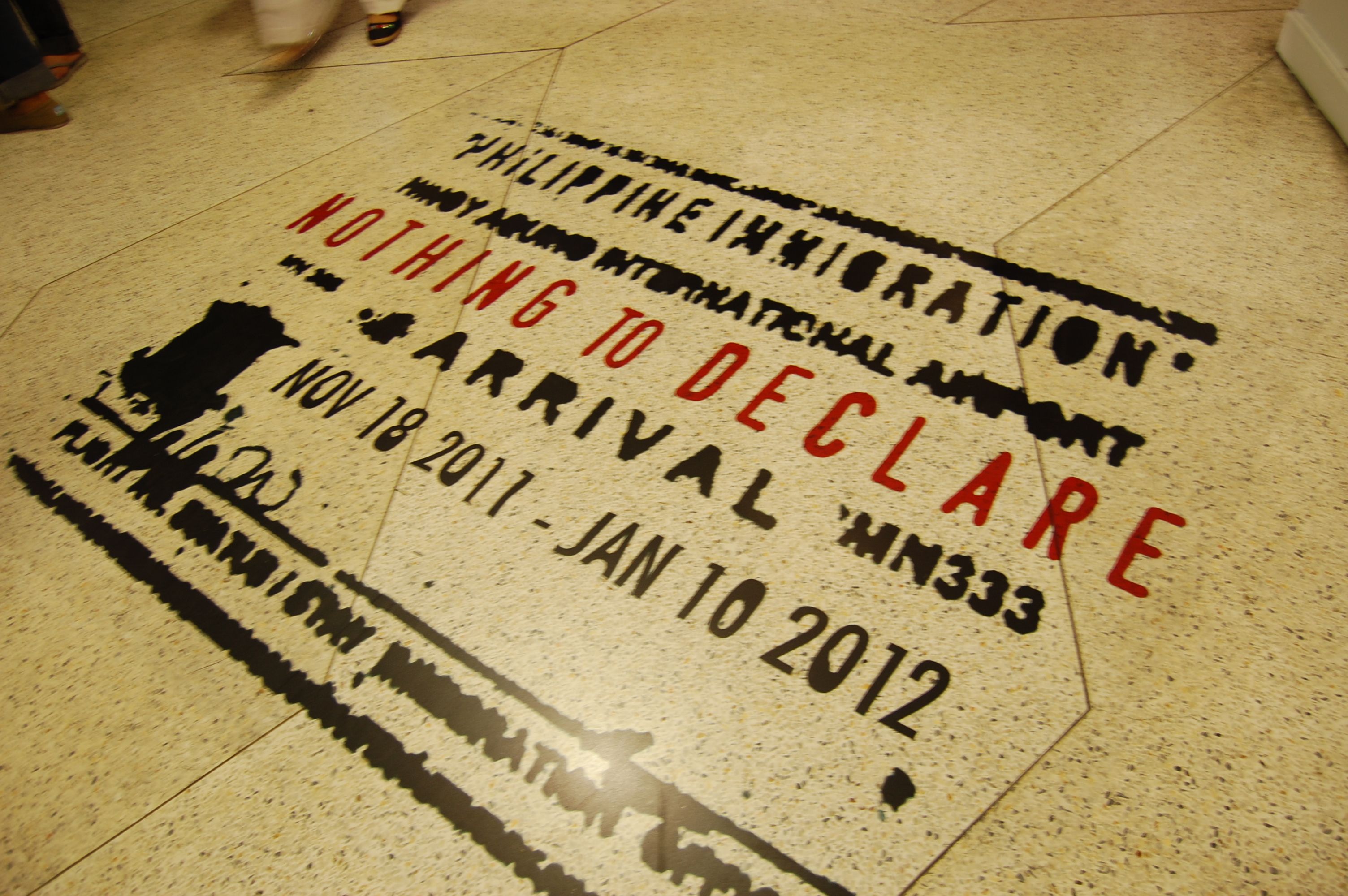
I missed Nothing to Declare at Blanc Compound, Shaw Boulevard. I also missed the opening at the Yuchengco Museum, RCBC Plaza. There is no way that I am going to miss its opening at the Vargas Museum, UP Diliman. I have been waiting for this exhibit. I have heard of the difficulties in making this a reality. I have seen the struggles in social media. I am not about to miss it, and I didn’t.
I am not about to write a review right after the opening cocktails. I have not even absorbed the exhibit yet. I need to go back on a quieter day, though admittedly, this exhibit is difficult to maintain and I will no longer get the energetic vibe of the audience when I go back. But I need peace and quiet as I ponder the artworks. Moreover, I need time to reflect and digest this. It is the best part about a large exhibit with numerous installations, though it is often a challenge to analyze, it is still pleasurable to behold.
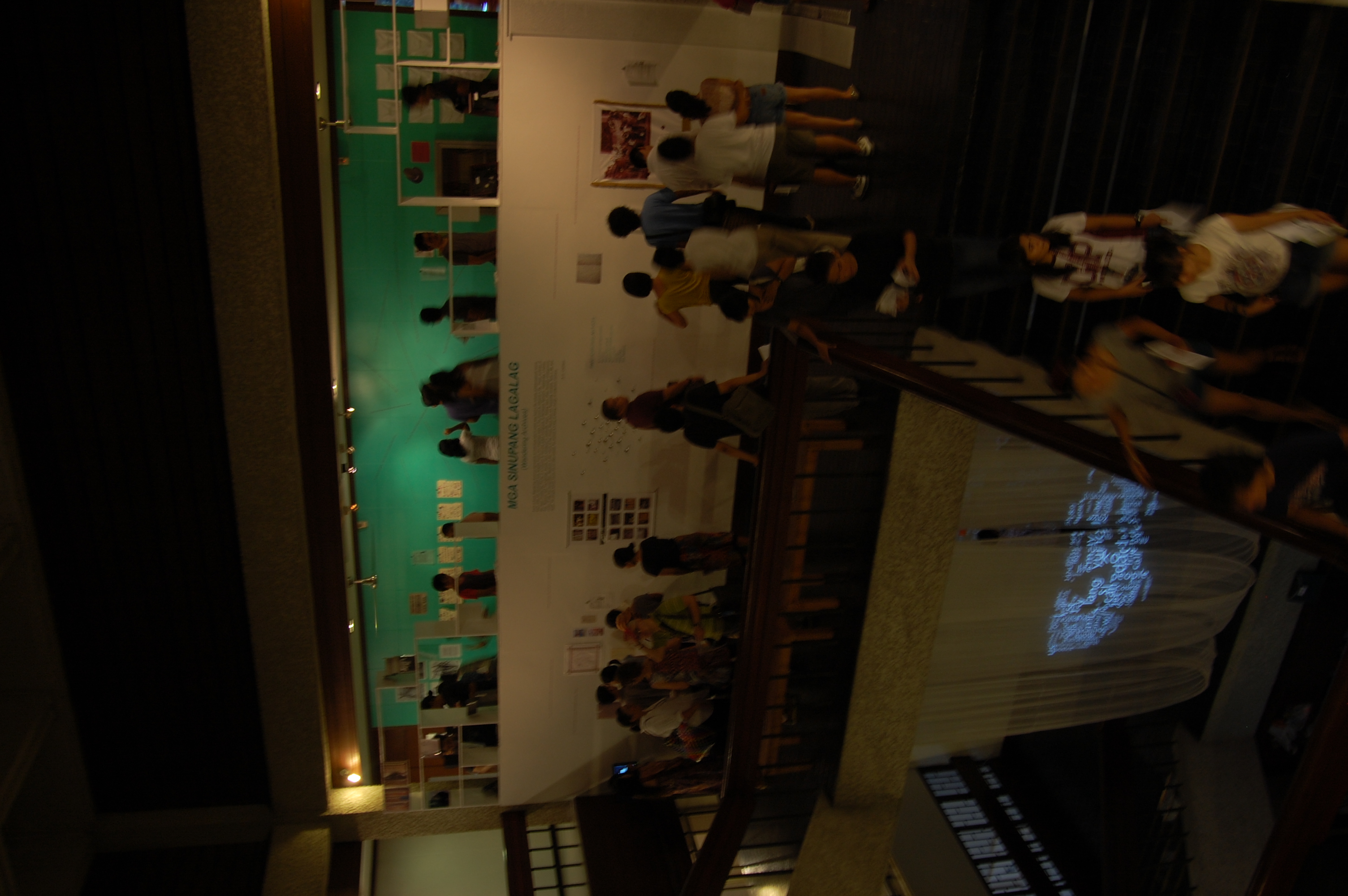
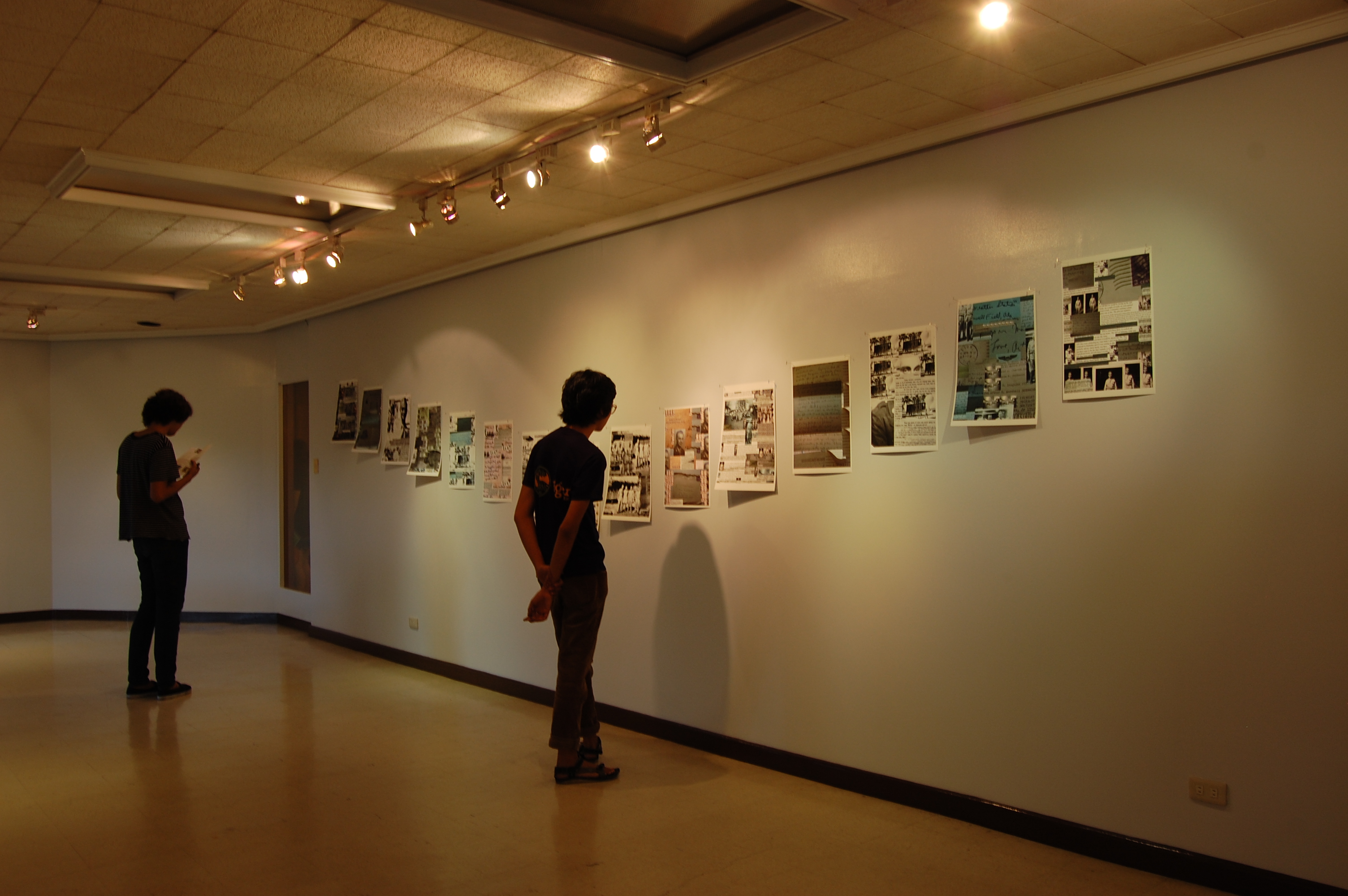
I always feel happy to see Vargas Museum filled with people. It was a very different case during my undergraduate years when it was nearly deserted. Now, every time there is an exhibit opening, people flock to it. There are also visitors everyday, there was never a time when there is absolutely no visitor in the museum, whenever I drop by; whether for a class or when I am simply looking for inspiration. In this particular exhibit, every single space is occupied, even the small exhibition area on the third level.
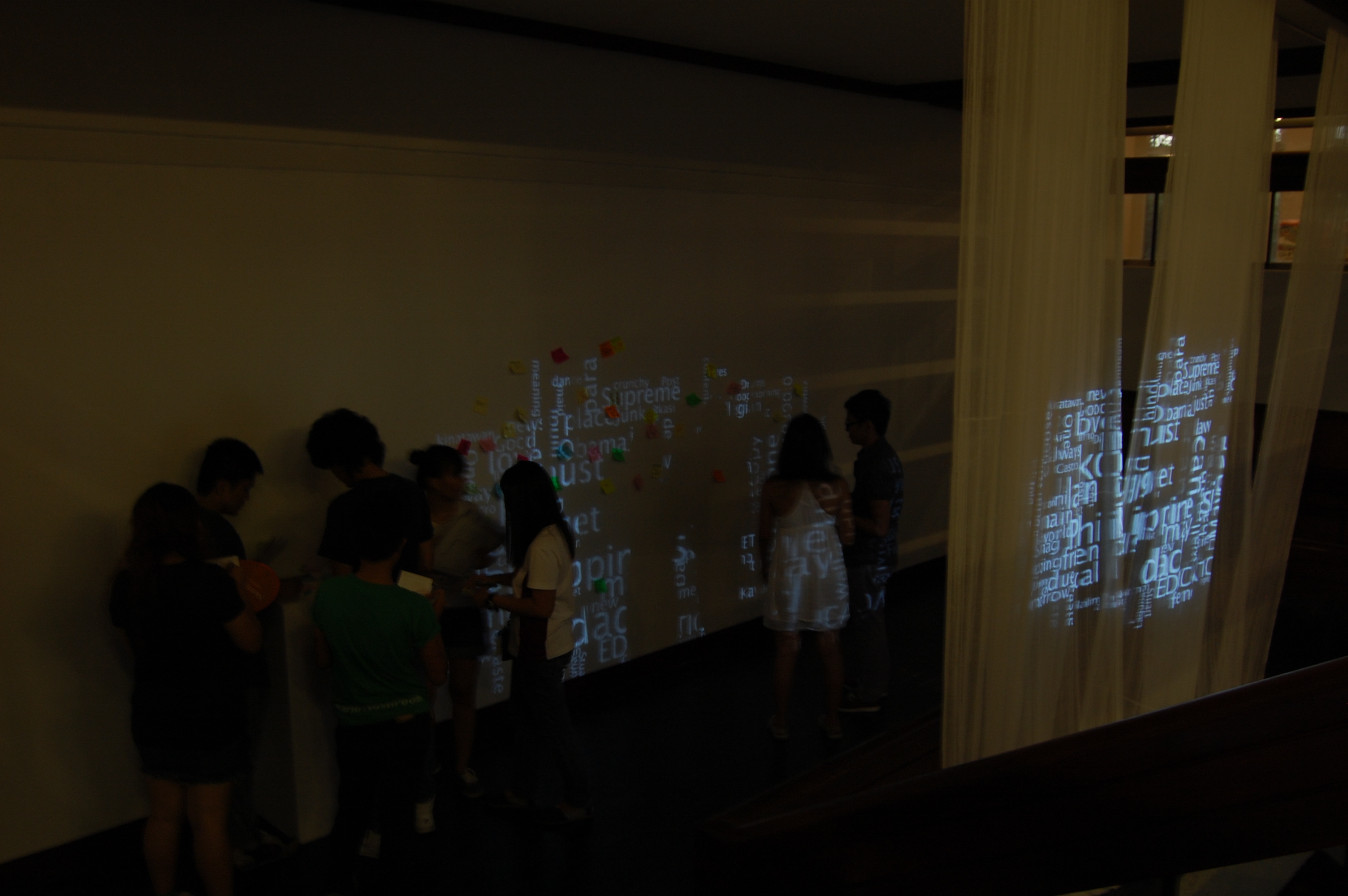
There are also various video installations that are to be viewed from the bench or participated to by the viewers. Admittedly, I am not a fan of crowds, especially when trying to reflect on artworks. I did not linger in the space. Again, I will come back for this on a quieter day, hopefully not causing too much trouble on the museum staff. Maintaining an exhibition of this size for two months, including video installations that must be synchronized, is far from simple.
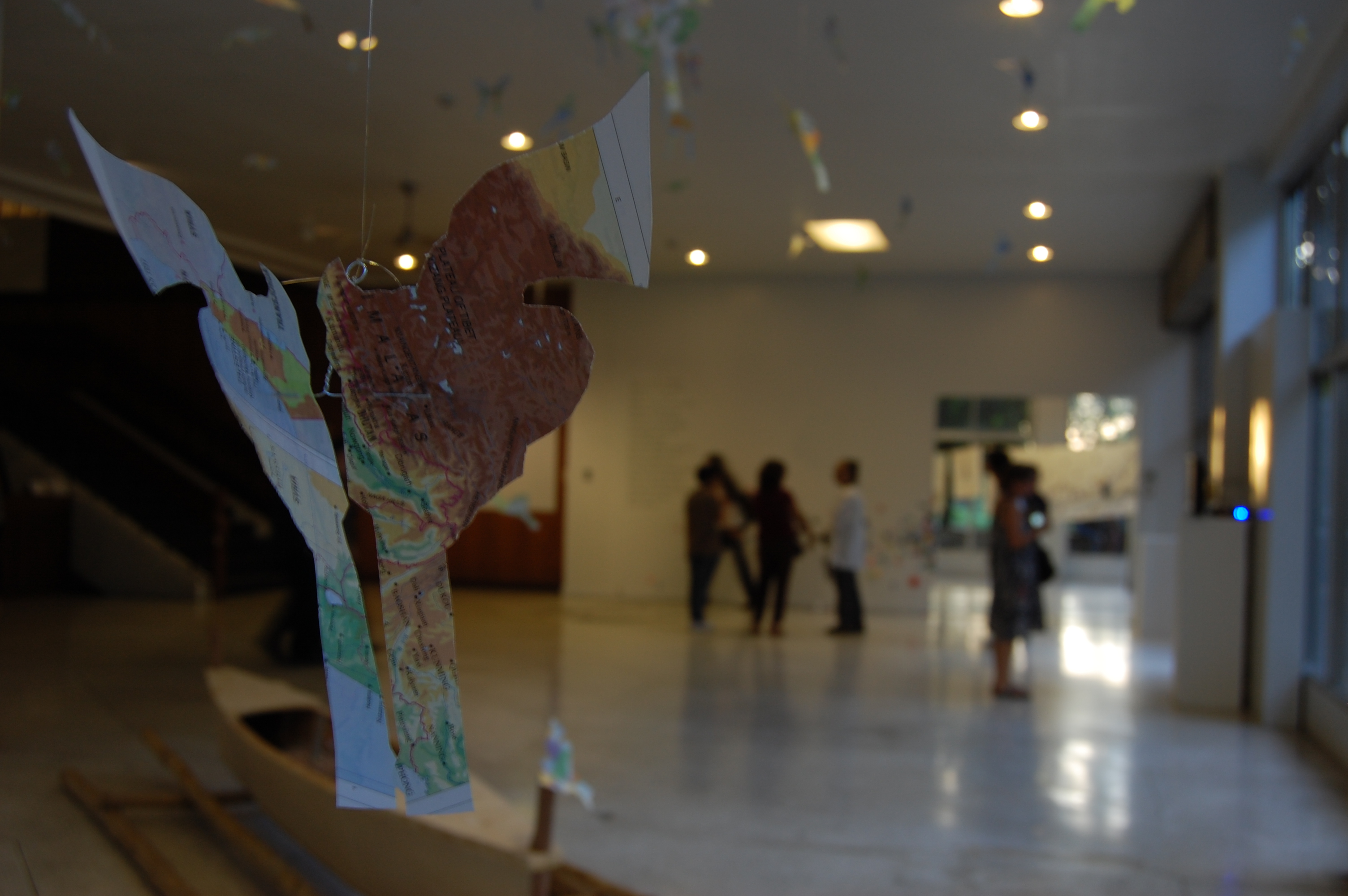
Admittedly, I have some immediate favorites, even with the obvious lack of reflection. I have seen this being installed a couple of days ago as I passed by and was immediately stuck by it. What is the artists’ statement? It looks light, airy and pretty. But knowing the artists that exhibit in Vargas Museum, there is often more than what meets the eye. There is a deeper story behind these pretty things and I will investigate and reflect upon it in the coming days.
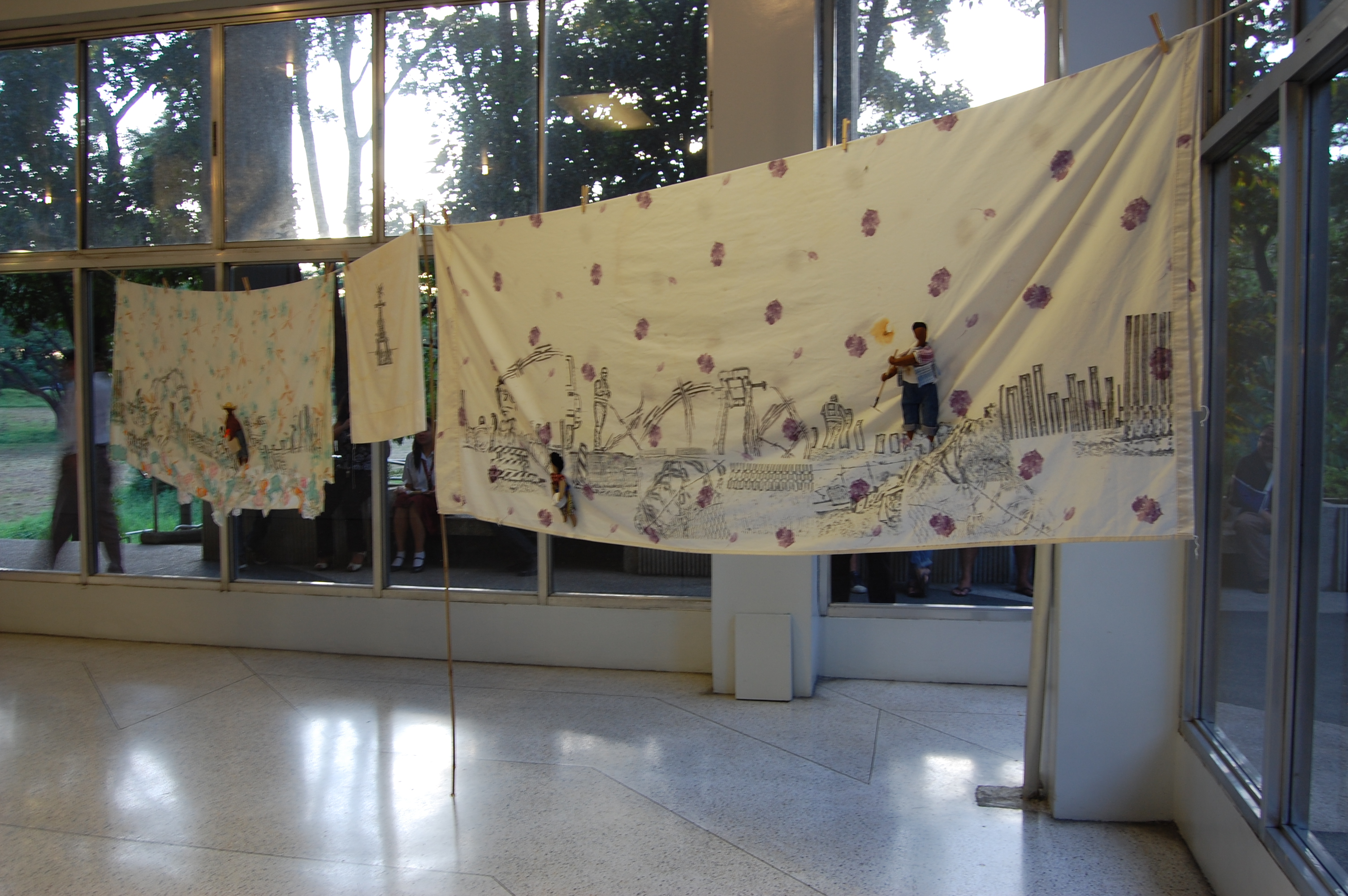
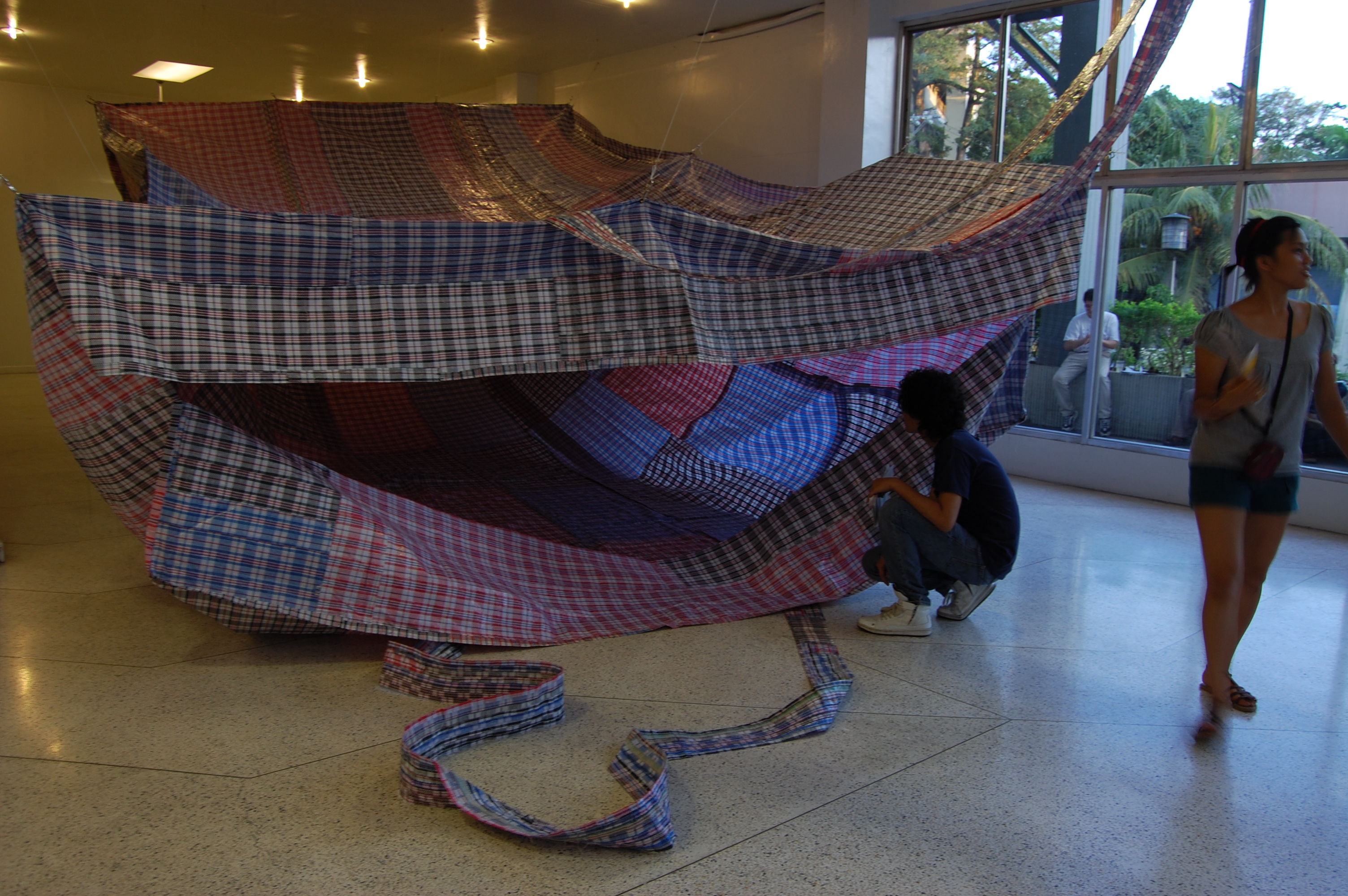
The right-wing of the museum was filled of installations more akin to Filipino sensibilities. The appearance of laundry and a gigantic bag reflects some obvious aspect of the Filipino culture. Right off the bat, I know this is something that will be very interesting to write about. I can almost hear the resonance of sampayan, bilad and even tiangge in the narrative. And I don’t even know the work’s titles yet. As I said, more on that, later.
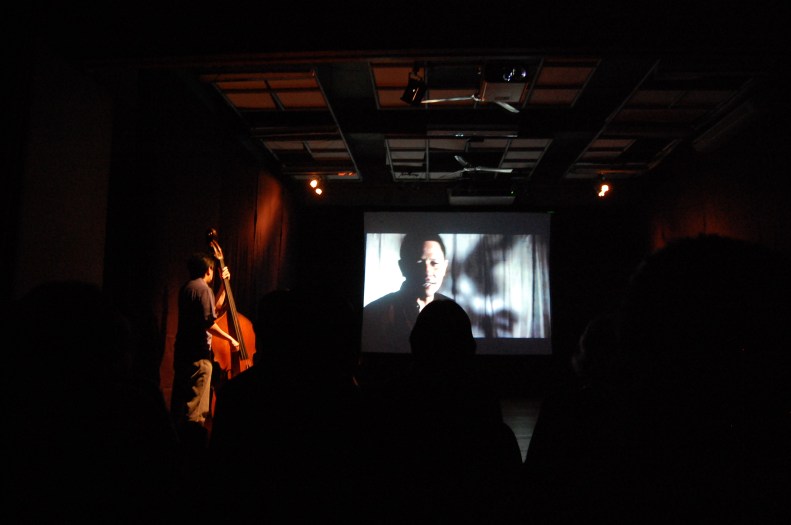
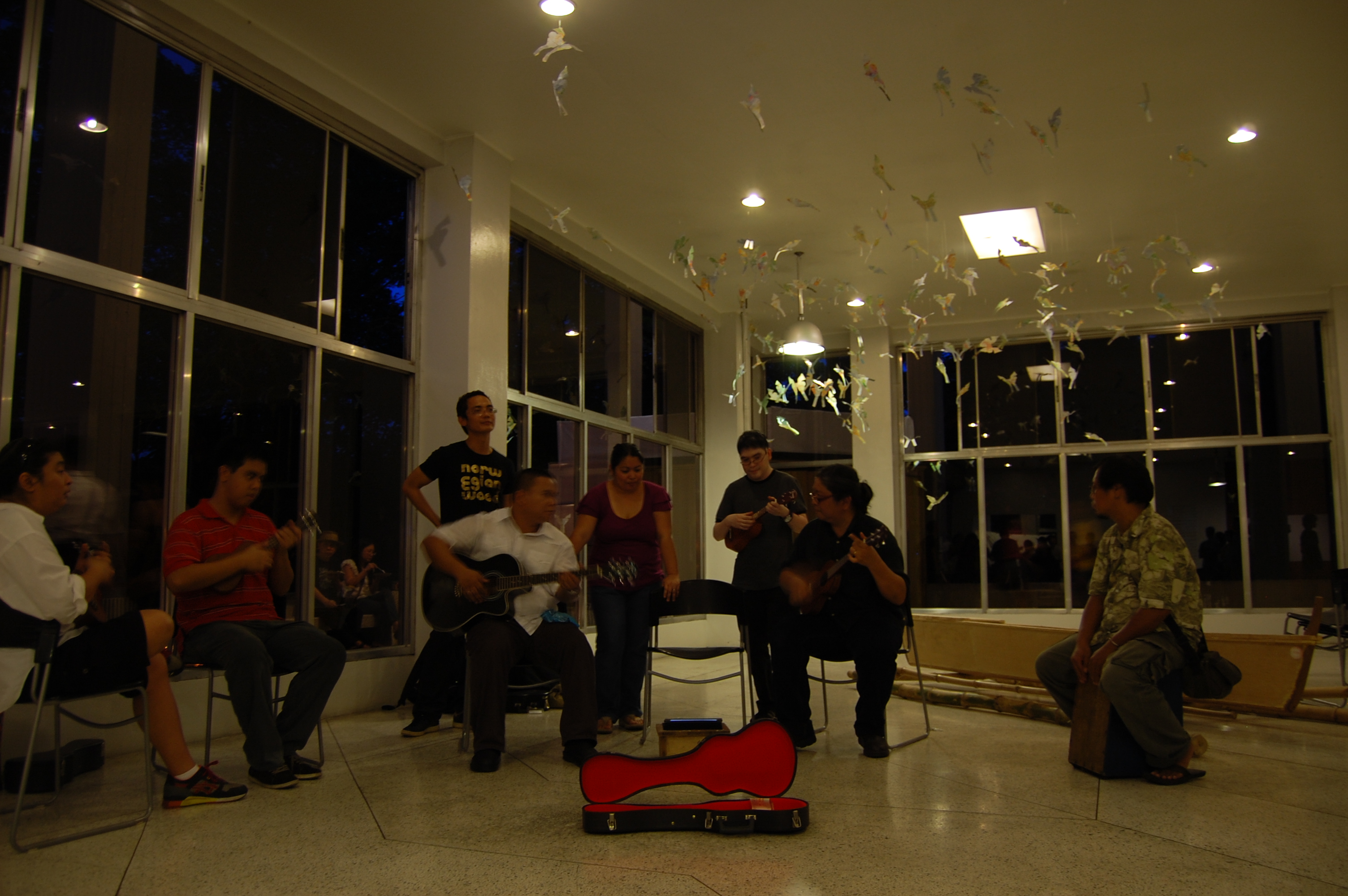
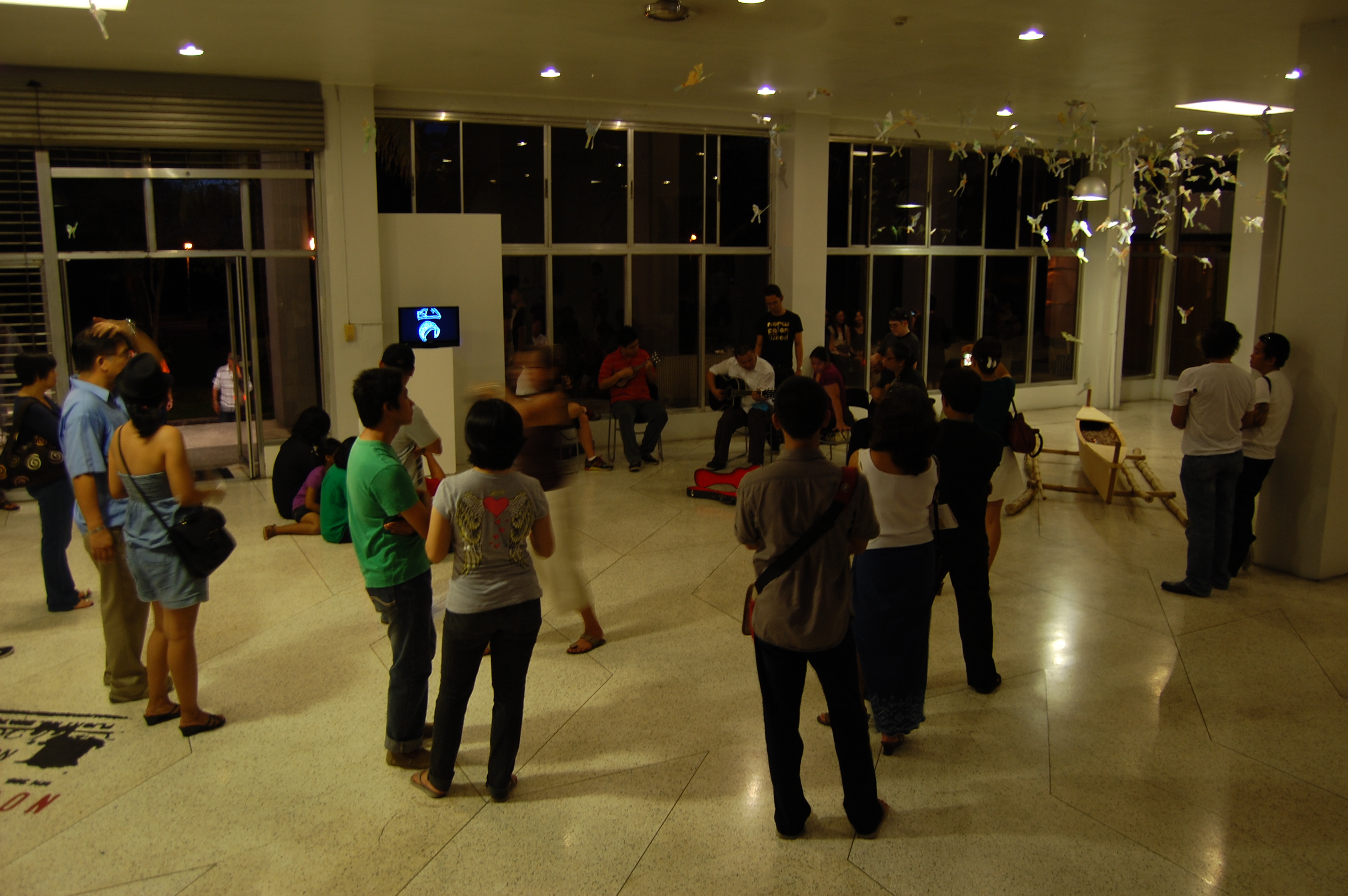
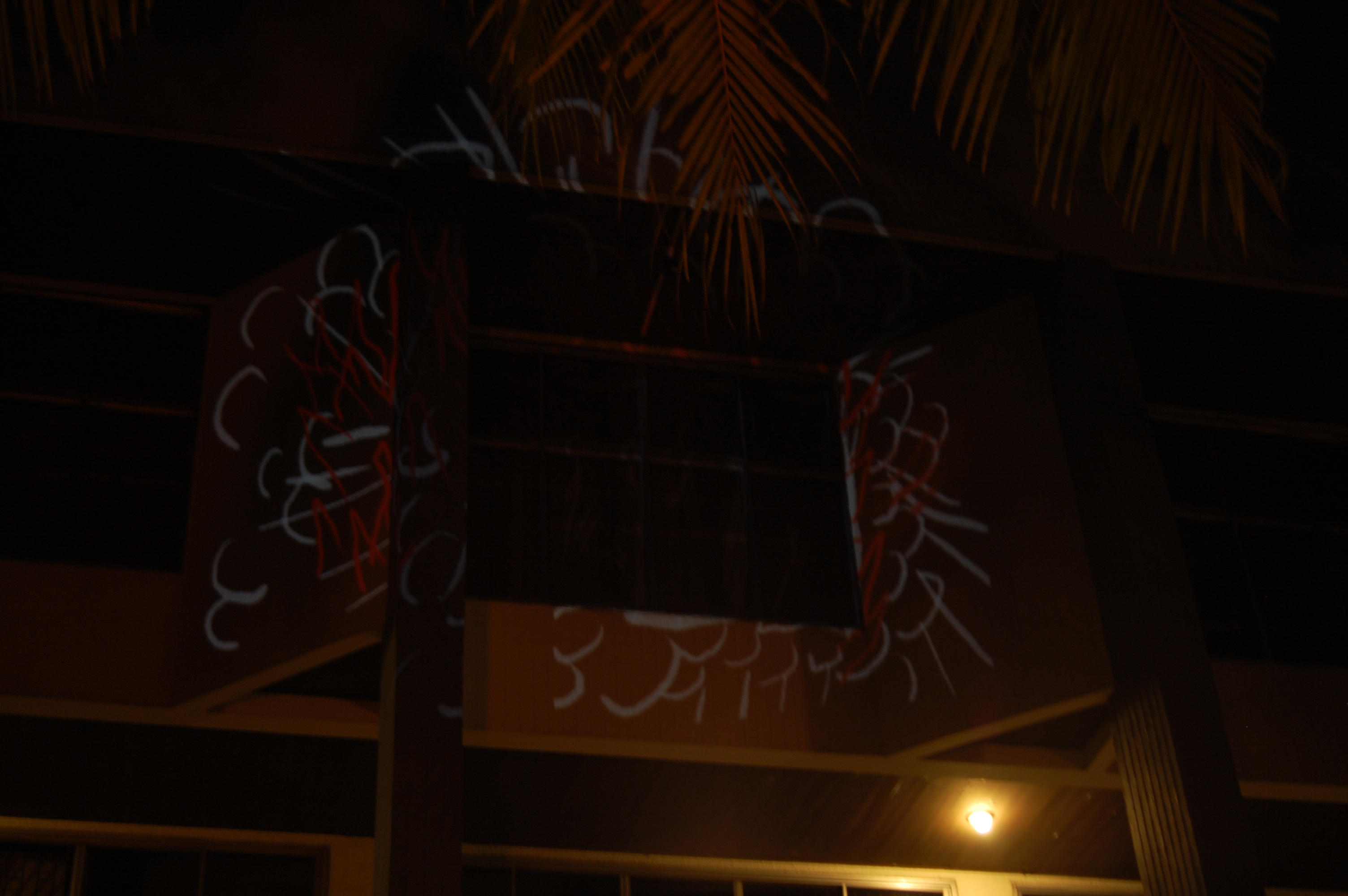
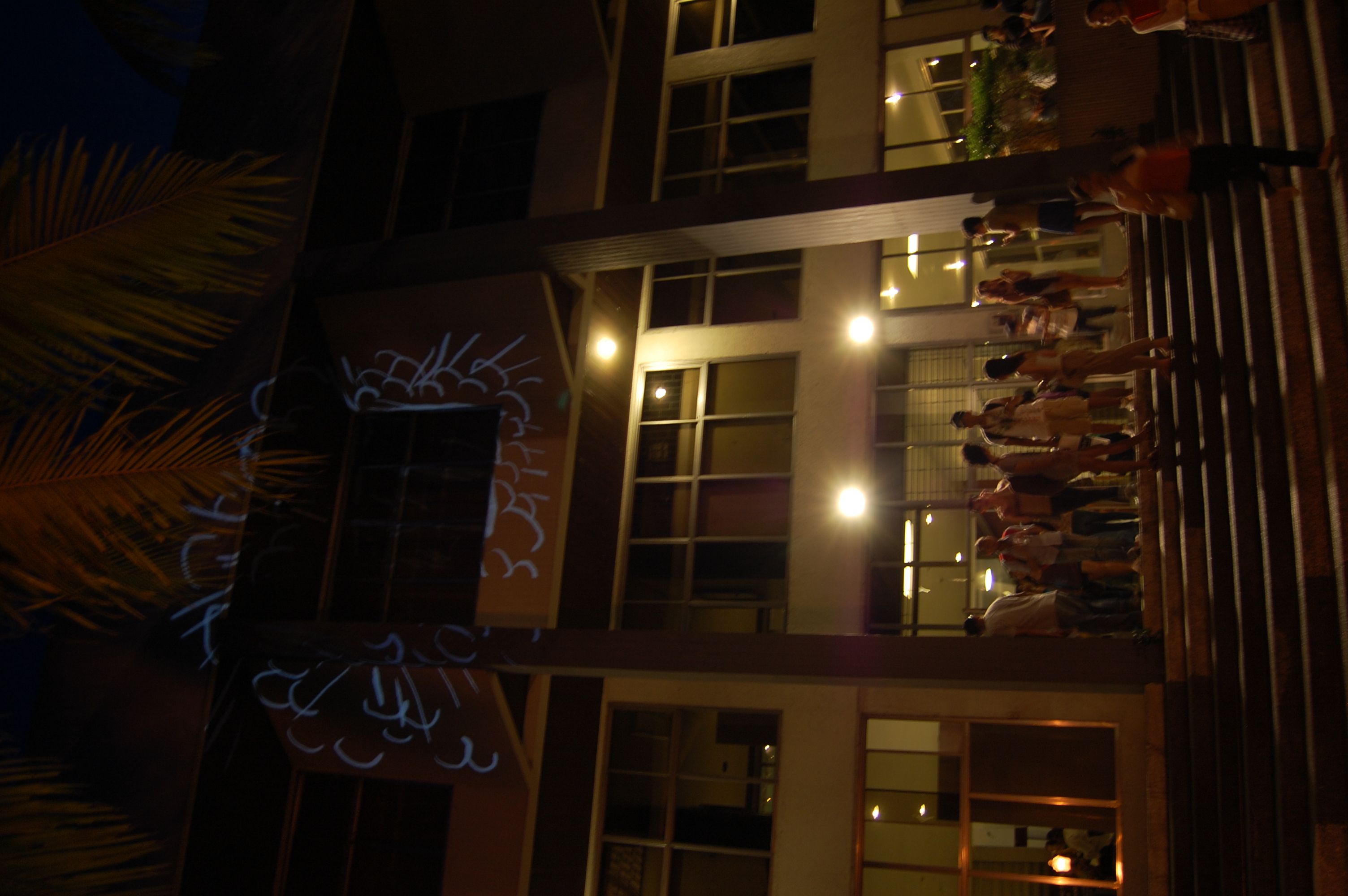
When writing solely on the art, opening cocktail is not really the best time to see them and contemplate. But there are things that are only present during openings, such as the varied audience interaction. Yet that is not the most amazing part. What I enjoy most are the planned or more often unplanned events that happen only during opening cocktails–such as performances by the artists and their friends. Once the sun went down, there were performances, both on the inside and outside of the museum. While there is an interactive music performance in the lobby, there is an art writing performance happening outside. Though I was not able to capture the obscenities they have painted, I captured some drawings they projected on the museum wall.
*Note the glaring red cover of the small guitar case on the center. So Vermeer…
I cannot end this wandering of the mind on the exhibit without showing the plastic bottle caps. It follows you everywhere throughout the exhibit space, like plastic bottle caps of real life. They are literally just everywhere. They are the trash and non-trash.
As should be noted, I have not included the titles of the works here, yet. It will follow. Studying it would defeat my purpose of letting my mind wander aimlessly. As I said, I need to go back, then digest. I just felt the need to write what I saw and what I experienced, more on the event rather than the art itself. With Daguerre’s birthday, this is also an attempt for a photography exercise. It may not be as perfect as I intended, but it is a start. This is a journey that I need to sail back to; and I will sail back soon.
Nothing to Declare is “a multi-pronged, multi-venue and multi-media international art project conceptualized by Flaudette May Datuin (Department of Art Studies, College of Arts and Letters, University of the Philippines), Josephine Turalba (Dean, School of Fine Arts and Design, Philippine Women’s University) and Precious Leano (Executive Director, Filipino Visual Arts and Design Rights Organization or FILVADRO)” (Exhibition catalog).








































 Portia Placino