The Pussy Riot women, could be you, or me, or anyone who believes and values separation between church and state.
-
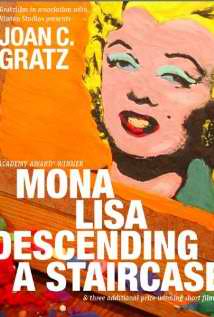
Mona Lisa Descending a Staircase
 I stumbled into this interesting piece as I was looking for new movies to watch. Since The Artist was such a success, I decided to look for more Academy Award winning films. Watching Mona Lisa Descending a Staircase is a revelation. Youtube people are calling this a 7-minute Art History lesson, specifically, I think this is a 7-minute Introduction to Modern Art History. I can’t wait to show this to my students.
I looked this up further and I saw Joan Gratz’s website. Apparently, she is “An accomplished director, artist, and animator, Joan Gratz pioneered the animation technique known as claypainting.Working with bits of clay she blends colors and etches fine lines to create a seamless flow of images.” The clay painting work for Mona Lisa Descending a Staircase is very impressive. It’s been a while since I saw art as a subject of shorts. I don’t think I’ve seen similar work and technique applied to Philippine cinema. This won the Academy Award in 1992, 20 years ago. But I am yet to see another film technique for the arts such as this one. I can’t believe this is the first time I am seeing this.
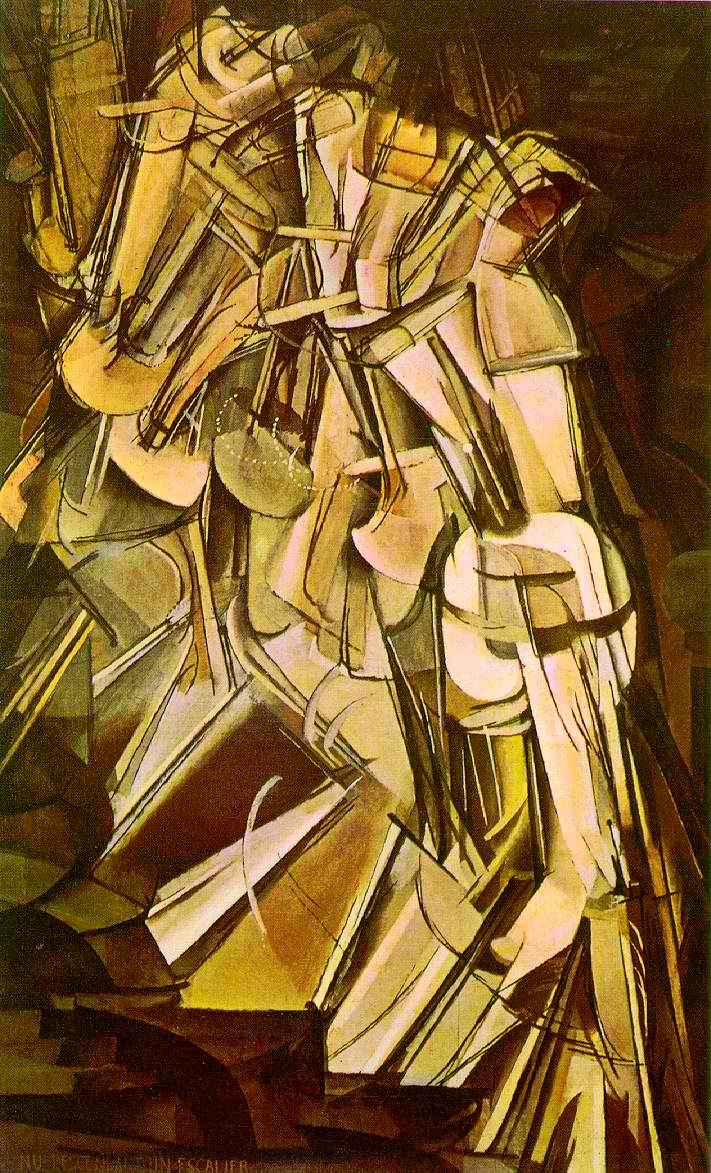
I have seen some complaints in Youtube about the title. Is she looking down on modern art? Where is the staircase? When I first read the title, Marcel Duchamp’s Nude Descending a Staircase first came to mind. After all, it does belong to the same period. Joan Gratz took modern art and told her own story using her own medium. I truly wish there are more works as insightful and as creative as hers. I am now a fan.

Nude Descending a Staircase, Marcel Duchamp, 1912 As I dig further, I saw an earlier work, but dealing with motion. Eadward Muybridge, famous for his motion photography (earlier incarnation of motion pictures), also has a work entitled Woman Going Downstairs. This is a very interesting take, placed side by side with Duchamp’s Nude Descending a Staircase.
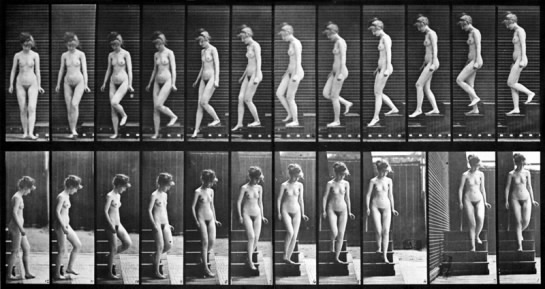
Woman Walking Downstairs, Eadward Muybridge, 1887 A story of art, indeed, can stand by itself. But it is still interesting to look further, dig deeper. You might learn something new. Today, I did learn. Instead of always looking up, sometimes, you just need to descend and walk downstairs. Its quite an interesting day after all.
Related articles
- ‘Cleaning Mona Lisa’ Now Available (appadvice.com)
- Cleaning Mona Lisa (fashioncopious.typepad.com)
- The Man Who Stole the Mona Lisa: the Greatest Art Theft in History (surviving-history.blogspot.com)
- Double Exposure (artnews.com)
- Download Mona Lisa Hq (rvkuuly.typepad.com)
- What Do Marilyn Monroe and the Mona Lisa Have In Common? Lipstick. (bellasugar.com)
- So, she truly was Leonardo’s labour of love (independent.co.uk)
-
Diary of a Grad Student: My Summer Cooking Saga
Last semester was toxic. I had deadlines till Black Saturday. What’s more, I am still working on something exciting up to this date, but I won’t reveal it till it’s done. I hope it turns out great. Needless to say, I was really tired. So I rested.
But then, I grew restless. Someone advised me to go out of my comfort zone. So I tried. But walking around town and eating at random places on my own didn’t work out to well. It’s summer, so it’s really hot. Then I get accosted every block or so, with people asking me where I was going and why was I alone. I go to a mall in the nearest city here and I run into someone I know even in the ladies’ restroom. Ever so often I also get the “are you married?” question as well. Such is the life in a small town.
I considered taking on an internship that opened over the summer. But my mom was adamant. I go home so seldom now. And as I take on my thesis in June, that’s going to be deadly. Also, cousins will be coming home from California, Canada, and Italy. I haven’t seen them in 5 years or so. I can’t miss their visit. Who knows when they will be able to visit again? So I am staying here until June.
What will I do now?
Then I saw some baking materials that my Mom haven’t used in AGES. And I’m so bad at the kitchen to the point that I burn and break stuff on a regular basis, I guess I might work on that. It’s outside my comfort zone after all.

First stop was a recipe that I found online. It’s a peanut butter and chocolate mini lava cake. I doubled the recipe because my Mom thought it was so small. I decided to bake it in a smallish oven. It turned out great. We thought it looked raw-ish so I extended the baking time. Apparently, I need not do so, because it hardens a bit when cooled. Also, it had too much sugar. I wanted to cut it down but I decided to follow the recipe to the letter. Next time I do this, I will half the sugar portion and not add the 5 minutes I did to the baking time. It was a relative success, as the Hershey’s chocolate chips I used was a pretty good base. We enjoyed this cake. And now, I want to make more.

Next up, was pasta night. I have been craving pasta for the longest time here. There is just no pasta that I am used to available here. I even bought a block of parmesan cheese that my Mom was very doubtful of. Turned out it was worth it. As well as the bottled pesto that I bought. I know, that is cheating, but there is no fresh basil in the supermarket. So, that is that. I made two pastas in one night because they might not appreciate the pesto cream pasta I was craving. I was inspired by the one in Cibo. So I fixed a sweet red sauce one with sausages. Then for the other option, the cream pesto. Turned out, they like it both! I wanted spaghetti for the meat sauce but apparently, we were out, so I also used the multi-colored vegetable pasta that I intended for the pesto cream. I played this by ear, working on stuff that we have, rather than working on a recipe. And no, I didn’t burn anything. I worked on memory from Cibo’s pastas.


Next stop is the squash soup. This recipe, i have been adjusting and readjusting so long, I think I finally made it right. The online recipe I found originally calls for the use of chicken stock. We don’t have that in the grocery. Making one from scratch is tedious. I used to put in that Knorr chicken cube, but that is just terrible and unhealthy. I do not like msg on my food. So I adjusted the milk and cream with the squash and did without the chicken. I think it’s pretty good, especially with nutmeg. Cooking the squash in extra virgin olive oil also adds a lot of healthy flavor. It’s the same case with pasta. Yum on a warm summer night. Or on any night.

The cooking saga continues. I was contemplating on making brownies or cookies, but then my Mom found me an easier recipe from a newspaper. The chocolate chip pudding. It was divine. I think I got that one right the first time. Except that I forgot to butter the Pyrex, so the chocolate now keeps on getting stuck there. Aside from that, yum! Pudding is pretty easy, but the use of an electric mixer is a little challenging. I wish I can get one of those professional ones like those seen on cooking shows, but that could get really expensive. There is a lot to one recipe as well, so my Mom bought some to the office. I think I am gaining weight from all this cooking! But I am enjoying it, I never really had the time to learn before.


Finally, just this morning, since we have some white bread left over from the night before… Pudding is supposed to be made from left over bread, but I do not like the idea of eating old bread, so I bought a fresh pack. Well, what can we do with left over bread? Make an egg salad spread for it. I have not eaten one in ages. I wish I know how to make an eggless mayonnaise or an eggless egg salad, butI don’t. Again, I just played with this one by combining sandwich spread, salt, pepper and hard-boiled eggs. Yummy breakfast.

Well, that is it for the cooking saga. I will have more in the coming days. I also have lots of blog backlog that I hope to get published. Happy eating everyone! And here’s to coming out of my comfort zone 🙂
-
Sleeping through the return to action film

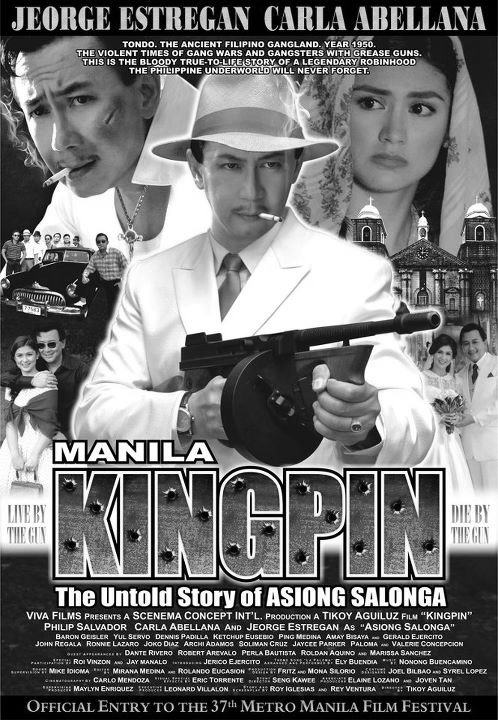
I wanted to write an intelligible review of Manila Kingpin: Asiong Salonga. I really did. It’s the first film that I watched in 2012. But, I had a cold that day. So I took some cold medicine. I’ve watched movies while sick before. I was also accompanied by a friend, he was actually the one who took me to the movie in the first place. So, after some soup and stuff, we went to this nice theatre at EDSA Shangri-la Mall. I was actually excited.
I try not to read reviews of movies I plan to watch, so my opinions will be untarnished. I didn’t really know it would be in black and white, and I thought that was quite a nice idea. After a few minutes of monochromatic gunshots, I did something that I have never done inside the theatre… I FELL ASLEEP! I missed about half of it, the middle part. I remember waking and hearing gunshots, then snoozing at it all over again. (That was really embarrassing.)
I never thought I would write about it, but I decided to write about the films that I have seen this year, all of it. For some reason, I really want to do that. Whether I keep at it is still a matter to see. But as of now, it’s what I will try. Though of course, I’d try to avoid watching movies while sick. Aside from wasting money, it’s embarrassing to my companion (if I am with one) and very much unsafe if I am alone (which I usually do half the time).
What do I remember of Asiong Salonga then? Using the monochromatic scheme is an interesting concept, but I feel that it’s unnecessary for the entire film. I never really got to decide. But it does add to the spaghetti-western effect. The problem is that spaghetti-western is not a very good genre. I guess, at least there is an attempt to something different, which is a rare event in itself in Philippine cinema. That is a good sign. Did they manage to contemporanize the spaghetti-western? From what I’ve seen, no, not really.
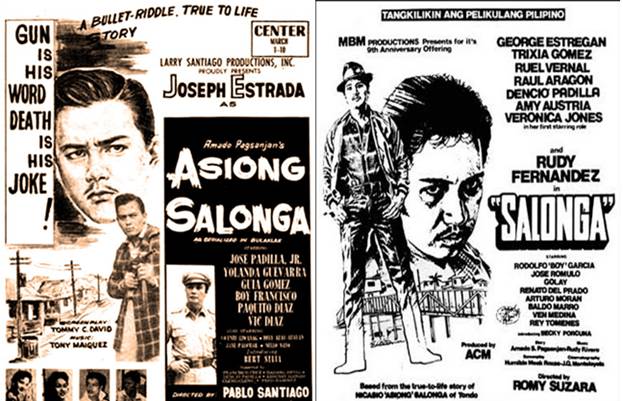
The emotions felt too contrived and stiff. Historically, Philippine action films are like that. I haven’t seen the Estrada and Fernandez incarnations yet, but from what I have experienced in the action genre, they are generally stiff with the obvious attempt at “Masculinity”. I wish they managed to let go though, get some real emotions in there. Maybe Baron Geisler as Asiong Salonga would’ve been a better choice. (I’ve read that online somewhere.) Geisler may be a controversial actor, but his acting skills does the job effectively. It may have given some passion and emotion to Asiong.
As for the women here, I’d rather not get into that. They played the stereotype. Part of the failure to contemporanize the genre is that they never got out of the early trappings of it. This may have been a weak attempt to bring back the action film, but at least its a start. Action films may still have a place in the contemporary world, but filmmakers need to have a consciousness to make it contemporary. They should escape the limitations and trappings of the genre to make it a critical part of contemporary film-making. It’s pointless to just go back to the genre without contaporanizing it, it fell into obscurity because of its limitations in the first place. If action is to take center stage again, they need to do something different.
Reading Youtube comments on the trailer is enlightening, amidst all the pointlessness. Yes, there may be a danger to the glorification of the world of crime and criminals, but as long as we can teach our society what is real and not, then there isn’t much problem. The problem is the quality of story-telling in cinema. I know, I know, I only managed to stay awake in the beginning and end, but isn’t it supposed to be the best part anyway? I was awake for the climax at least.
Should the action genre be revived in Philippine cinema? Definitely. Should they follow the path of earlier action films? NO. Our film makers need to do something to make it part of our film-watching lives once again, not as a nostalgic nod to the glory of the past. (While they’re at it, they should also avoid the controversies such as the ones surrounding this film. Really, they couldn’t be any more ridiculous than that.) Maturity, perhaps is key to bringing back the action. I look forward to that. I won’t fall asleep next time, I promise.
Related articles
- Manila Kingpin: The Asiong Salonga Story Ranked 6th Place in the Box Office but Wins MMFF 2011 Major Awards (kalongkong.wordpress.com)
- Happy New Year! (earlmguevarra.wordpress.com)
- Pinoy Gangster/Action Movie is Back! (kalongkong.wordpress.com)
- Manila Kingpin: the Asiong Salonga Story (2011) (kingdelrosario.wordpress.com)
- Zona: A Book About A Film, About a Journey To A Room ~ Geoff Dyer (chazzw.wordpress.com)
- Adrenaline a Telluride MountainFilm Festival on Tour at WaterColor Inn & Resort (prweb.com)
- Enteng Ng Ina Mo Dominates 2011 Metro Manila Film Fest’s First Two-Day Gross; Manila Kingpin: The Asiong Salonga Story Upsets Ticket Sales! (entervrexworld.wordpress.com)
-
Wishing for more poetry
I wish I was a poet. Or I have at least given the time to develop my poetry. I suppose every person has the ability inside them. We can’t help but have poetry in our lives.
I saw a goat, standing proudly on a mound of earth, like a small hill. It gives the appearance of contemplating the surrounding, amidst the setting sun. I would have taken a photograph, had I a good camera with me. But in a pure, silent moment, I watched the goat watching the sunset.
I ran into children. I have never been more afraid of children than those that I have encountered here. Once I have been struck by a stone by them. I have seen them chase a family on goats once. I have almost intervened, but I feared them. Instead of toys, they carry sticks and stones. They chased the family of goats, hitting them, shouting at them. I used to fear goats too, until I realize they are more afraid of me than I of them. I also learned that they are among the gentlest creatures on earth. Even as they are stuck, they never attacked back. They just ran. The children ended the chase when the smallest boy picked up an enormous rock, much too heavy for his slender body, and shouted with the loudest and purest contempt and hurled the rock towards the goats. It barely flew a feet, but we all froze in shock, even the goats. Then the children left, the mother goat herded her children back into the grassland, and I kept on walking. I didn’t know what just happened. But I shall never forget it.
Why do these children have sticks and stones instead of toys? Where did we go wrong? I have heard them utter the harshest curse words, in the harshest tone that in my worst day I could never speak so cruelly. They spit such words as if it’s the most natural thing on earth. I fear these creatures that are half my size. I know for a fact they could hurt me more than I could ever hurt them. Up to now, I don’t know what to make of that.
I don’t know what to make of my new surroundings. I leave this place in a few weeks. I don’t know where I would go next. Maybe this is the last time I would naturally encounter goats and children in my everyday existence. I still haven’t made sense of all these, then I will go into a new place again. The story of my life in the past decade or so. And my guess is, it would still continue, for another decade or so.
Reading this, I really do wish I had more poetry in me.
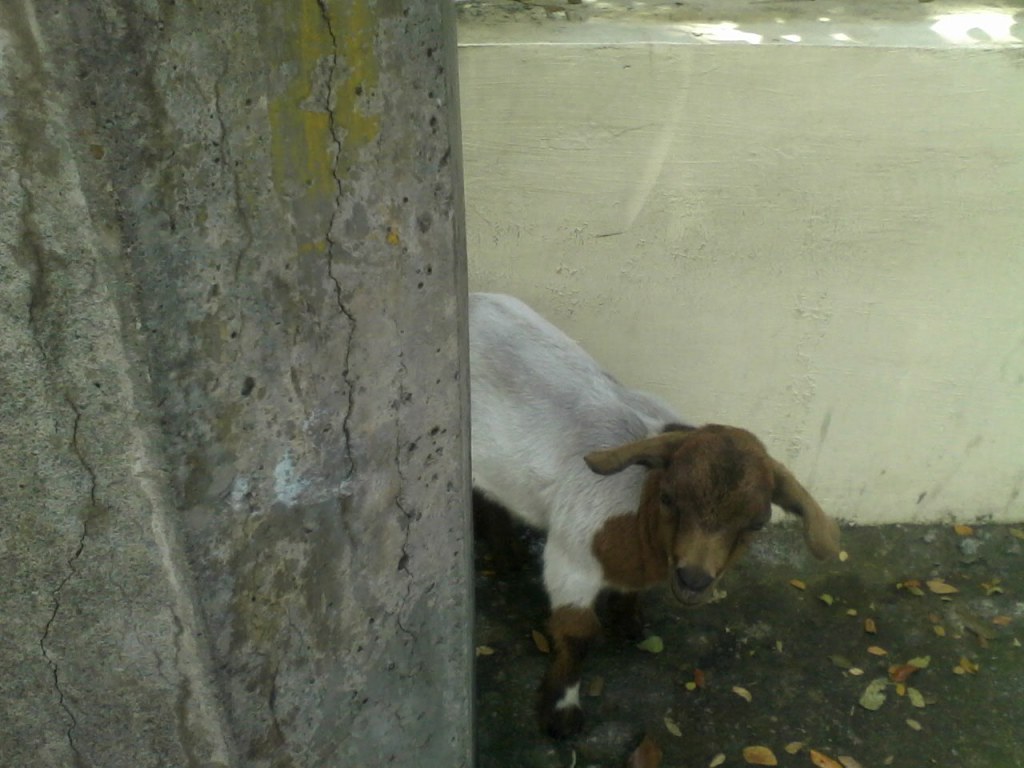
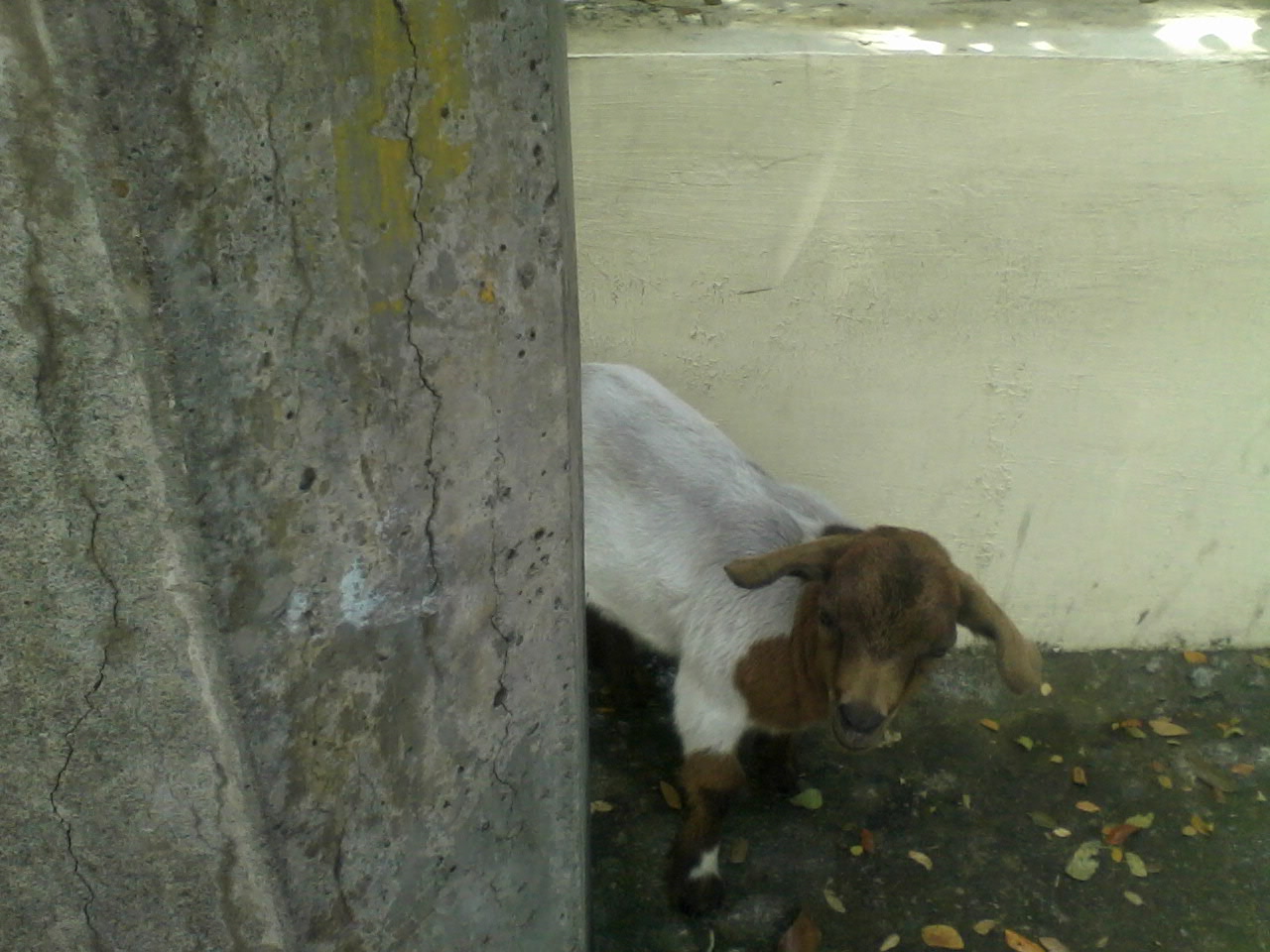
This is a goat I once found near the College of Fine Arts. I found it there in the morning and still in the afternoon when I got back. It was such a tiny little thing that was so afraid of me.
Related articles
- Mama wants Llamas (bethchristopher.com)
- Succeed (debramoolenaar.wordpress.com)
- Poetry Archive: Volume II Issue 14 (shinecycle.wordpress.com)
- Poetry Contest! (alivingoddity.wordpress.com)
- When I Write Poetry (samyueruiriamuzu.wordpress.com)
- Goats wearing sweaters dropping cuteness bombs? Of course you know now, this means war (cafewitteveen.wordpress.com)
- Poetry (alittlewriterslife.wordpress.com)
- Look, It’s a Goat Eating Pizza [Animals] (gawker.com)
- Amazing Pizza Goat Mystery Solved [Video] (gawker.com)
-
Art Conversations: Ideas and Aesthetics of Modernism
Modern ideas are often applied within the aesthetic imagination of the Filipinos. F. Sionil Jose’s obsession with the significant form and the greatness of the art of the masters echoes Clive Bell in his The Aesthetic Hypothesis, “It is the mark of great art that its appeal is universal and eternal. Significant form stands charged with the power to provoke aesthetic emotion in anyone capable of feeling it… Great art remains stable and unobscure because the feelings that it awakens are independent of time and space, because its kingdom is not of this world… The form of art are inexhaustible; but all lead by the same road of aesthetic emotion to the same world of aesthetic ecstasy” (Bell online). Poleteismo, being something which is not covered with such “great art” becomes a subject of controversy and even ridicule of those that remained left in the time and politics of the “great masters”.
The controversy also shows the pre-conception of a bourgeois, educated perspective in the appreciation and critique of art. Isagani Cruz writes in his column, ““Kulo” was clearly too sophisticated for the general Filipino audience. That is proven by the controversy itself. Even the rich and famous who should know better because they have had the chance to visit the largest museums in the world reacted as though they had never travelled. Because they were miseducated, a number of Catholics understandably could not even distinguish between Church and State, art and religion, protest and violence” (online). This echoes the closed and elitist art world that is reflected in Jurgen Habermas, in his Structural Transformation of the Public Sphere, “The bourgeois avant-garde of the educated middle class learned the art of critical-rational public debate through its contact with the “elegant world”. The courtly-noble society, to the extent that modern state apparatus became independent from the monarch’s personal sphere, naturally separated itself, in turn, more and more from the court and became its counterpoise in the town. The “town” was the life center of civil society not only economically; in cultural political contrast to the court, it designated especially an early public sphere in the world of letters whose institutions were the coffee houses, the salons, and the Tischgeselleschaften (table societies)” (1747). It appears that popular critics still believe that there are still the salons and table societies that may house more progressive art forms rather than exposing the general public to such artworks. This elitism and close-mindedness in art discourse fails to enrich the Philippine art discourse and does not address the issue of aesthetics valuation of the Filipinos.
Instead of daring to delve into the aesthetics of conceptual art, art writing in the Philippines are stuck in the ideal, reverting once again to beauty. GWF Hegel’s Philosophy of Fine Arts would become more resonant rather that any exploration or consideration for conceptual art. He says, “Only in the highest art are Idea and presentation truly in conformity with one another, in the sense that the shape given to the Idea is in itself the absolutely true shape, because the content of the Idea which that shape expresses is itself the true and genuine content. Associated with this, as has already been indicated, is the fact that the Idea must be determined in and through itself as a concrete totality, and therefore possess in itself the principle and measure of its particularization and determinacy in external appearance” (Hegel 101). They look into the beauty and truth of an idea of the artwork, rather than its corporeality in everyday life and Philippine society, “For the Idea as such is indeed the absolute truth itself, but the truth only in it’s not yet objectified universality, while the Idea as the beauty of art is the Idea with the nearer qualification of being both essentially individual reality and also an individual configuration of reality destined essentially to embody and reveal the Idea. Accordingly it is here expressed the demand that the Idea and its configuration as a concrete reality shall be made completely adequate to one another. Taken thus, the Idea as reality, shaped in accordance with the Concept of the Idea, is the Ideal” (100). Such an ideal pervades the imagination of art discourse and art practice that unfortunately traps other forms of discourse and practice. There is limited growth in simply searching for the ideal and never even challenging the concept of this ideal that is assigned, even forced into, upon the Filipinos.
The intolerance of varying opinions on art is reminiscent of Immanuel Kant’s The Critique of Judgement wherein the judgement on “taste” is given importance and such concepts were invoked by various critiques published during the controversy. Such elitism of taste is widely invoked by writers and columnists, particularly, again, by F. Sionil Jose as he writes, “Now, let me contribute my two pesos worth in this melee. Bear in mind, I am an octogenarian. I have seen almost every major art museum in the world. I operated one of the earliest art galleries in Manila, Solidaridad, from 1967 to 1977, with the intention of giving our art a Filipino and an Asian face. I am also a novelist, and, as we all know, literature is the noblest of the arts. I am enumerating these not just to establish my bonafides but to show that I know whereof I speak. The exhibit should not have been shown at the CCP. If submitted to my old gallery, I would have rejected it. It is not — I repeat — it is not art! It is an immature and juvenile attempt at caricature. I have not seen the exhibit itself but I have seen pictures of it and they are enough to convince me of the validity of my conclusion” (online). Though there are differences in opinion, published works seeks the agreement of everyone and see the conditioning of “taste”. Kant states that, “The subjective necessity attributed to a judgement of taste is conditioned. The judgement of taste extracts agreement from every one; and a person who describes something as beautiful insists that every one ought to give the object in question his approval and follow suit in describing it as beautiful. The ought in aesthetic judgements, therefore, despite an accordance with all the requisite data for passing judgement, is still only pronounced conditionally. We are suitors for agreement from every one else, because we are fortified with a ground common to all. Further, we would be able to count on this agreement, provided we were always assured of the correct subsumption of the case under that ground as the rule of approval” (Kant 94). Kant also argues that “The necessity of the universal assent that is thought in a judgement of taste, is a subjective necessity which, under the presupposition of a common sense, is represented as objective. In all judgements by which we describe anything as beautiful we tolerate no one else being of a different opinion, and in taking up this position we do not rest out judgement upon concepts, but only on our feeling. Accordingly we introduce this fundamental feeling not as a private feeling, but as a public sense. Now, for this purpose, experience cannot be made the ground of this common sense, for the latter is invoked to justify judgements containing an ‘ought’. The assertion is not that every one will fall in with our judgement, but rather that every one ought to agree with it” (95). This insistence upon the belief of one that should be subscribed to by others is the discourse that is espoused by F. Sionil Jose and those who dealt with the issue. Such matters of taste and those with supposed superior or higher standards of taste is advocated through the popular media as opposed to those who have a limited access upon it.
Part IV of Art Conversations. See Part I, Part II, and Part III.

Not to be reproduced by Rene Magritte, 1898-1967, Collection EFW James, Sussex Related articles
- Kitsch (pbmo.wordpress.com)
- Beyond Good and Awful: Criticism in the Amazon Age (entertainment.time.com)
- Beyond Good and Awful: Literary Value in the Age of the Amazon Review (entertainment.time.com)
- PAL.Chapter 21. The Moral Dimensions of Aesthetic Experience. pp.554-577 (biffnet.org)
- Quora answer: What’s so special about philosophers like Kant, Wittgenstein, and Nietzsche? (thinknet.wordpress.com)
- First Class of Aesthetics (wittgensteininmycloset.wordpress.com)
- Survival of the Beautiful by David Rothenberg: review (telegraph.co.uk)
- A thread of thought (thehindu.com)
-
Diary of a Grad Student: Leap Year, Cartoons, and Opera

Google Doodle for Rossini and Leap Year I looked to the coming of the leap year with dread. It was supposed to be the deadline of my thesis proposal’s first draft. But, maybe the leap year has its magic. Alas, the deadline was extended. With a sigh of relief, I wasted time again.
If you’re a reader of this blog, you will know of my fondness for google doodles. I wanted to write about it during the day, but as it was, I was terribly busy. My voices column went out in The Shakespeare Standard, then spent part of the day procrastinating. It’s an extra day of the year after all, right?
And so it was, it was also the 220th birthday of Gioachino Rossini. Unfamiliar with his music? You’re not. Listen to this…
The things we learn everyday, right? Gives us some Loony Tunes and Lone Rangers memories. I was reading comments on YouTube, saying that if Rossini was alive, he’d be so rich because of all the royalties due him. They’re right, of course. It’s probably why older, popular cartoons choose “classic” music instead of contemporary ones. Not that I’m saying it’s a bad thing. At least children of the generation are familiar with the music and are regularly exposed to it. Nowadays, sigh…

Who didn’t have cowboy fantasies? Especially after listening to that? And of course, in another incarnation, is Mickey Mouse! As I said, it’s very educational and helpful for children to listen to such music. I grew up with it. It makes me sad that children today rarely see this. It’s just one spectacle after another today.
Going back to Rossini, he’s also the composer of The Barber of Seville. Yes, you are familiar with that. It’s the first part of The Marriage of Figaro trilogy. Yes, it’s good with cartoons too. I only wish we could still be as cultured as before. Even cartoons were thinking cartoons. We were geeks without even knowing it.
Here’s a leap, to another year.
Related articles
- Google doodle twofer: Leap year, cartoon opera composer (digitallife.today.msnbc.msn.com)
- Gioachino Rossini and “Leap Year” Google Doodle (iused2be.wordpress.com)
- Gioachino Rossini Google Doodle Leap Year 2012 (ktrmurali.wordpress.com)
- Google Doodle hops into leap year (news.cnet.com)
- Google’s leap day, Gioachino Rossini b’day doodle (ibnlive.in.com)
- Google-Doodle Honors Gioachino Rossini – Leap Year (femaleimagination.wordpress.com)
- Frog Google-Doodle honors Gioachino Rossini/Leap Year (techie-buzz.com)
- GIOACHINO ROSSINI ‘LEAP YEAR’ GOOGLE DOODLE: A high note! Musical ‘Leap’-frog logo celebrates Italian composer’s birth (elizabethkarlsson.wordpress.com)
- Google’s Frog Doodle (presurfer.blogspot.com)
- Google Leap Day doodle celebrates composer Giochino Rossini (slashgear.com)
-
Art Conversations: The Concept and Question of “Beauty” and “Sublime”
As revealed in the discussions on Poleteismo, Filipino people are still looking for beauty in art. Numerous articles are looking, not just for beauty but also for the ennoblement of the soul. It almost appears that the Filipino aesthetic valuation and theory remain still with the “great masters” echoed by F. Sionil Jose. In another article by Isagani Cruz, he states that, “Instead of ennobling some Catholics, “Poleteismo” made them commit one of the deadly sins — anger. It made them receive Holy Communion with hatred in their hearts — the sin of sacrilege. It made them judge and therefore made them liable to be judged. It made them throw the first stone even if — let us not be hypocritical — no human beings except Jesus and His mother Mary were born without sin. There is provoking and there is provoking. The kind of provoking that Mideo Cruz did was not justified by the creative piece that he did. Critics always say that an artist should “earn” the effect of his or her work. That means that there should be a deliberate, successful effort by the artist to achieve whatever it is she or he wants to achieve. No art piece can be conceived simply on the spur of the moment. Every art piece that aspires to be art is always the product of long, careful, profound hard work. Therefore, based on the reception of the work, “Poleteismo” flunked the test of good art. It may be art, but it is bad art. It may be art, but it is not Art” (online). This kind of discourse becomes the popular and the norm for the Filipinos, which ironically, echoes some of the earliest aesthetic discourses. Plotinus, in his Ennead One: Sixth Tractate, echoes the same sentiment, “Such should be the experience of beauty, amazement, pleasant consternation, yearning, ardour, and excitement mixed with pleasure” (50). Such belief is also reflected by Francis Hutcheson in An Inquiry into the Origin of Our Ideas of Beauty and Virtue, “Our sense of beauty seems designed to give us positive pleasure, but not positive pain or disgust” (97). These are early philosophies of aesthetics that are subscribed to by the popular writers and are therefore what most Filipinos are exposed to.
Looking back, one of the earliest theories on beauty is that of the Greeks. Their understanding of beauty focuses on the “1. wonderful and supreme; 2. as beyond all measures and distinctions, related to un-limit; 3. as pertaining to all things; 4. as pertaining to the gods and to nature and natural things as well as to human beings and their works, including works of art; 5. as pertaining to finite things, shapes, colors, sounds, thoughts, customs, characters, and laws; and 6. as inseparable from goodness and excellence (arete)” (Ross in Oxford 238). There appears to be a limited understanding of beauty as well as the canons of art in the aesthetic understanding of the Philippines. It is widely believed that there is a standard of beauty and a specific canon that should be followed for art to be considered as art. There is, not only a canon for beauty but also a canon on how art should be perceived. Silvers writes, “Canonical objects accomplish this not by modeling how other works should look (each should be unique) but instead by modeling how we should look at other works; that is, the eye or ear or sensibility of the prospective connoisseur is cultivated by exposure to art that the admiration of previous generations of connoisseurs has marked as canonical (Oxford 335). This kind of perspective was perhaps part of what inspired F. Sionil Jose in citing his experiences of seeing the works of great masters from great museums that make him an expert on judging the work as something which is not art. The discernment from a photograph is enough for him to determine that he can actually do the work and therefore declare that it is not art. Again, as this is a word by a National Artist, it pertains to a canonical valuation as well as a canonical perspective on beauty.
On judging beauty, David Hume’s Standard of Taste should be looked into. He says that, “It is well-known, that in all questions, submitted to the understanding, prejudice is destructive of sound judgement, and perverts all operations of the intellectual faculties: It no less contrary to good taste; nor has it less influence to corrupt the sentiment of beauty (Hume 494). Ironically, Hume also points out that not everyone can properly judge artworks as they may be lacking in their taste. He further states that, “Thus, though the principles of taste be universal, and nearly if not entirely the same in all men; yet few are qualified to give judgement on any work of art, or establish their own sentiment as the standard of beauty. The organs of internal sensation are seldom so perfect as to allow the general principles their full play, and produce a feeling correspondent to those principles” (494). The belief that there are standards to be followed and that not everyone is capable of having or discerning that standard is prevalent among the Filipino popular writers. For F. Sionil Jose and the others, it is the great masters of the art world that are the standards of beauty and greatness of artworks. Again, as F. Sionil Jose writes, “First, what is art? I go by this simple definition: Being an artist myself although I work with words not with the brush — if I can do it, it is not art. If I were to do the Jesus Christ commentary in oil, I would have used imagination, craftsmanship, and most important — originality. None of these basic qualities are in the CCP exhibit” (online). There is a canon of the medium–the oil, and not only that, but also the canon of looking at and examining the medium. Though there is a welcoming online discourse on the matter, it is still those with a larger voice that is given the larger space to express their views, as in the case of columnists and editors; more than the ordinary netizen or even the academics and theoreticians.
There is also the pervading belief that art should be pleasurable because of its beauty. Perhaps it is where aesthetic education of the Filipinos today came from and eventually got stuck there. Friedrich Von Schiller in his essay On the Aesthetic Education of Man, he states that, “For whole centuries thinkers and artists will do their best to submerge truth and beauty in the depths of a degraded humanity; it is they themselves who are drowned there, while truth and beauty, with their own indestructible vitality struggle triumphantly to the surface” (Schiller 580). The Cultural Center of the Philippines is still stuck in “The true, the good and the beautiful” that the aesthetic education of Filipinos became stunted in its growth. The Imeldification that struck CCP from its founding in 1969 until the present day was never truly replaced. Risqué, challenging and confrontational artworks that do not fit “the true, the good and the beautiful” suffers. The publicity received from the Imelda visit and her comments on KKK (Katotohanan, Kabutihan at Kagandahan) struck a nerve, not just on the artworld but on the Filipino public. Once again, this woman was listened to, especially as newspapers, such as Inquirer and Sun credits her for the closing of the exhibition. This discourse on beauty is traumatized and afraid of disgust and merely looks into pleasure. These valuation is where the aesthetic value of the Filipinos, even the institutions got trapped in. It is a good philosophy to a certain extent, but far too narrow and limited. It may apply more to the 19th century Filipino oil paintings but hardly to conceptual and popular art that numerous artists are exploring in the present time. Contemporary context of art will hardly apply to the concept of “the true, the good and the beautiful.”
In the discourse of beauty and the sublime, the sublime was hardly looked into within the popular discourse. Mideo Cruz’s Poleteismo would fit more into the theory and aesthetics of the sublime, rather than the concept of beauty that was insisted upon by the popular media. Guy Sircello in Is a Theory of the Sublime Possible? poses the possibilities of the sublime discourse that might also be useful in the discourse of Poleteismo. He first distinguishes the tripartite aspect on the issue of the sublime, “first, there are experiences of the sublime or alternatively, sublime experiences. Second, there is what I call the sublime discourse. And third, there is talk about the sublime (Sircello 541). In this context, he poses some assumptions, “The first assumption is that only sublime experience properly motivates sublime discourse and therefore that only sublime experience is the proper and ultimate subject matter of talk about the sublime” and “My second assumption is that sublime experience can and does occur in a large variety of personal, cultural, social and historical contexts, all such contexts also inevitably involving experience that is not specifically sublime” (542). He formulated a theme on the sublime which he refers to as an “epistemological transcendence” (542) that is supposed to validate a sublime discourse that can somewhat be quantified without falling into the trap of universalism. Despite this attempt, there are still various topics that needs further exploration, “(1) what it might mean, (2) whether it is indeed presented in sublime experiences, (3) what, if so, there might be about such experience that could present an epistemological transcendence of that form, and finally, (4) whether epistemological transcendence as so interpreted is warrantable or believable are tasks–among many other tasks–at least for more talk about the sublime, if not for a theory of the sublime. This exploration of the subliminal discourse will be much useful in Mideo Cruz’s work, particularly in the experience, discourse and talk that the artwork and the surrounding controversies inspired.
Part III of Art Conversations. I am working on this topic. I am posting it here, hoping for a response from those who wants to engage in this conversation.
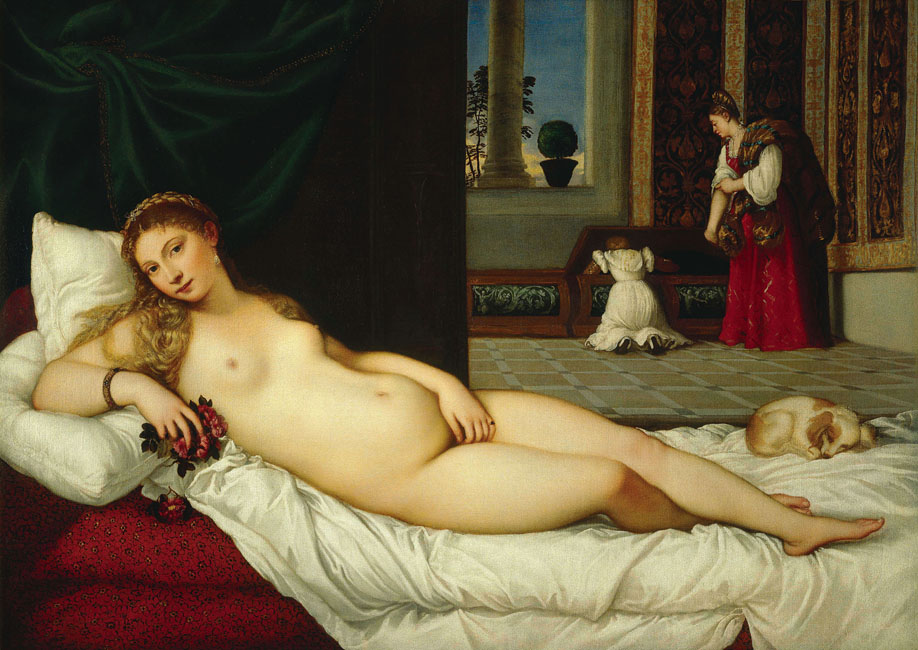
Venus of Urbino by Titian Related articles
- Art Conversations: Critical Art Practices in the Philippines (portiaplacino.com)
- Art Conversations: What is Art? Problems of Defining Art (portiaplacino.com)
- He who is bullied has amnesia. (geniusrewired.wordpress.com)
- Because it has always been a déjà vu. (geniusrewired.wordpress.com)
- Art Appreciation: Ian Valladarez, Filipino Artist (shaicoggins.com)
- His blackboard and chalk of blood and road. (geniusrewired.wordpress.com)
-
Art Conversations: What is Art? Problems of Defining Art
The earliest cries on the aesthetic value of Poleteismo is its position as art. It is the root cause of the controversy and debate when the issue of religious offense was set aside. Various definition of art was propositioned from various sectors, including two of the most popular and opposing editorials–F. Sionil Jose’s Hindsight: The CCP Jesus Christ exhibit: It ain’t art and Raul Pangalagan’s Freedom for the thought we hate. F. Sionil Jose states that, “First, what is art? I go by this simple definition: Being an artist myself although I work with words not with the brush — if I can do it, it is not art. If I were to do the Jesus Christ commentary in oil, I would have used imagination, craftsmanship, and most important — originality. None of these basic qualities are in the CCP exhibit. Our problem as art patrons and viewers is that we have somehow lost the capacity to discern, to criticize, and also to remember. We go back to the yesteryear, the masters we studied in school, the sculptors of ancient Greece and Rome, the classical writers as well, Homer, Cervantes all of them. Even without the superior implements and materials today, the many varieties of oils for the painters, and the modern cutting instruments powered by electricity, the artists of the ancient world were able to produce those sculptures and paintings that continue to delight us with their fine detail and their exquisite form. Now, we say that there is a new way of looking at things and I agree, but the old verities remain: that artists are craftsmen, they are a special people, for not everyone can draw, or write” (online). Meanwhile, Raul Pangalagan cite’s that, “The fourth fallacy is that Poleteismo deserves less protection because it is lesser art, a “mere” collage, in contrast to, say, a “real” painting. What is art, after all? If you have to ask, Rambo, you’ll never know. The CCP’s curator selected only well-known artists, and this exhibit has been previously housed at two universities, the Ateneo de Manila and the University of the Philippines” (online). Obviously, each has a position in the artworld enough to enable them to write a these columns. It is recognized by both that to a certain extent, art has to be validated, particularly, by the institution that concerns it. F. Sionil Jose’s position, certainly places himself as an institution that can verify the art as an art, higher than the institution of the CCP, comparing the work to ancient “masters”. Meanwhile, Pangalagan recognizes the CCP as the institution that can show and decide on art, as well as recognizing other institutions–Ateneo de Manila University and the University of the Philippines as having the valid voice in granting the label of art.
As demonstrated, one of the key concepts that is brought by the controversy is the very root of artistic and aesthetic discussion–the problem of defining art. The very basic concept that will be discussed in an art class is the definition of art. What is art? Lengthened study on the subject will not bear a specific definition on the matter. Until the present time, there are numerous debates on this issue. It is most beneficial in the matter at hand to go back to the institutional definition of art, especially as espoused by three theoreticians–Morris Weitz, George Dickie and William L. Blizek. Though there are various points that they critique on one another, there is a basic principle that is obvious–the definition of art is highly relevant on the institution that it resides in. Aside from the galleries and auction houses that highly contributes to the market of value of art and its place in the art world, it is the academic institution that theorize, research and establish the concept of art. It is upon the book, journals and other writings published by credible writers, academics, critics and historians that largely determine the concept and definition of art.
Morris Weitz in his article The Role of Theory in Aesthetics focuses on the determination of the nature of art elucidated in the definition of it, thus answering the basic question of What is art? The definition is formulated by the identification of the necessary and sufficient properties of art (Weitz 191). He compares the definition of art with games wherein there is no common properties, instead there are strands of similarities. He says, “Knowing what art is not apprehending some manifest or latent essence but being able to recognize, describe, and explain those things we call “art” in virtue of these similarities” (195). Weitz points out that the concept of art is an open concept and its character cannot ensure a solid set of defining properties (195-196). In the study of aesthetics, he says, “To understand the role of aesthetic theory is not to conceive it as definition, logically doomed to failure, but to read it as summaries of seriously made recommendations to attend in certain ways to certain features of art” (198). For Weitz, aesthetics would apply more into the judgement of what makes a work of art good rather than what makes art, in which the exploration would likely not work.
George Dickie on the other hand goes beyond Weitz’s “generalization argument” and “classification argument” and actually gave an institutional definition of art in his article What is Art? An Institutional Analysis (207). He defines an art work as “(1) an artifact (2) a set of aspects of which has had conferred upon it the statues of candidate for appreciation by some person or persons acting on behalf of a certain social institution (the art world)” (212). He also defines the people who belong into that art world, “The core personnel of the art world is loosely organized, but nevertheless related, set of persons including artists (understood to refer to painters, writers, composers), producers, museum directors, museum-goers, reporters for newspapers, critics for publications of all sorts, art historians, art theorists, philosophers of art, and others. These are the people who keep the machinery of the art world working thereby provide for its continuing existence. In addition every person who sees himself as a member of the art world is thereby a member” (212-213). This definition clearly has a renewed interpretation with the online world as anyone can have and does have a voice on the art world and therefore may also declare one’s self as part of it. This is also the main point that William L. Blizek will challenge.
In An Institutional Theory of Art, William L. Blizek challenges Dickie’s concept on the membership int he art world and the role that a person plays in that art world. His main objections are– “(a) It will be difficult to determine which objects in the world are works of art if anyone who ‘sees himself as a member of the art world’ can transform any object into a work of art simply by treating it as a candidate for appreciation” (219) and “(b) Many objects which are not generally considered to be works of art might be included in the realm of art simply because someone had at one time or another conferred upon them the requisite status” (219). This challenge applies especially in today’s scene as the mode of communication rapidly changed. Anyone can post anything, as a comment, critique or otherwise that are immediately viewable to a wide public. It may be open to the criticism or agreement of others. How can the conferring upon an object as an art happen by a member of the art world happen in a communication landscape that opens up the conferment to virtually anyone.
The conferment of the art world into Mideo Cruz as an artist and his work as an artwork in largely verifiable. The audacity of the controversy made the conferment of the object into art is the insistence that if there is a large number of people who declare it as non-art makes the object non-art. More importantly, the struggle of power between institutions, from the religious to the political tries to undermine the role of the artworld in the conferment of the artifact or object into an artwork. As previously cited, at least three art institutions verified Poleteismo as art–the Cultural Center of the Philippines, the Ateneo de Manila University and the University of the Philippines. As far as the art institutions are concerned, Poleteismo is art. Can this conferment be undermined by other critics such as F. Sionil Jose, the religious institution and the political institution? Perhaps the conferment of Poleteismo cannot be undermined as an artwork but certainly the threats received including the threats of violence, the removal of funds and the removal of positions was enough to close down the exhibition. The problem is not precisely on the definition of art but the power play between institutions, the art world, unfortunately, having the least power compared to religious and political institutions of the Philippines.
Part II of Art Conversations. I am working on this topic. I am posting it here, hoping for a response from those who wants to engage in this conversation.

Related articles
- What’s wrong with asking “what is art?” (rationalapriori.wordpress.com)
- 1st artists’ village in the Southeast Asia inaugurated in Baler (jasondeasis.wordpress.com)
- The Smiles and Frowns of Mona Lisa (portiaplacino.wordpress.com)
- F. Sionil Jose: A celebrated patriotic writer in a foreign tongue (julianosaur.wordpress.com)
- Public art becomes tourist attraction in India | British Airways – Travel Industry News (travelnews.britishairways.com)
- Just a Repost- Top Schools in the Philippines (graciellealexandra.wordpress.com)
- no absolute skill (flowersociety.wordpress.com)
- Be Happy, Do Your Best, Be Good and Kind (personalbrandingblog.com)
- The Concept of Art (glowbey.wordpress.com)

 Portia Placino