My first day in Berlin, I wanted to find the East Side Gallery, a kilometer or so of what is left of the former Berlin Wall. It was March 17, 2013, St. Patrick’s Day, and David Hasselhoff was supposed to be here in a protest against the destruction of the Berlin Wall. A and I never made it though, we got lost in the S-Bahn, took the wrong train in the wrong tracks (or something like that). It was actually funny. By the time we figured some stuff out, we were too tired and too cold, we just took hot apple cider in Alexanderplatz. I found the East Side Gallery on another day though, through directions given by another A. It was a powerful experience.

I took the wrong exit in the S-Bahn at the Ostbahnhof, so it took me a while and a walk in a tunnel to find it. Eventually, I did find the East Side Gallery. I took the walk from the other side first. The graffiti on this side is more personal, it tells of stories, colors, words, and names. It is not as formal, as the one facing Ostbahnhof. From this vantage point, you can see where the conflict lies. Developers are creeping in on the former Berlin Wall. This piece of land may one day be luxury condominium units. It is highly possible that I may never experience this walk again, as it might take me a few years to get back to Berlin. I kept on wondering how it felt to be divided by this wall, and how it reminds Berliners and every single one of us of the pains and lessons of a time past.

There was still a protest going on, though I am not exactly sure what he is protesting. Is it to save the wall? Is it about this particular image? I don’t speak a word of German, though I wish I did. He is free to do this now. Even if we don’t exactly win what we fight for in this life, it is still a good feeling to have the freedom to protest and resist.

One thing that really surprised me in the early part of the walk is YAAM. I wasn’t exactly sure what it is. I googled it later and saw that this is an Afro-Carribean Artist Community and this is supposed to mimic a beach. Sand and snow isn’t exactly the easiest surface to walk on but it was fascinating. Most of the shops were closed and I just had breakfast anyway, but there were a few places that were open–and they were playing reggae music. Even back then I knew there was something here that reminded me of Bob Marley.
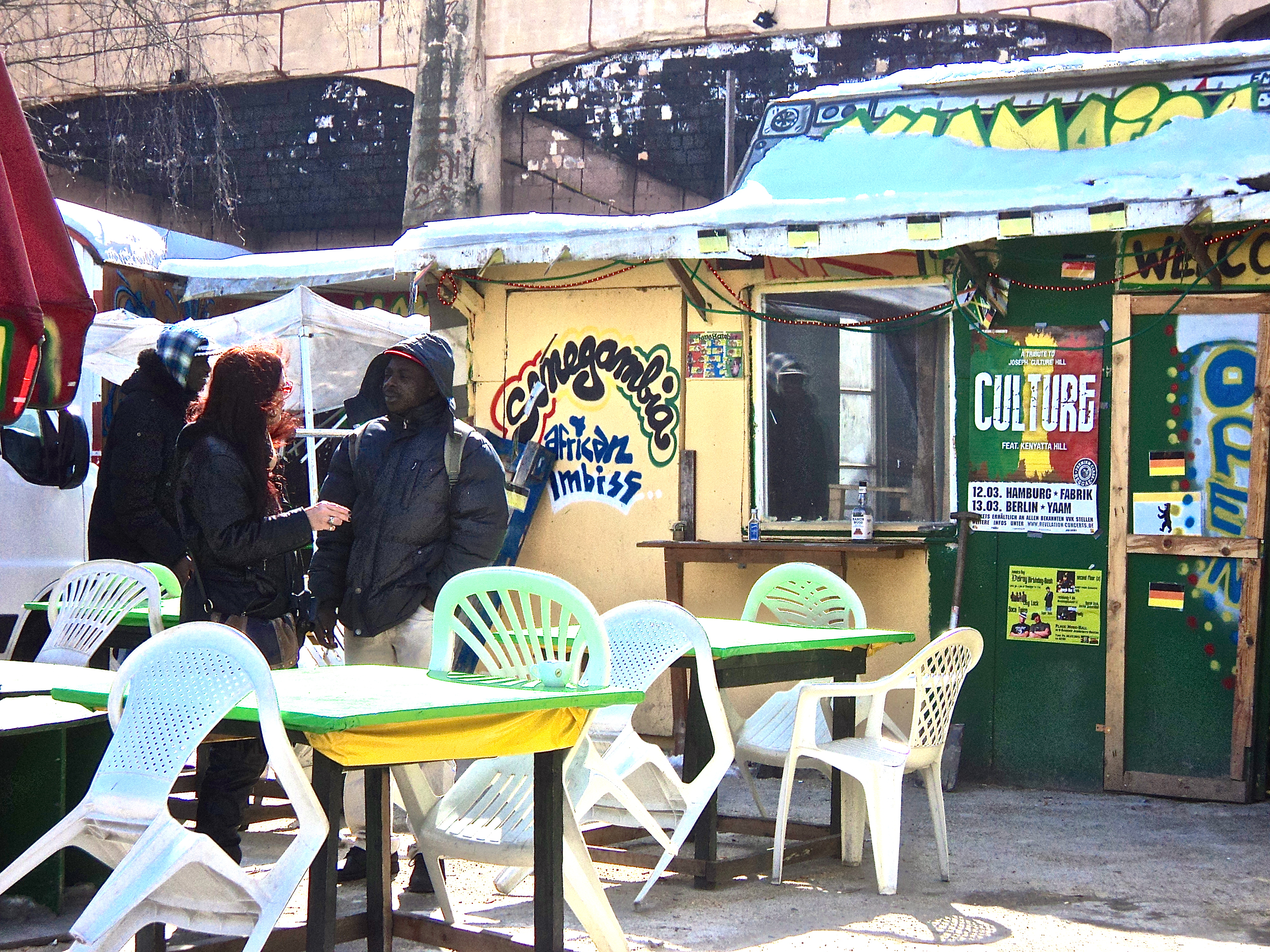
There are a lot more photos I want to show of YAAM, but for now I’d say this–someone called to me, “Don’t fall pretty lady!” I really was having trouble walking in the sand+snow. I was afraid at first, but there were a few people and most of them are nice, and are smiling. And mostly just listening to reggae music. I just never really thought I would find this here.

This is one of the really popular image of the East Side Gallery. I even saw it in my Lonely Planet Guide. There’s a lot of people trying to take their photo with the wall. But this day was so cold, my hands were shivering and I can barely hold my camera steady. Good thing I just took my handy digicam for this travel. Its small, light, and capable of capturing the details and colors of my experiences. It is the memory that I try my best to provide. I can say I have never had so much visual and color overload in my life. It was a kilometer of colors, art, stories, histories and emotions–on two sides of the wall.
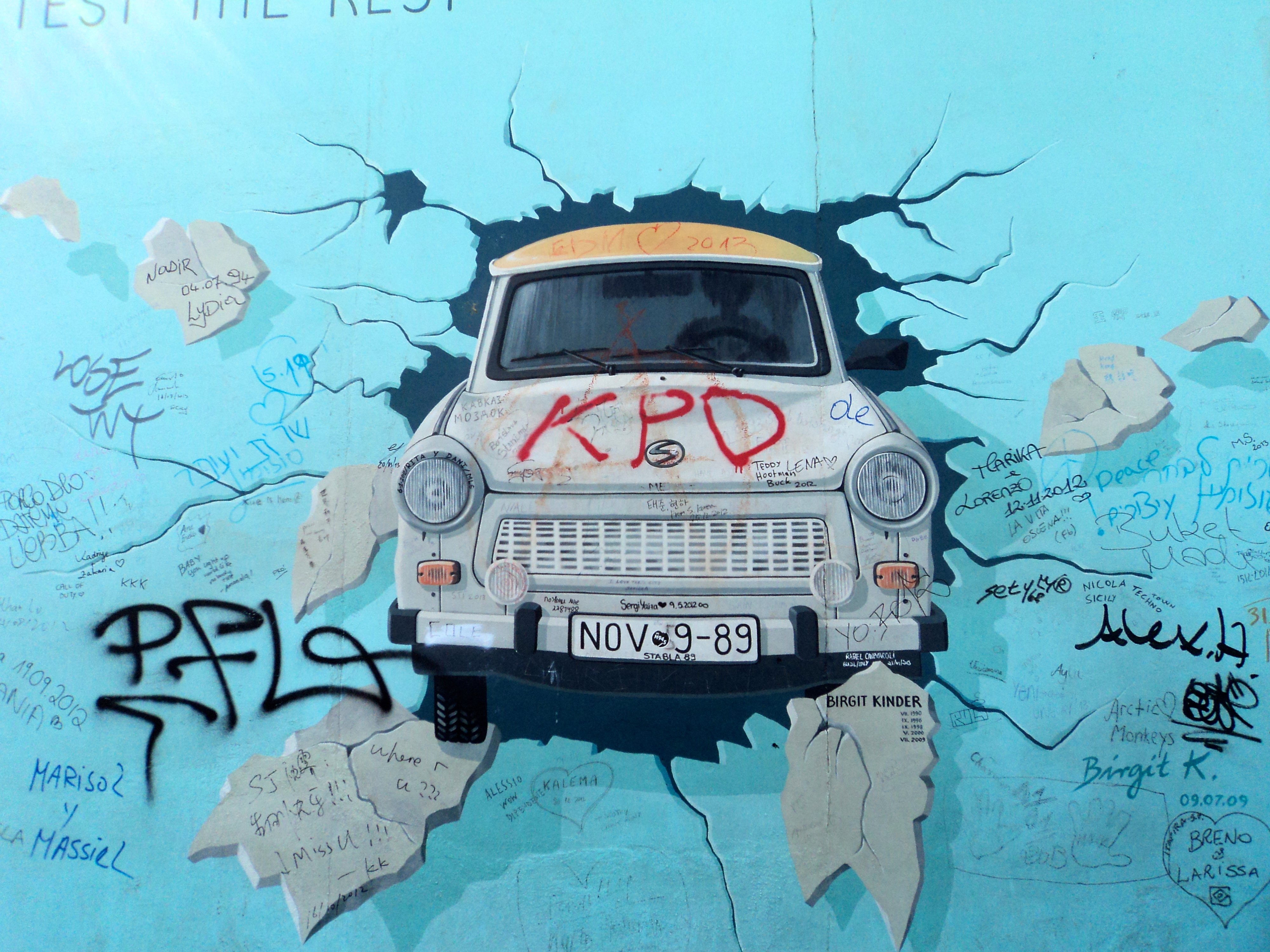
It would take several blog posts to cover the East Side Gallery alone. I know other people has taken a lot of photos of the wall, but I can’t help it, I don’t think I can leave these images behind. Given the knowledge that this wall may disappear before I can go back, I want to tell the stories as much as I can. I’ve only ever seen graffiti like these in photos, but it really looks three-dimensional. The nameplate on the car tells the story of ’89 too. And from the graffiti that added to the art, this is the wall that keeps on evolving with the times. Once it was used for repression, but now it is a space for artistic freedom.
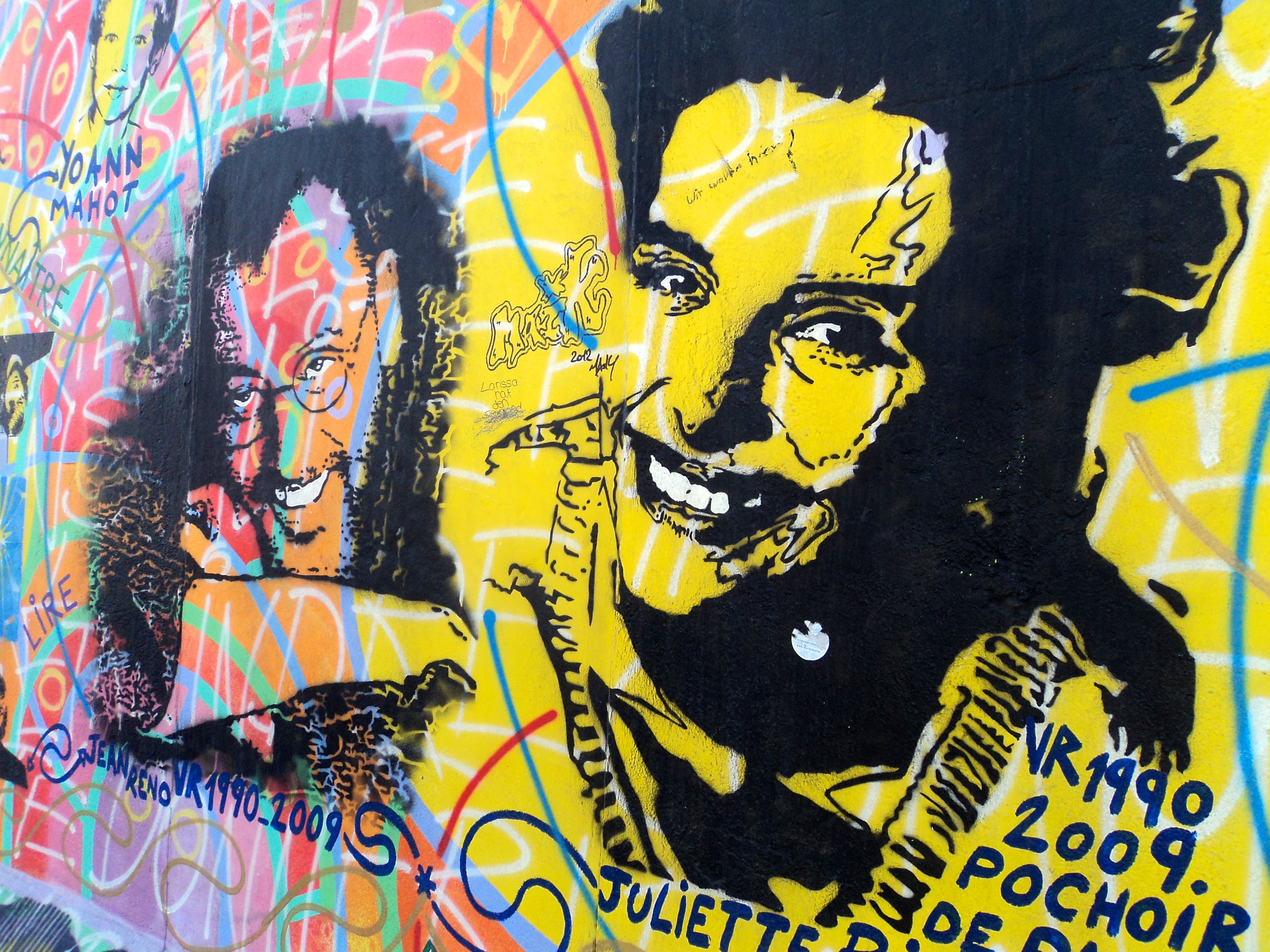
There were a lot of faces that can be found on the wall, and there were very few that I recognize. I only know the basics of German history and not much about their contemporary life. There were too many things that I don’t understand, but it is something that I still cannot help but appreciate. Who are these smiling people and what stories do they tell?

Something about this image spoke to me. It is of two doves carrying away the Brandenburger Tor (Brandenburg Gate). It is quite moving. And as I’ve mentioned before, people tend to add their own graffiti, their own stories to the image. The largest letters here says “Free Palastina” and I’m wondering if it is about Palestine. I met Palestinians for the very first time at the Former West Congress. We’ve had good talks and I’ve learned of some of their struggles. It is not easy for them to leave the country and what they experience in airports can be ghastly. Their convictions are strong and impressive. I wonder if it would be possible for me to see Palestine one day, they did say it is possible, but I know it won’t be that easy. But maybe someday.

One funny thing about the East Side Gallery is the souvenir shop. I wasn’t allowed to take photos inside. I don’t really have much shopping money for my travel as Europe is expensive. But I bought some parts of the Berlin Wall that was destroyed. Yes, they sell them. Yes, they say its authentic, but I have no real way of proving that. I wonder, when the time come that the entire East Side Gallery is destroyed, would they run out of the parts of the wall to sell? I learned about a week later when I was in Paris that they did take down part of the wall already and I was grateful that I was given a chance to see it before it was destroyed. A part of me wonders, will the memories be destroyed along with the wall?
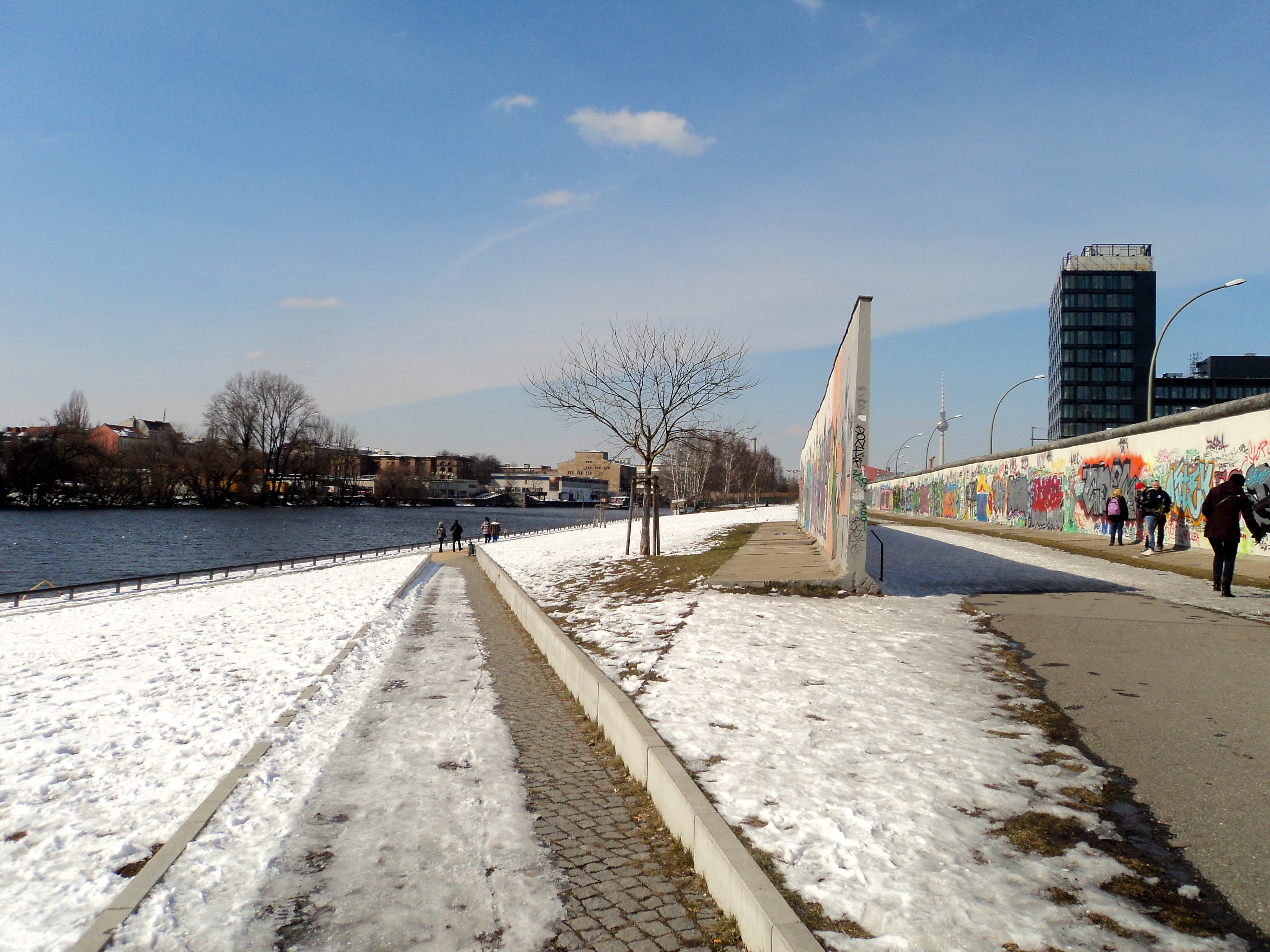
This is the side of the wall by the Spree River. I saw some people taking a boat trip, though I never got the chance to take one. But in winter, I can hardly imagine being on the river, as walking along it is cold enough. Admittedly, I was also thinking of the expense, after all, this is on the first leg of my trip and I’m yet to see the season change. There were a lot of lives, deaths, histories, and stories along this wall. It is a marvel that I even got here to experience this. It may not be here the next time I am, sometimes, we just can’t stop change. Building may rise and the wall may be obliterated, I just hope that the memories wouldn’t. Sometimes, even pain should be remembered, so that the lessons learned would remain. But only time could ever really tell.
I have more photos and stories of the wall, but it will take some time to make its appearance from my mind and my notes. This story is just a beginning of many beginnings.
**edit: Also, its my blog’s 4th year anniversary. So, I took this time to blog about something incredibly special.
Related articles
- When in Berlin, Part 2 (diaryofaperthgirl.com)
- Berlin (mussennurwollen.wordpress.com)
- East Side Gallery (light-absorption.com)
- Brandenburg Gate / Brandenburger Tor (susangibsonprblog.wordpress.com)
- Air Berlin Brings Us Tea – First Day in Berlin (hypahtrainthrougheurope.wordpress.com)
- Gentrification of Berlin stirs protests with neo-Nazi tinge (loweringthetonemelbourne.wordpress.com)
- More Walls to Tear Down (cultofcuriosity.wordpress.com)
- Berlin Wall Gallery (abeautifultwentysomethinglife.wordpress.com)
- Street Art in Berlin (liveandbeefree.com)
- Once in Berlin… (minechoice.wordpress.com)


 This tube of paint installation is something that can be found near the Shida night market. We ran into this on the very first day. I felt like a child again, admiring this piece.
 Outside the National Taiwan Normal University is a line-up of painted tiles. Looking closely, it is of street vendors selling street food! Very suited as it is in the Shida district.
 This could make you hungry of a quick fried snack, similar to what we have at home.
 I particularly like this one as it appears like he is selling bread. I have come to discover that Taipei has the best breads and pastries. There are shops everywhere with the yummiest window displays! Something that I totally did not expect when traveling to this country.
 I even liked this window display. I want to tell the bear, “Yes, I feel lost Sir. Can you help me?” It reminds me of this kid’s show that I adored, Bear in the Big Blue House. If I get to own a house, I would also want it to have a blue door.
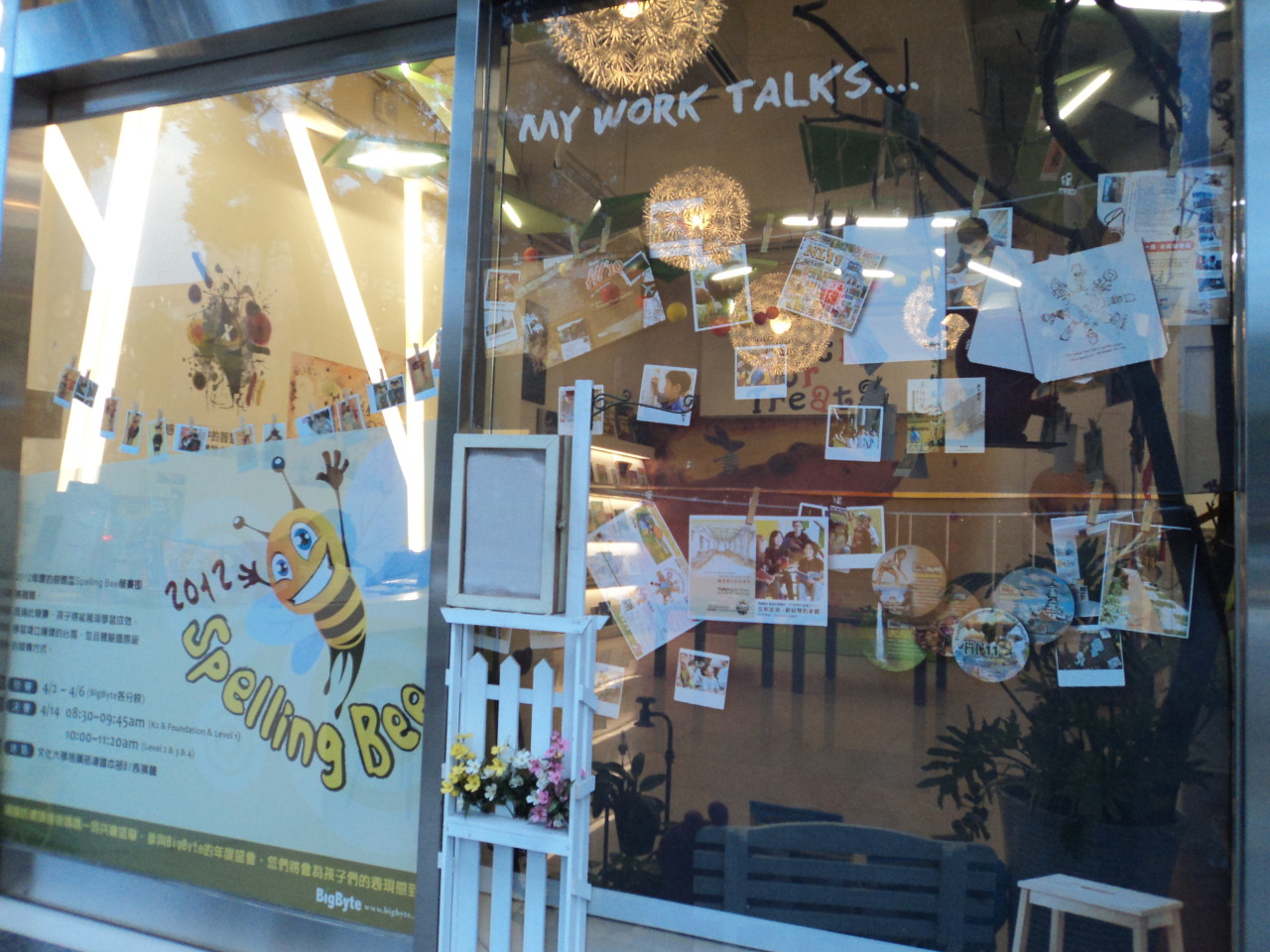 Yes, your work talks. Art talks. Everywhere. It is just a matter of engaging in the conversation, isn’t it? 🙂
 Part I was actually my previous post, the Petit Louvre. As I said, we got to visit the museum at night, which is a very rare opportunity. Unfortunately, we only had until 9 p.m. to walk through everything. From the Petit Louvre, we go on to the more traditional aspect of the National Museum of History.
 My favorite part of their exhibition are the scrolls. I really wish I had more time to take it all in. I even bought a book of modern brush painting from the museum shop. I would review that here when I get the time.
 As expected, the lighting was low. People usually assume that scrolls and brush paintings are old. The National Museum of History subverts that expectation as part of their collection are modern scrolls and brush paintings.
 I can only guess at what they mean. Some are translated, but a lot are not. It doesn’t make this scroll any less beautiful though.
 With the time crunch, we really didn’t have much time to savor the viewing of each artifact. But there is something quite magnificent about museums at night. You are there for the experience more than anything else.
 We were also lucky enough to see some works that are normally inaccessible to the public. This collection is only there to celebrate its 20th anniversary.
 The details found in the jades and other stones are extraordinary.
 The more you experience these things, the wider you are aware of your knowledge gap. I wish to know more, but with the reality that you cannot know all. Maybe little by little, in time.
 Petit Louvre is a special exhibition of the National Museum of History in Taipei. Basically, its goal is to make exhibits that are proportional to children, ideally to remove the distance and fear in viewing art works.
  See the grand pyramid? Yep, it’s like that, it is made to scale for the young audience of the museum. The basic goal is that children should not be intimidated when viewing artworks.
 Children should be able to view the artworks in the scale that adults can view them. The frames are also lowered so that it would be easier on the children’s eyes. Not all of the works from the Louvre are replicated, only key works, such as that of Venus de Milo.
 There are also three-dimensional representations of paintings. It has cut-outs in them that children can look into.
 There is also a part where the artworks were represented in cartoon form. The room is filled from top to bottom of replication. Such replication would help familiarize children in viewing artworks without fear, as opposed to works that they cannot touch or go too near to.
 Details like these are also present. Though it might need some explaining to young children, they will view it with no malice if seen within the context of art and the museum. Something that I feel is lacking in my home country.
 Some replication are an artwork by themselves. Exhibitions aimed at training young children in viewing artworks are something that is badly needed back at home. Familiarization instead of intimidation should be ingrained as they are growing up, perhaps nurturing the love for the arts.
 One of the most interesting presentation of art history I have seen in recent memory is the Museum of Taipei University of Education‘s modern art timeline.
 Basically, they have a linear timeline, interspersed with artist’s names. Walking through the timeline, you can see replicas of the artworks.
 This approach basically gives a visual feel of the movements. It also gives a three-dimensional analysis of their modern art history, cluing in on how certain artists and they work may have related to one another at certain periods.
 Walking through the exhibition feels like walking through a story of their art. On the floor, once can see moments certain moments of their history that are related to the work. The problem is that it is in Chinese, a script that I can’t read. But for locals, this information must be invaluable.
 The space also includes the nature outside, giving a breathable feel while going around the exhibition. You do not feel suffocated as you try to make sense of their art history. It is quite a journey.
 You can also view the exhibition from above, again lending itself well to analysis of their modern art movement.
 There are also replicas of sculpture on the second level space. This exhibit also shows the value of replicas. Though devoid of “aura”, such replicas are not so sensitive to human exposure. It can be touched and breathed on, without fear of contamination. It gives itself to experience and is free to be used unique ways without fear.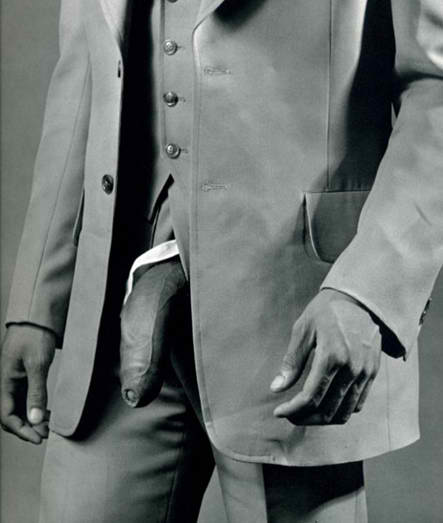








 Portia Placino