 One of the most thought-provoking things that I have witnessed in Taipei is their National Human Rights Museum. Albeit all the sensitive issues that this may provoke, at the very essence, they are preserving their painful memories so that they may never allow the same suffering to happen to their people ever again.
 It was an incredibly gloomy and rainy day. It sets the stage for the gray walls of the museum.
 You literally have to pass through a claustrophobic inducing structure, mimicking the experience of political prisoners of the Taiwanese dictatorship.
 The former barracks were recreated to serve as a briefing room. Here, the guide would retell the story of the Taiwanese period of dictatorship and the White Terror.
 The bare grey walls speak for itself. I am not a Taiwanese, but the story of dictatorship is also my story as a Filipino.
 On top of the highest grey walls are dove sculptures. Until now, I think we are still fighting for our flight towards freedom.
 This entire complex was created for the sole purpose of holding political prisoners.
 Still, a mythical figure looks on. I truly wonder how they felt about this.
 Irony of all ironies, this prison also holds a Chiang Kai-shek memorial. How was it like to pass through a structure memorializing the very reason you are imprisoned for? They memorialized the person who robbed them of their freedom.
 The museum showed how communications were monitored at the time.
 Even phone conversations. Lifting those phones, you can hear the conversations that the political prisoners had. I don’t speak Chinese, but it gives a sense of loneliness, isolation, and fear. Maybe it is the context that I am viewing it from, as I have absolutely no idea of what is being said.
 An opening to the prison cell.
 No conversation is allowed in the small exercise yard below.
 The story is painful for the to tell, but they tell it anyway. It is the subject of endless debates. Is it right to represent something that cannot be fully conveyed? By doing this, do you prevent the people from moving forward?
 Is it a valid point, to keep on telling the story so they may heal? So that they always remember, and through collective remembrance, learn.
 They invited one of the former political prisoners to speak with us. He does not appear to be a sad man, even if he did went through so much pain. He believes in the museum and what it aims to do. The museum tells a story of terror. And through that terror, a story of freedom.
 It leads me to thinking about our own struggles as Filipino people. Why are we so intent to forget? We don’t try to remember. We forget and let go of our past hurts and terrors, but we don’t learn the lessons. In forgetting, one generation may heal from it, but the coming generation forgets.
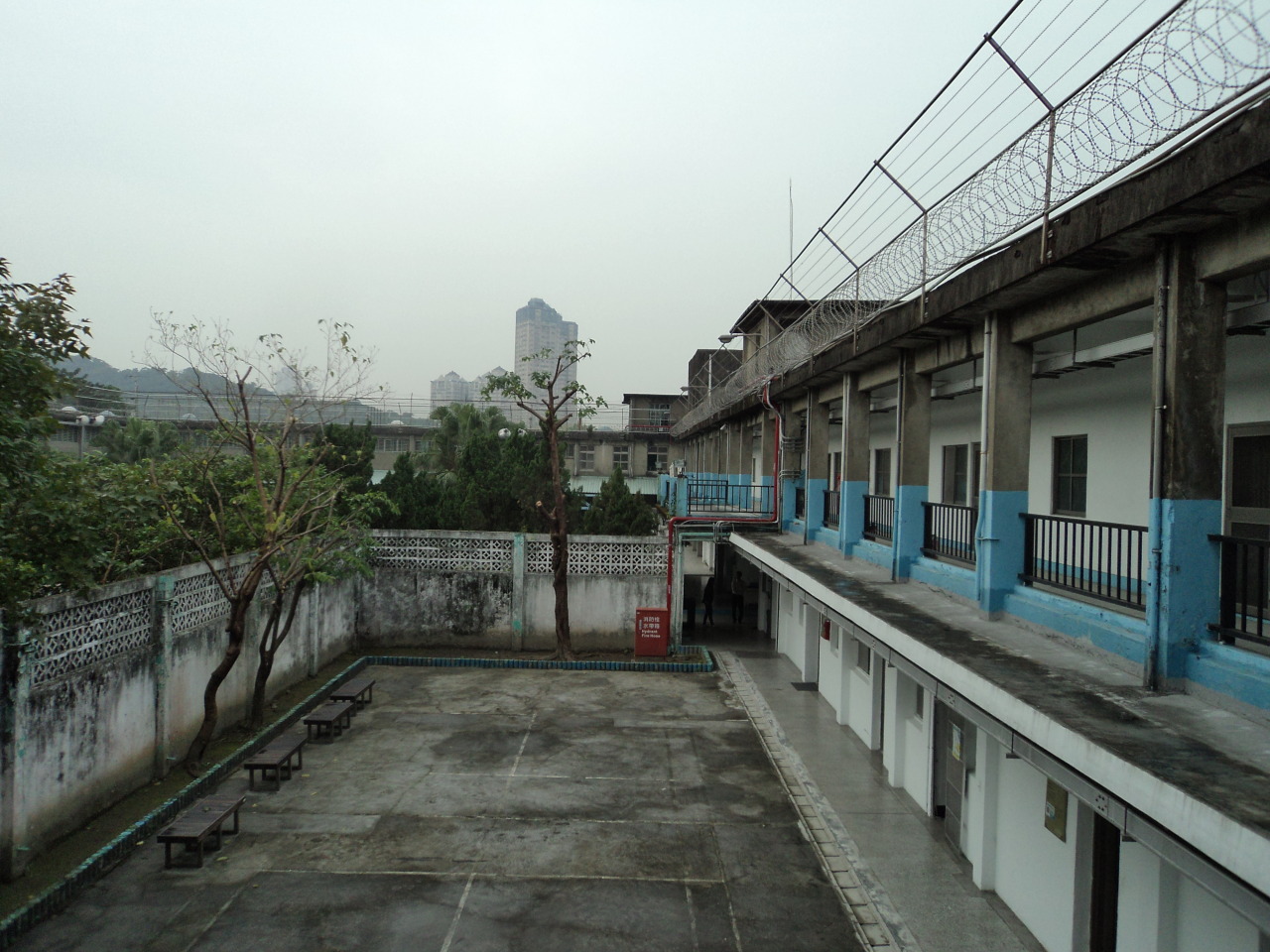 This place feels bleak. You will leave with a pain in your heart and a disturbed mind. But still, they teach a lesson. They don’t forget. They teach a lesson to always fight for the freedom that they earned. They grow from that belief. Taipei is rising around these walls, but these walls still stand.
 I wonder how I can carry this home. How can we remember the pain? So we may never allow such terrors again. I still have no answer.
 Part I was actually my previous post, the Petit Louvre. As I said, we got to visit the museum at night, which is a very rare opportunity. Unfortunately, we only had until 9 p.m. to walk through everything. From the Petit Louvre, we go on to the more traditional aspect of the National Museum of History.
 My favorite part of their exhibition are the scrolls. I really wish I had more time to take it all in. I even bought a book of modern brush painting from the museum shop. I would review that here when I get the time.
 As expected, the lighting was low. People usually assume that scrolls and brush paintings are old. The National Museum of History subverts that expectation as part of their collection are modern scrolls and brush paintings.
 I can only guess at what they mean. Some are translated, but a lot are not. It doesn’t make this scroll any less beautiful though.
 With the time crunch, we really didn’t have much time to savor the viewing of each artifact. But there is something quite magnificent about museums at night. You are there for the experience more than anything else.
 We were also lucky enough to see some works that are normally inaccessible to the public. This collection is only there to celebrate its 20th anniversary.
 The details found in the jades and other stones are extraordinary.
 The more you experience these things, the wider you are aware of your knowledge gap. I wish to know more, but with the reality that you cannot know all. Maybe little by little, in time.
 Petit Louvre is a special exhibition of the National Museum of History in Taipei. Basically, its goal is to make exhibits that are proportional to children, ideally to remove the distance and fear in viewing art works.
  See the grand pyramid? Yep, it’s like that, it is made to scale for the young audience of the museum. The basic goal is that children should not be intimidated when viewing artworks.
 Children should be able to view the artworks in the scale that adults can view them. The frames are also lowered so that it would be easier on the children’s eyes. Not all of the works from the Louvre are replicated, only key works, such as that of Venus de Milo.
 There are also three-dimensional representations of paintings. It has cut-outs in them that children can look into.
 There is also a part where the artworks were represented in cartoon form. The room is filled from top to bottom of replication. Such replication would help familiarize children in viewing artworks without fear, as opposed to works that they cannot touch or go too near to.
 Details like these are also present. Though it might need some explaining to young children, they will view it with no malice if seen within the context of art and the museum. Something that I feel is lacking in my home country.
 Some replication are an artwork by themselves. Exhibitions aimed at training young children in viewing artworks are something that is badly needed back at home. Familiarization instead of intimidation should be ingrained as they are growing up, perhaps nurturing the love for the arts.
 What is a socially purposeful museum? More importantly, how do we make one? How do we involve the people in this creation?
 Keynote speakers from various countries try to explain that.
 The more interactive part is the plenary sessions where participants are divided into smaller groups, you can go to where you want to. There are several points of interests and specializations for the each of the plenary sessions.
 When your mind is too full, you just cannot complain with the coffee break refreshments. I have mentioned this before, Taipei has the best cakes. Unexpected. But very true. I ate so much cake the week I was staying there.
 There was also a small exhibit going on in the venue. This provides some visual stimulation from an intellectually enriching, yet challenging day.
 It can get frustrating that I cannot read the exhibition notes, as they are in Chinese. But it does not lessen the interest that the exhibit can provoke.
 I almost want to deconstruct this one.
 What does this remind you of?
 Portia Placino