It’s been a while since I’ve seen challenging films. I’ve been watching Hollywood-need-not-think ones because I’ve been thinking too much as it is. But going through my interdisciplinary elective, I am once again exposed to the world of challenging cinema. What struck me most was the Mike de Leon’sAliwan Paradise, a 1992 short film. I should have seen this before, as an Art Studies major, but surprisingly, I have not. I wish I can get a copy of this short film so I can also expose my student’s to it as well. The issues presented are what struck me most, almost two decades later, we are still facing the same problems. (Look back to my previous blog entry How “Babae sa Septic Tank” ruined my Friday night.)
The story is basically about the search of the entertainment industry for something new, for bagong-bago that would sell to the public. The presentation was exaggerated to a point of a carnivalesque entertainment. Such style, ironically, lives on today, such as in noon-time game shows. The much-protested Willie Revillame‘s shows reflect such sensibilities in the search for bagong-bago. The exploitation of the poor and their suffering is still the same, except that we now enjoy them in digital HD. I can almost see Johnny Delgado‘s character epitomized into the “well-loved” entertainment heavy weight WR.
The aesthetization of poverty is also alive now, more than ever in our award-winning independent films. Even the supposed anti-independent Ang Babae sa Septic Tank falls into the same trappings. Just because it is comedic, audience assumed that it is different, but its representation of the poor as the desperate, car-robbers obviously fails in the satiric attempt. The poor is beautiful and it is marketable. Almost two-decades later, we are still in the same pit. How will this end? When can see new ideas in today’s filmmaking?
As I study and delve into media theories that we have, I hope to explore more on this subject. We are in a changing world with constantly changing media, but still, we seem to be stuck in the same ideas. Is it the market? But who is to say that quality and challenging films will not sell? Granted, that I also enjoy the need-not-think films, but that doesn’t mean that I will not enjoy challenging cinema, it is just not as accessible. Films like these are still stuck in the archives somewhere or deep in university libraries. Perhaps access to the challenge is what we need.
This is a great beginning to the semester as I gear towards the end of my course work. I will challenge myself once again with films that inspires change. Hopefully, I will also find more time to write about it and perhaps some might get to read it and in turn watch such films. And, as an end goal, not just for me but for the rest of the Philippine cinema world, a beginning of the end of poverty porn. One can dream, after all, even Aliwan Paradise is a just a dream.
I’ve watched Puss in Bootsthree nights in a row in different cinemas with different friends. I was not planning on writing about it, but it had to happen. Imagine, THREE NIGHTS IN A ROW, from Thursday night to Saturday night, all I did was watch Puss in Boots. I have to say, its was worth it anyway.
First, it was all about the company. With movies that you know from the beginning will lack in-depth, you just have to let it go and condition yourself to laugh. That is what we did Thursday night. Cyrus, Adj and I were there to get a laugh. We paid PhP300.00 for a Php250.00 ticket at SM Cinema in North Edsa. The additional PhP50.00 was for the “FREE” popcorn. Personally, after New York’s finest pizza and spaghetti with meatballs from Yellow Cab, we didn’t really want the popcorn, especially SM popcorn (mediocre at best popcorn). I wish we had the option to forego the popcorn. Someone from BIR should look into that, my receipt said PhP250.00, but I paid PhP300.00. Something is definitely wrong here.
Anyway, back to the ultimate laugh trip, for the last full show on Thursday evening, there was the three of us, plus a couple, watching it in full 3D. Of course we took advantage of it and laughed. And laughed. And LAUGHED. It was all the movie was about. Sure there was redemption and some other cartoony values, but for the most part, it was catty jokes that you should let yourself be carried away in laughter. From the Shrek 2, where we first saw Puss in Boots, up to the full feature film, he never fails to be funny. Lightens the heart and spirit.
The next night, since I failed to inform Estee and Joan that I have already seen Puss in Boots and its the movie that they really do want to see, then, they’ve already bought tickets before I was able to say otherwise. Anyway, why would I deprive them of the laugh trip that I have enjoyed the night before? I was there to be with them more than I wanted to see a movie. So after dinner at Teriyaki Boy, we watched the movie at Gateway (not my favorite cinema but a convenient meeting place), then ended up in Dairy Queen for ice cream. Once again, a night of laughter, though not as loud as the night before.
Saturday night, well, we had choices, but since Louie was feeling under the weather and a tad depressed, and he said he wanted to watch Puss in Boots, once again, who am I to deny? It was supposed to be fun. After enormous burgers with everything on it from Army Navy, we hit SM Cinema, but not the 3D one. Isn’t really that great for 3D anyway, so why not just pay half the price? I guess he was looking for something else and he said he didn’t really find slapstick that amusing, so I’m more or less the only one laughing. Well, me and the numerous audience anyway. After all, it’s a Saturday night. My theory is that it’s all about letting go and laughing.
I said before, the movie lacked depth. But, if you would look closely, it uses most of our favorite nursery rhymes. Puss in Boots, though, because of the Shrek hype, the original story have slipped my mind. You will see Jack and Jill, no longer the clumsy kids but as toughies, yet still referring to tumbling down the hill. Another part where I keep on laughing (while the rest are silent) is on their discussion about having kids. It was hilarious! Another character is from Jack and the Beanstalk, but he was imprisoned because he sold the wrong cow. The giant this Jack fought with was alluded to, and was of course, already dead. The children in the orphanage also refer to various nursery rhymes including Little Boy BlueandMary had a Little Lamb. I just hope that the rest of the audience recognize them, but I highly doubt it. Children just don’t grow up with nursery rhymes anymore. I wonder if they still find the irony in the story of Humpty Dumpty and the Golden Goose. I grew up with nursery rhymes and fairy tales. Watching Puss in Boots made me nostalgic for those times, especially as I see how the children of today grow up. It feels like they lack the magic and wonder of the earlier days. And I’m not even 30 yet…
The best part of Puss in Boots, aside from the catty wit and humor, is the marriage of various nursery rhymes that we have grown up with. I just hope that children today can still grow up with them. In a way, we saw what broke Humpty Dumpty and what makes the Golden Goose so special. It is a special animated feature. It makes us remember the good times and hopefully make us want to share such good times with today’s children.
Tell me, what is your favorite Puss in Boots moment?
Since I started teaching in an exclusive school, I became fond of starting the semester with Mona Lisa Smile. This line from Catherine Watson is the best:
What is art? What makes it good or bad? And who decides?
It is one of the key things that I try to teach in an Art Appreciation class. Even in an Art Historyclass. How do I convince my students to ponder about these things? I always want my students to challenge not just the role and image of art but also of their place as women in society. We have come a long way since the setting of the movie (50s), but let’s face it, women today are still expected to marry and have children after they graduate. Not that they shouldn’t, but, it should not be to their detriment if they do not want to. Of course, the weakness of the movie is on Catherine Watson’s own love story, which is completely unnecessary to the narrative. But, this is still Hollywood cinema, it is inevitable.
The issues presented in the movie is still relevant in the contemporary setting. When asked about artists that they are familiar with, it is still very common to hear about Leonardo da Vinci and Michelangelo. After all these time, few would immediately name Soutine or Pollock, the artists featured in the movie. Abstract expressionism, is well, still abstract in their mind. It is the consideration for art that they need to learn. There are various artistic movements that is difficult to trim it down to a two-hour class every week for the entire semester.
Carcass, SoutineNumber 1, Pollock
Part of the responsibility of a teacher is to choose what to teach to their students. It is the most difficult part. There are too many artists, art works and art movements that choosing what you teach in class can be quite a burden. How do you mold your lesson, not just to teach, but to be relevant to the lives of students. As part of the educational institution and of the artworld, the teacher defines what is art. It is inevitable based on what you teach and what you put up for consideration for your students. The strength of the institutional theory of art is strongest in the classroom.
Another issue covered by the film is the mass reproduction of art. Remembering Walter Benjamin’s Art in the Age of Mechanical Reproduction, one should consider the effect of mass production in art. Decades after this article is written, it is still very relevant, even more in todays setting. With Tumblr and other photo sites, reproducibility is more rampant now than ever. Does this affect the production of art? Or the appreciation of it? Or does it depreciate the value of art? I have never been to Europe or America, so at least I can experience their art through these reproductions, but, it is not the same. But different is not necessarily worse. For one thing, I am able to teach my students based on these reproductions.
Sunflower, Van Gogh
Lastly, another issue dealt with by the movie is on advertisements. Last semester, I covered advertisements, especially with the issue on the gigantic Bench advertisements along EDSA featuring the Azkals. The imagery of men and women in advertisements and the reactions the inspire from the audience is very different. Just like in Catherine Watson’s breakdown, how will the future scholars see us and represent us? Unfortunately, I have to say that even my students love the photo of the MAC cosmetics and would be pleased to look like Barbie dolls. We still have a long way to go.
Ironically, a film about women’s role in the artworld ignores women artists. The film still falls in the trap of art HIStory. But that would be part of another lesson, another time. A very lengthy lesson.
Self-Portrait, Frida Kahlo
This is just the beginning of an exciting semester. Hopefully, it will be a good one. In the end it is still about choices. After this course, maybe art can play a role in those choices. It is the smiles and frowns of a Mona Lisa.
Tomorrow, another semester will start. Whew, I had a bit of vacation and I really hope I have recuperated enough from last semester’s tasks. As always, I have a dual role, as a teacher and as a student. Its been exhausting and exasperating, but at the same time, it is worth it. I’ve been browsing online and saw that it’s actually Marie Curie‘s 144th Birthday. She is one great woman.
Which brings me to the thought of teaching women. In the Fine Arts Department, I do have a few male students (two, actually). Personally, I never imagined myself going to an exclusive school. I went to a co-educational school all my life. But hearing the explanation about the thrust of the school, especially on prioritizing the education of women, I do get their point. After a semester of witnessing how my students relate to each other, I also saw what was missing in co-educational schools. In a way, these women are freer in their actuations and in support of each other. It’s always a different story from the inside, as always.
Every semester of Art Appreciation is different for me. I try to adjust to my students’ capacity and interest, as well as to what is happening in the world. This semester, I will also be teaching Art History in the Philippines and Asia. Its exciting, but it’s so broad that choosing the topics to cover is very challenging. Hopefully, we’ll be learning from each other.
Just like Marie Curie, I hope all women will strive for excellence. Despite all the constraint she had during her time, she still excelled. I can hope no more than that for my students. Being a woman in a patriarchal society is challenging and complicated, but it should not be a bar in doing the best that we can.
I prefer posting art-related topics, papers and lessons on this site. But upon reflection, it is also beneficial to share my reflections on these topics, even on an informal manner. We’ll see how it goes. Either way, I feel like this will be an exciting semester. I am on my last leg of course work in my graduate studies and will be working on my thesis proposal, as well as teaching. Seeing Marie Curie online should be enough to inspire the beginning of this semester.
What is a woman? What defines her? Is she different? How so? These are some of the questions I asked as the strength of my character was challenged and measured today. Things were on track. My paper was working out in its own way. Everything was relatively fine. And then, bam, my month old laptop froze and quick fixes just weren’t working. No other choice but to give it up for repair or even replacement. Two to three weeks, he says. On the last three weeks of the semester, with papers to write and grades to compute. More importantly, with research materials stuck inside that laptop, a laptop that they need to rip apart piece by piece. It will come back in mint condition, but containing nothing of what was placed there.
This concern, my concern, is a middle class concern. Obviously, in some way or another, I managed to purchase a supposed quality laptop. I am writing, an undertaking not open to everyone, especially not to those who are too busy with children to take care of, a household to run or manual labor to exhaust. They can, if they really wanted too, but too often, they just don’t. This particular moment is when I remember a remarkable woman, Virginia Woolf. In a way I have always felt for A room of one’s own, but moments like these in particular would remind you of what she says, “One cannot think well, love well, sleep well, if one has not dined well” (Woolf 210). I am fortunate because despite of having to work, I still have the time, energy and capacity to study, contemplate and write, rather than simply being occupied with everyday life. I have my independence, first provided by my family and then supplemented by my own capacity. Again, as Woolf says, “…what a change of temper a fixed income will bring about. No force in the world can take from me my five hundred pounds. Food, house, and clothing are mine forever. Therefore not merely do effort and labour cease, but also hatred and bitterness. I need not hate any man; he cannot hurt me. I need not flatter any man; he has nothing to give me” (230). This is the independence that she has been given, that I have been given. But, unfortunately, this independence is not given to all women, not even to most women.
Being a single woman in Philippine society is not simple. Even if good circumstances in life bring you independence—society, culture and tradition will make independent living difficult. I for one have been termed a soltera in the most derogatory fashion. Women in ragged clothes with unkempt children, even those borrowing money from the family would express their sympathy for my sorry state in life, being never married. I was 25 when I was first called that. I expected to be at least 30 before being termed such. In a society such as ours, we can go back to the first wave of feminism and witness the same concerns expressed in present time. Society will make you feel like an incomplete woman without a man by your side and without birthing children to carry on the line. Unless of course, if the soltera is useful, such as in educating siblings and cousins, providing money and material things to their family. Living an academic life, teaching and writing, being in the art world, does not count. Being an only child, not having to provide but will in fact inherit—being unmarried is confusing if not downright unacceptable. Society assumes that there is something seriously wrong with you. You are the incomplete woman. This is part of the price to be paid for independence—the independence that you need to study, contemplate and create.
Yet, this independence that I enjoy, despite the challenges of society, is not enjoyed by most women. It is like we never learned, never grew up from the past. I know for a fact that a lot of women now still have no voice. I remember the assertion of Mary Wollstonecraft in A Vindication of the Rights of Women, “But, if women are to be excluded, without having a voice, from a participation of the natural rights of mankind, prove first, to ward off the charge of injustice and inconsistency, that they want reason- else this flaw in your NEW CONSTITUTION will ever shew that man must, in some shape, act like a tyrant, and tyranny, in whatever part of society it rears its brazen front, will ever undermine morality. I have repeatedly asserted, and produced what appeared to me irrefragable arguments drawn from matters of fact, to prove my assertion, that women cannot, by force, be confined to domestic concerns; for they will, however ignorant, intermeddle with more weighty affairs, neglecting private duties only to disturb, by cunning tricks, the orderly plans of reason which rise above their comprehension” (2). She fights for women’s voice. Despite the grounding of this in the domestic life, which has been a dominant place of the woman for a very long time, her assertions are still relevant in the present time. Though the feminist discourse today veered away from the moralist discourse of Mary Wollstonecraft, she still paved the way for it, and her discourse still hits home. Where is feminism now, if we are still at a time that a universal human right is still widely denied—the provision for women’s health?
We keep on going back, remembering the first wave of feminism, “Moralists have unanimously agreed, that unless virtue be nursed by liberty, it will never attain due strength- and what they say of man I extend to mankind, insisting that in all cases morals must be fixed on immutable principles; and, that the being cannot be termed rational or virtuous, who obeys any authority, but that of reason” (Wollstonecraft 164). Unlike the time of Wollstonecraft, feminists broke away from the moralist tendencies. In fact, the fight for women’s rights goes against the grain of the traditional moralists. The fight for the RH Bill is raging. The sexist patriarchal Philippine society is rearing its head. A law that provides gender equity, freedom of choice and education is barred by moralists as something evil and demonic. It is a different world from which Wollstonecraft came from but we still have the same problems, the same concerns.
“The State recognizes and guarantees the exercise of the universal basic human right to reproductive health by all persons, particularly of parents, couples and women, consistent with their religious convictions, cultural beliefs and the demands of responsible parenthood. Toward this end, there shall be no discrimination against any person on grounds such as sex, age, religion, sexual orientation, disabilities, political affiliation and ethnicity.
Moreover, the State recognizes and guarantees the promotion of gender equality, equity and women’s empowerment as a health and human rights concern. The advancement and protection of women’s human rights shall be central to the efforts of the State to address reproductive health care. As a distinct but inseparable measure to the guarantee of women’s human rights, the State recognizes and guarantees the promotion of the welfare and rights of children.
The State likewise guarantees universal access to medically-safe, legal, affordable, effective and quality reproductive health care services, methods, devices, supplies and relevant information and education thereon even as it prioritizes the needs of women and children, among other underprivileged sectors. The State shall eradicate discriminatory practices, laws and policies that infringe on a person’s exercise of reproductive health rights.”
Current feminist discourse keeps falling into the trap of post-modernism, the trap of non-difference. How can we look forward without seeing that the earliest feminist concerns are still unrealized? We had two female presidents; the first was a hero-worshipped weakling and the second was a demonized political leader. The society still admires the woman that is weak and is afraid of a woman that shows strength. What we now see is the death of feminism, its status as a ‘post’, yet in reality, we have not yet fully enjoyed the fruits of feminism. Amelia Jones say in Postfeminism, Feminist Pleasures, and Embodied Theories of Art, “The recent resuscitation of this patriarchal fantasy by the right under the guise of ‘family values’ is a symptom of the massive anxiety of the patriarchal system, signaling a reaction formation against the threatening incursion of women into the work force and, more recently, the political arena” (384-5). A grieving widow is a hero and a fighting leader is a demon, that is how we still see women in the political arena and this is still the country’s model.
The fighting, screaming voice of feminism is now made to be tame if not silenced. I find this incredibly sad, frustrating even. The work, the ideology is not yet done, yet it’s already starting to ebb. The fire is dying a slow painful death as feminism is appropriated in a non-different post-modern world, “The strategic appropriation of feminism both radicalizes postmodernism and simultaneously facilitates the silencing of the confrontational voices of feminism–the end result being the replacement of feminism by a less threatening, postfeminism of (non)difference” (Jones 388). Where is the woman then? Where is her voice?
How can women gain the power and dominance of her voice? In finding the women’s voice and place, it is interesting to look into the French feminists. They look into the personal aspect of relationships and breaks down the sexism of psychoanalysis. Simone de Beauvoir deals with this in The Second Sex, “Today the combat takes a different shape; instead of wishing to put man in a prison, woman endeavours to escape from one; she no longer seeks to drag him into the realms of immanence but to emerge, herself, into the light of transcendence. Now the attitude of the males creates a new conflict: it is with a bad grace that the man lets her go. He is very well pleased to remain the sovereign subject, the absolute superior, the essential being; he refuses to accept his companion as an equal in any concrete way. She replies to his lack of confidence in her by assuming an aggressive attitude. It is no longer a question of a war between individuals each shut up in his or her sphere: a caste claiming its rights attacks and is resisted by the privileged caste. Here two transcendences are face to face; instead of displaying mutual recognition, each free being wishes to dominate the other” (51). This struggle of the heteronormative relations is still present today. In the more traditional curve of Philippine society, this is the struggle of the male and female. As a woman, I know my voice and I want to express it. I have no sovereign; I have no wish to be dominated. Looking in the bigger picture of the society in which I belong, my struggle is simply not right.
Like almost every Filipino woman, I am expected to marry and to bear children. This is if I am to belong and if I am to become a complete woman, according to expectations. Helene Cixous’s take in The Laugh of the Medusa challenges this expectation, “There are thousands of ways of living one’s pregnancy; to have or not to have with that still invisible other a relationship of another intensity. And if you don’t have that particular yearning, it doesn’t mean that you’re in any way lacking. Each body distributes in its own special way, without model or norm, the nonfinite and changing totality of its desires. Decide for yourself on your position in the arena of contradictions, where pleasure and reality embrace. Bring the other to life. Women know how to live detachment; giving birth is neither losing nor increasing. It’s adding to life an other” (891). There is nothing wrong in marrying, and giving birth, but there is also nothing wrong in not doing so, or having no desire to do so. It is a matter of the right and freedom of a woman to choose, and not to be judged or discriminated for her personal choices. This basic principle is still denied most women. There is no law for or against it, but for women to live in accord with her society, this is what is expected of her. She is not expected to create, other than that of her own children. Cixous, admirably, tries to break this barrier down and go beyond the psychoanalytic expectations of a patriarchal society, “Beware, my friend, of the signifier that would take you back to the authority of a signified! Beware of diagnoses that would reduce your generative powers. “Common” nouns are also proper nouns that dispar-age your singularity by classifying it into species. Break out of the circles; don’t remain within the psychoanalytic closure. Take a look around, then cut through!” (892).
Going back to Simone de Beauvoir, feminism and the fight for women’s rights is not about denying her a man, if that is what she wants. It is more on the relationship of the woman to her society, to other people, and to end her situation as ‘the second sex’, “To emancipate woman is to refuse to confine her to the relations she bears to man, not to deny them to her; let her have her independent existence and she will continue none the less to exist for him also: mutually recognising each other as subject, each will yet remain for the other an other. The reciprocity of their relations will not do away with the miracles —desire, possession, love, dream, adventure — worked by the division of human beings into two separate categories; and the words that move us — giving, conquering, uniting — will not lose their meaning. On the contrary, when we abolish the slavery of half of humanity, together with the whole system of hypocrisy that it implies, then the ‘division’ of humanity will reveal its genuine significance and the human couple will find its true form” (De Beauvoir 60). Only in freeing the woman, emancipating her and giving her the rights to live the life she wants, can she truly be capable of art and artistic discourse. There may be few artists who surpassed such odds—Berthe Morisot and Mary Cassatt for instance, yet there are more to achieve when freed from society’s bounds. Imagine how many more Jane Austen is out there, that lies bound by society. Like Jane Austen, I may never marry nor gain fame in my lifetime, but, I will struggle to study, write and contemplate like she did. But my hope, as in the hope of feminism, is that women will not have to be bound, silenced or pressured to conform.
Being in the academe, a woman is allowed to express more as opposed to her peers. But we have to always be careful of some academic pitfalls. There is still hope in the academe, “Interestingly, then, while the postfeminism of popular culture works to deny the continuing empowerment of feminist discourse and the sexually and professsionally active feminist subject, the postfeminism of academic criticism works simultaneously to celebrate and absorb feminism and feminist theory. Postfeminism in art discourse is precisely this absorptive operation: the incorporation of feminism into postmodernism as ‘post’ (Jones 389). The challenge though, is to translate feminism from an academic and artistic discourse into the discourse of women everywhere. The struggles enumerated by Linda Nochlin in Why have there been no great women artists? still holds true today, “The question “Why have there been no great women artists?” has led us to the conclusion, so far, that art is not a free, autonomous activity of a super-endowed individual, “Influenced” by previous artists, and, more vaguely and superficially, by “social forces,” but rather, that the total situation of art making, both in terms of the development of the art maker and in the nature and quality of the work of art itself, occur in a social situation, are integral elements of this social structure, and are mediated and determined by specific and definable social institutions, be they art academies, systems of patronage, mythologies of the divine creator, artist as he-man or social outcast” (Nochlin online). We cannot enter into the realm of post-feminism, we cannot allow the death of feminism, because the end of feminism has not yet been realized.
Looking into writing, and art production in general, Helen Cixous still resounds in my mind,”I shall speak about women’s writing: about what it will do. Woman must write her self: must write about women and bring women to writing, from which they have been driven away as violently as from their bodies-for the same reasons, by the same law, with the same fatal goal. Woman must put herself into the text-as into the world and into history-by her own movement. The future must no longer be determined by the past. I do not deny that the effects of the past are still with us. But I refuse to strengthen them by repeating them, to confer upon them an irremovability the equivalent of destiny, to confuse the biological and the cultural. Antici-pation is imperative” (Cixous 875). There is no changing the silence of women’s past, but the silence of the present and the future is unforgiveable. Maybe there is also a seed of truth into writing as the symbolic phallus. I have men enough men that are easily intimidated by women who write, women who create. It is through these productions that we break our silence, “It is by writing, from and toward women, and by taking up the challenge of speech which has been governed by the phallus, that women will confirm women in a place other than that which is reserved in and by the symbolic, that is, in a place other than silence. Women should break out of the snare of silence. They shouldn’t be conned into accepting a domain which is the margin or the harem” (881). It is a time that women should break away from the bounds of expectations, and for society to stop trying to bind their women according to patriarchal ideals.
Instead of the death of feminism, going into post-feminism, we should look into the re-embodiment of feminist. The goal of feminism is still unrealized, women’s struggles are still alive, and there is still a need for feminist discourse. Instead of ending a much needed discourse, perhaps we need to re-embody it into our present situation, “My central argument is that at this particular moment the most radical rethinking of feminism can take place through the articulation of re-embodied theories of female artistic subjectivity, feminist agency, and representation in the broadest sense. Ideally, by re-embodying the subjects of feminism–by saturating theory in and with the desiring making, viewing, and interpretative bodies of art theory and practice–the notion of a unified feminist subject (a notion that we saw was integral to this subject’s termination in the popular press accounts of postfeminism) can be rejected. And, by acknowledging multiple feminist subjects of infinitely variable identities, we can perform reinvigorated feminist art histories and practices that are radically empowered through the newly recognized diversity of feminisms” (Jones 395).
I am lucky that I am not Virginia Woolf’s Judith Shakespeare, I was not a poetic mind driven mad with frustration by society’s bounds. It may be a middle class, elitist dream, but creation can more easily happen in Woolf’s imaginings, “By hook or by crook, I hope that you will possess yourselves of money enough to travel and idle, to contemplate the future or the past of the world, to dream over books and loiter at street corners and let the line of thought dip deep into the stream” (300-1). More so, she says, “So that when I ask you to earn money and have a room of your own, I am asking you to live in the presence of reality, an invigorating life, it would appear, whether one can impart it or not.” This is what I hope for every woman, as her story goes. This is just the beginning too, as its merely scratching the surface of a heterosexual woman in society, a place that I also belong too. And women’s stories do not, in any way, end here. We can start again by taking care of health, and then break the bounds of society instead of conforming to it. After that, creation, writing, artistic productions and criticism may easily follow. A woman as a writer, as an artist, as anything she may want to be would be just as acceptable as her role as a daughter, a wife and a mother. Hopefully, not just in my ideals but also in reality.
References:
Brand, Peggy. “Feminism and Tradition”. Oxford Encyclopedia of Aesthetics, 1999.
Brodsky, Joyce, “Feminist Art History”. Oxford Encyclopedia of Aesthetics, 1999.
Cixous, Helene. “The Laugh of the Medusa” trans. Keith Cohen and Paula Cohen, Signs, Vol. 1, No. 4 (Summer, 1976), pp. 875-893
De Beauvoir, Simone. The Second Sex. Online.
Jones, Amelia. “Postfeminism, Feminist Pleasures, and Embodied Theories of Art” The Art of Art History: A Critical Anthology, ed. Donald Preziosi. New York: Oxford University Press (1998) 383-395.
Nochlin, Linda. Why Have There Been no Great Women Artists? Online.
Silvers, Anita. “Feminism”. Oxford Encyclopedia of Aesthetics, 1999.
The Responsible Parenthood, Reproductive Health and Population and Development Act of 2011. 15h Philippine Congress.
Wollstonecraft, Mary. A Vindication of the Rights of Women. Online.
Woolf, Virginia. A Room of One’s Own. New York: Houghton Mifflin Harcourt, 2010.
Once again, I am staring at a blank sheet of paper as I struggle with the topic I am working on–psychoanalysis and phenomenology. Neither of the two are my favorite. I certainly do not want to unearth the writings of Sigmund Freud and Carl Jung, again. As an undergrad, encountering their perception of the world for the first time, I was very impressed. I found it fascinating to read. I was opening the world of psychoanalysis, something I have never encountered before. Familiar, in a way, of the story of Oedipus, and having Oedipus Rex as the first play I have watched by Dulaang UP, I was enthralled. I thought it was a viable theory and even fooled myself into believing that it was an explanation for sexuality, behavior and representation. I had feminist leanings as a teenager as well, so encountering Laura Mulvey‘s Visual Pleasure and Narrative Cinema was a revelation. I found myself writing more and more about psychoanalysis and visual perception, I even remember my paper on the image-formation of Filipino women in cinema using Mulvey’s paper as a theoretical framework. Fortunately, I outgrew that perception of the world.
As I grew up and grew more critical of what I am reading and writing, I find psychoanalytic theories too encompassing, without consideration for other people and other cultures. Certainly, not everyone in the world can be the same? As fascination for a new concept fades and criticality begins, Freud’s Oedipus Complex and Jung’s Electra Complex became more and more ridiculous. I now find the concept of a son hating his father and desiring his mother, and a daughter hating her mother and desiring her father, in the way of their psychosexual development, absurd. Of course, in time, I knew that various points of their arguments were also disproved. The five stages of psychosexual development is no longer accepted. Yet, these are the starting point in the discussion of psychoanalysis. Certain theoreticians still adapt and appropriate these theories in their analysis. It is also a good beginning in the discussion of consciousness, particularly of the concept of the sub-conscious. Still, I struggle with the fact that, I just don’t want to write about this again.
I watched PETA’s production of William last Saturday. I have to say that its a very good play, a combination of Shakespeare 101 for students and ‘identify the reference’ for Shakespeare fans. Its a different feeling when you get to witness a theatre-full of teenagers laugh and applaud a Shakespeare-inspired play. Looking at this from a psychoanalytical point of view, the play could go down the road of over-reading and absurdity. There are various parent-child relationships in the play, notable ones are the relationship of TJ Domingo and Estella Marie Carandang. Their relationship with their fathers (played by the same actor but with different characterizations) display more or less the Oedipal and Electra Complexes. TJ Domingo, the rebel, aggressive jock has a violent relationship with his father. His father, a dominant and aggressive man is abusive and tends to beat-up TJ, whenever TJ fucks up. TJ of course, resents his father. The absent mother is never mentioned, but he looks into Estella, the mature mother-image of the group, to help him out whenever he was in a bind. He also grew to love her in a romantic way. Sounds familiar? Looking into Estella’s parental relationship, on the other hand, she resents her mother greatly for leaving them and is very close to her father as a result. The father tends to be over-protective of Estella and Estella adores him greatly. Again, familiar right? So, maybe Laura Mulvey wasn’t too far off in her essay, even though the narrative here is in theatre form. If my main focus is on the psychoanalytic aspect of the play, it would focus in these two parent-child relationships and its representation. There are two other characters with fathers (again played the same actor) with the same dynamics. A little bit different, though, is Erwin Castro’s relationship with his father. Even though he is male, he has a good and gentle relationship with his father. But the thing is, though Erwin is not gay, he is, in a way, effeminate. He is very gentle and soft-spoken, almost the common characterization of a woman. He is not aggressive, so there is no competition for dominance or for being the alpha male of the family, unlike in TJ’s case. Here, there is no struggle for power. Erwin, to a certain point, is a mediocre push-over. Using the psychoanalytic perspective will go far in any narrative, but I have grown up enough to know that it is often not enough, that there is something more to the perception of the world than psychosexual and power relationships of gender and consciousness. Or more to the point of psychoanalysis—the sub-conscious. Though this theory does not lack in merit, I still feel that there is something else, something more.
This is where I see phenomenology coming in. Instead of just focusing on the universal sub-conscious that psychoanalysis seem to imply, I want to explore art as we experience them. I want to point out the self-consciousness of the audience rather than the psychoanalytical dispositions and secret sexual desires that the audience apparently has no control over. Looking into Merleau-Ponty, when we perceive something, we also perceive ourselves, that we are also visible. He says that, “The visible can… fill and occupy me only because I who see it do not see it from the midst of nothingness, but from the midst of itself; I the seer am also visible. What makes the weight, the thickness, the flesh of each color, of each sound, of each tacile texture, of the present, and of the world, is the fact that he who grasps them feels himself emerge from them by a sort of coiling up or redoubling, fundamentally homogenous with them, he feels that he is the sensible itself coming to itself” (113-14). When you watch a play, you do not just see the play, you also locate yourself in the play. Part the popularity of William is the easy self-identification with at least one of the characters and recognizing other characters as someone one have encountered in everyday life. Very suited to the teenagers as the characters are mostly teenagers themselves, most adults can also relate as they have played such roles earlier in their lives. Often, the tendency is to relate to one character and remember people encountered in life that embodies the other characters.
There were five main characters in the play, the five students–TJ Domingo, the popular, basketball player, jock; Sophia Reyes, the nouveau riche, social climbing, beautiful, shallow, romantic girl; Richard Austria, the gay guy “outed” during the course of the play; Erwin Castro, the mediocre, push-over, quiet-type geek; and Estella Marie Carandang, the plain-looking, know-it-all nerd. These are the five stereotypes of the typical high school classroom translated into students learning about Shakespeare from their weird, passionate teacher Ms. Lutgarda Martinez. When viewing these characters, it is not a simple identification of the high school stereotypes but also self-identification with previous experiences informing and affecting the perception of the play. Paul Crowther further explores Merleau-Ponty:
“There are two aspects to this (though Merleau-Ponty does not always clearly separate them). First, as we have seen, things define themselves as styles brought about by our body’s modes of orientation towards the world. Our perceptual contact with the world is expressive, in so far as the body is constantly taking up new positions and launching itself into new projects. This means that the stylizing and expressive foundation of perception is of general validity. Each human has the same broad range of bodily capacities and will, therefore, tend to see and do much the same things (i.e. share the same styles of perception) as other human beings. However, it is also true that as individual embodied beings we each retain our particular view of the world” (108).
Aside from recognizing the Shakespearean motifs in William, the audience also recognize themselves as they experience the play. As Merleau-Ponty says in Eye and Mind, ” Things have an internal equivalent in me; they arouse in me a carnal formula of their presence. Why shouldn’t these (correspondences) in their turn give rise to some (external) visible shape in which anyone else recognize those motifs which support his own inspection of the world” (60). There are several layers of recognition that may happen. At first, the easiest one is the characterization of the high school stereotype that an audience may relate to. Next, is the Shakespearean references that such characters represent. Another layer is the Shakespearean play or sonnet that the character is acting out, whether straight-up recitation (Shylock’s monologue from The Merchant of Venice) or appropriated to a more Filipino context (Marc Anthony’s monologue from Marc Anthony and Cleopatra). Yet another layer that may affect this identification is the actual knowledge or experience the audience have of Shakespeare. Though some are easy to identify as it is explicitly stated in the performance, some are not, and only those who have some previous readings and knowledge of Shakespeare may recognize. Such identifications may happen in different layers within the embodiment of the play. Each person will have a different sense and layer of such embodiment. A necessary condition for such embodiment, is self-consciousness, as Crowther defines it, “To be self-conscious is to be able to ascribe experiences to oneself. It is to be a person” (150). In order to examine the consciousness and embodiment present in William, I want to go beyond the consciousness and sub-consciousness of Freud and consider the phenomenological proposition of Crowther in Art and Embodiment, from aesthetics to self-consciousness:
“The first of these I shall call attention. By this I mean our capacity to be receptive to sensory stimuli. It is a basic orientation or directness bound up with our body’s position in relation to that world of sensible items and events with which it is causally continuous. The second necessary capacity is that of comprehension. A self-conscious being in one who must be able to organize the stimuli received in perception by discriminating sameness and difference amongst them. This capacity is powerfully enhanced by the third necessary (and complex) feature, which I shall call projection. A being can only be self-conscious if it can posit situations other than those presented by the immediate perceptual field. The chief projective powers are memory and imagination; the former enables us to posit situations in which we have previously been, and the latter enables us to posit alternative possibilities of experience to those which are immediately accessible to us in perceptual terms. The projective powers, of course, are the very flesh of any sense of having a personal history” (150-51).
I will take into consideration, the most powerful performance delivered in William, the character of Richard Austria, the gay guy. His story embodies Shakespeare’s Shylock, the Jew from The Merchant of Venice. Richard was a closeted gay, “out” only to his closest friends. A fight with TJ caused him to be “outed” in his entire school, resulting to his persecution. Richard, the hard-working class representative was suddenly mistreated and harassed by his fellow classmates. Thus, he delivered Shylock’s speech, as they both embodied persecution, “He hath disgraced me, and hindered me half a million, laughed at my losses, mocked at my gains, scorned my nation, thwarted my bargains, cooled my friends, heated mine enemies; and what’s his reason? I am a Jew. Hath not a Jew eyes? Hath not a Jew hands, organs, dimensions, senses, affections, passions? Fed with the same food, hurt with the same weapons, subject to the same means, warmed and cooled by the same winter and summer, as a Christian is? If you prick us, do we not bleed? If you tickle us, do we not laugh? If you poison us, do we not die? And if you wrong us, shall we not revenge? If we are like you in the rest, we will resemble you in that. If a Jew wrong a Christian, what is his humility? Revenge. If a Christian wrong a Jew, what should his sufferance be by Christian example? Why, revenge. The villainy you teach me I will execute, and it shall go hard but I will better the instruction” (Act III, Scene 1).
In the manner of Crowther’s self-consciousness, the layers are attention, comprehension and projection. In Richard’s arch and almost every other performance, the most obvious part in experiencing it is by paying attention, in order to be receptive of the performance. Next is to organize the stimuli received and basically understand the performance–what is happening, why it is happening, what are the the Shakespearean references made, what is the plot, what does the plot pertain to in Shakespearean plays, etc. But the most notable part in Crowther’s self-consciousness is projection, the actual embodiment. The relationship of Richard’s character and performance and the memory or imagination of the audience will come in to play. Do you need to be gay to be able to feel for or project the performance of Richard’s character? Not necessarily. Because even though you do not have the memory of being a discriminated gay student, you still have the memory of others as well as your own imagination that enables you to project yourself into the performance. Through an effective performance, one can project the self into it through memories and imagination–feel the frustration, the pain of betrayal, the hate of discrimination and the release into freedom after the resolution. The phenomenology in experiencing and projecting into a performance could be achieved in that manner. This projection will also have another layer, as the audience will not only project themselves into Richard, but also into Shylock as he is embodied by Richard. The pain of persecution and the desire for revenge is something that would be powerful in the memory and imagination of the audience. The layers of embodiment enriches each other, as the character (Richard), the character reference (Shylock) and the audience affect each other and enrich each other in the phenomenological and aesthetic experience, and transcend this relationship into the projection of the self.
Another interesting character is TJ. He is initially presented as a stupid jock, a bully and a villain. As the narrative goes further, he was humanized as his relationship with his father was explored. He was also redeemed towards the end as he apologized publicly to Richard. Again, looking at it from Crowther’s self-consciousness and embodiment, one does not necessarily need be in TJ’s situation or have a memory of experiencing such event. The imagination of the audience will help transcend the performance from attention and comprehension, well into projection. With such imagination, the audience may project on to the humanization of TJ, his reasons for being a bully, his eventual redemption. The viewer may not only comprehend the meaning of redemption but also characterize and embody the feeling of being redeemed. This gives the ephemeral character of a performance lasts in the imagination of the audience. Just like in Richard and Shylock, the layers of embodiment is also there. This time, the relationship is between TJ, Claudius and the audience. One does not necessarily be a betrayer to feel the pain of betrayal. The use and enhancement of memory and imagination will come into play as the humanization and pain of the villain is represented. The viewer transcends into the character of TJ and into the the character of Claudius from Shakespeare’s Hamlet:
“O, my offence is rank it smells to heaven;
It hath the primal eldest curse upon’t,
A brother’s murder. Pray can I not,
Though inclination be as sharp as will:
My stronger guilt defeats my strong intent;
And, like a man to double business bound,
I stand in pause where I shall first begin,
And both neglect. What if this cursed hand
Were thicker than itself with brother’s blood,
Is there not rain enough in the sweet heavens
To wash it white as snow? Whereto serves mercy
But to confront the visage of offence?
And what’s in prayer but this two-fold force,
To be forestalled ere we come to fall,
Or pardon’d being down? Then I’ll look up;
My fault is past. But, O, what form of prayer
Can serve my turn? ‘Forgive me my foul murder’?
That cannot be; since I am still possess’d
Of those effects for which I did the murder,
My crown, mine own ambition and my queen.
May one be pardon’d and retain the offence?
In the corrupted currents of this world
Offence’s gilded hand may shove by justice,
And oft ’tis seen the wicked prize itself
Buys out the law: but ’tis not so above;
There is no shuffling, there the action lies
In his true nature; and we ourselves compell’d,
Even to the teeth and forehead of our faults,
To give in evidence. What then? what rests?
Try what repentance can: what can it not?
Yet what can it when one can not repent?
O wretched state! O bosom black as death!
O limed soul, that, struggling to be free,
Art more engaged! Help, angels! Make assay!
Bow, stubborn knees; and, heart with strings of steel,
Be soft as sinews of the newborn babe! All may be well.”
(Act 1, Scene 3)
This is the aspect that William does well in terms of engaging the audience. The main intention of the play is to enrich the knowledge of the audience, particularly the high school students, of Shakespeare. They do this, phenomenologically. The audience are given so many layers in the engagement, depending on the depth of their self-consciousness. As mentioned earlier, the easiest to identify with is the high school students. At one point or another in the audience’s high school and teenage life, they embodied a form of these stereotypes. Next is the embodiment of the character of another characters, those of Shakespeare’s. They transcend space and time as they bring to life characters hundreds of years old and embody them in their characters. The audience then, is given another layer of story and characterization to project themselves into. While all these is going on, the audience are projecting both their memories and imagination into the complexities of the characters performing. These workings on the aesthetic experience and the embodiment of the self into the artistic production enriches the performance as well as the viewing of the performance. It does not work in one way. There is the interchange of the phenomenological experiences between the audience and the performers as they project their own uniques selves—previous experiences, memories and imagination, into each other.
This dynamics in the art, not just in the theatrical performance, needs to be further explored, rather that being stuck in the rut of the sub-conscious. The theory of the sub-conscious, at least for me, is imaginative, too imaginative that the theory robs the imagination from the audience and the viewer. It is in the psychological couch that all imaginations are sucked in, never to be shared into the world. Self-consciousness, on the other hand, is far richer than the sub-conscious that the conscious realm cannot control. Self-consciousness, at least can be enriched. A person, through their own choosing, may enrich their own experiences, dig deeper into their memories and use their creative imagination as they experience things around them—particularly art, such as the theater. It has become so easy to rely into more “scientific” theories that the realm of imagination has become limited. The audience have the option, the choice, in using their memories and imagination—they become the proactive actors, rather than being mere victims of the psychosexual development and sub-conscious desires. Self-consciousness and the embodiment of aesthetics may evolve, develop and may enrich—it does not limit a passive recipient. Instead, aesthetic embodiment, in a phenomenological sense, may enrich, both the audience and the performance. It is a consistent transcendence of memories and more importantly, of the imagination. It is not just the artist who may imagine, but the audience and the viewer as well.
References:
Crowther, Paul. Art and Embodiment, From Aesthetics to Self-Consciousness. New York: Oxford University Press, 1993.
Legarda, Maribel, dir. William. Philippine Educational Theater Association, September 2011.
Merleau-Ponty, Maurice. The Phenomenology of Perception trans. Colin Smith with revisions by Forrest Williams. London: Routledge & Kegan Paul, 1974.
Merleau-Ponty, Maurice. The Visible and the Invisible trans. Alphonse Lingis. Evanston: North-western University Press, 1968.
Mulvey, Laura. “Visual Pleasure and Narrative Cinema,” A Critical and Cultural Theory Reader, ed. Terry Eagleton, 1985. 158-166.
Shakespeare, William, Hamlet. New York: Barnes and Noble Books, 2008.
Shakespeare, William, The Merchant of Venice. New York: Barnes and Noble Books, 2008.
So, given all the oddities I stumbled into last week, I decided to continue on stumbling into odd and otherwise tidbits again this week.
If Shakespeare is called by any other name, would he still be Shakespeare? Would our favorites, such as Merchant of Venice and Romeo and Juliet, and Midsummer Night’s Dreambe the same, if they were written, not by the now familiar bard, but someone else? Steven Cherry hashes out this issue as he reminds in Shakespeare by Any Other Namethat the Shakespeare authorship is still under debate. Would it be a very different world, if Shakespeare is not the Shakespeare that we have always believed to be?
Few people earn from the Bard, few people earn from Shakespeare. Even staff of The Shakespeare Standard does not earn from the Bard. David Sabrio, states, “Reading and studying Shakespeare, the arts and humanities may not make us materially wealthy. But studying these fields can give us wealth that is not subject to the fluctuations of the Dow Jones averages; the arts, humanities, and Shakespeare give us wealth that, in the long run, is just as valuable as material goods and far less ephemeral. We should not have to choose between Shakespeare and solar shingles.” In the article Either or Fallacy: Shakespeare vs. Science, the Bard’s importance to our everyday life was given life, though we may not earn from it.
Photo by Ian Nichols
Shakespeare is an inspiration to literature, in so many levels. This includes the inspiration for Shakespeare and Company, a quaint bookstore that “lives under the brooding glory of Notre Dame de Paris, at 37 Rue Bucherie, in the fifth arrondissement.” According to Ian Nichols, “To walk into Shakespeare and Co is to enter a wonderland jumble of books. The first thing you see upon entering is a case holding rare books and first editions. I had to have my credit card surgically removed when I saw a first edition of Hemingway’s The Sun Also Rises on display.” The book stops here, “There may be some order to how the books are stacked, piled and heaped, but it is one open only to initiates. For the novice, it is simply a browser’s paradise, where you can grab a book of poetry, slide on up to one of the many cafes nearby and enjoy a little verse and execrable French coffee. If you’re lucky, you may chance upon on of their weekly readings, a signing, or even one of their bi-annual festivals. Like Paris, Shakespeare and Company is a whirlwind of delights.” As the inspiration suggests, Shakespeare has his unique pleasure that you have to find amidst the whirlwind.
Stewart Buettner, Author of The Shakespeare Manuscript
More on Shakespearean inspired literature, a literature from literature, Lauren Zachary reviews Stewart Buettner’s The Shakespeare Manuscript, “The race to put on the new production is on, but this strange new Shakespearean play takes its toll on everyone involved as they search for the manuscript and begin to discover their true identities, revealing secrets and taking risks along the way. Was the manuscript really written by Shakespeare? Or is it a fraud? And who stole the manuscript? The Shakespeare Manuscript is an interesting read as Buettner weaves this captivating plot by providing a perspective of a different character with each new chapter. This keeps the reader on edge and speculating as to who stole the manuscript until the very end. It does contains a fair amount of foul language and material that may make it difficult to finish.”
On a lighter note, can you imagine Shakespeare’s Macbeth voice-acted by The Simpsonscharacters? Jack Van Beynen says, “Some of the play’s funniest moments came when he played on the original text, inserting pop culture references or snide remarks from the characters pointing out its flaws. Although he takes many liberties with the script, this is the show’s beauty. Miller proves that Shakespeare can be fun, that we can play with it as well as revere it.You get the sense Miller really loves Shakespeare, and while The Bard can seem daunting, MacHomer is an excellent, highly entertaining way of making one of his greatest tragedies accessible.”
Literature and more, we should open more caskets and discover more Shakespeare. If you pay attention, he is around and easy to stumble into. How did you stumble into Shakespeare today?
Are you interested in joiningThe Standard’s volunteer staff? Check out our current staffing needs. If one of our roles sounds perfect for you, email our Managing Editor today!
Choices. Remember the Choose your own Adventure books? Well, now we have choose your own ending. Imagine if Romeo decides to go back to Rosaline instead of going after Juliet, will he have a happy ending then? Which will you choose, a powerful but tragic ending with Juliet, or a simple, happy and contented marriage with Rosaline? Though the re-interpretation received mixed reviews, it may be interesting to wonder the “what ifs” of the Bard.
What ifs. What if you experience Twelfth Night steampunk style? Ironically sponsored by Bronxville Women’s Club, Pipe Dream marries the conflicting industrial and Victorian styles, even adding a touch of western air. Carla Young says that “Actors performed on a sparse set, which included only a couple of chairs and a small table, and were illuminated by subdued decorative lights wrapped around a number of trees in the courtyard of the Women’s Club. The evening’s biggest round of laughter was awarded to ‘Malvolio,’ who despite the despair caused to him by fake love notes purported to be from Olivia, was an audience favorite throughout the show.”
Rap, hip hop and soul. Shakespeare as the original rapper?PETA (Philippine Educational Theater Association, “noted that just like today’s rap hits, Shakespeare’s works are based on beats, rhythm and rhyme. ” The play, “William features 10 original rap songs composed by Jeff Hernandez which are a mix of various genres such as rock, soul, funk, RnB and hip-hop. It also utilizes FlipTop, a form of rap that is becoming more popular among today’s Filipino youth.”
Naked Bard. The oddities continue. If Shakespeare is deemed boring by some, imagine if his play are recited by girls. Beautiful, sexy and naked girls. New York’s Greenwich Village houses the Naked Girls Readinggroup. In an intimate, boudoir-type room, wine is sipped, literature is read and a “full frontal literature” is delivered. Sapphire Jones, a member of the cast, prompted strong emotions upon dedicating a Shakespearean text to her grandmother. The burlesque-inspired literary performance also reads from Wilde’s The Importance of Being Earnest and Ibsen’s A Doll House.
Classes. Surprising, or oddly enough, lot of students are still interested in Shakespeare today (despite the lack of naked girls). Sometimes, they are inspired by a brilliant mentor. Professor Dennis Huston’s Shakespeare on Film, is only offered once every two years and is very popular among the student. He practices Socratic-style discussions as well as delivers powerful lectures. This is enough to inspire student to enroll in a 7:30 am class and discuss about Shakespeare. The end of the term also results in the class’ own Shakespearean performance.
Oddities. There are a lot of oddities in the Shakespearean world. Its not always the straight, formal, Elizabethan theme that pervades the ordinary imagination. It is for all people, of various shapes and sizes, in every way possible, even in the oddest of the odd voices. Let’s admit it, sometimes, its even more interesting that way, the odd way.
What other odd voices have you seen or heard of the bard today?
Are you interested in joiningThe Standard’s volunteer staff? Check out our current staffing needs. If one of our roles sounds perfect for you, email our Managing Editor today!
Looking, searching, and many times, just stumbling.
Sometimes, you don’t have to look too hard to find Shakespeare. You’d be surprised; Shakespeare will just come and find you.
Ty Cacek/The New York Times. Underground theatre: Paul Marino, with beard, and Fred Jones perform a scene from “King Lear” in the subway.
Lead Subway. Do not be afraid if you suddenly find two guys screaming scenes from Romeo and Juliet on the New York Subway, no, they are not insane; yes, it is illegal; and yes, they still do it anyway. Claudia La Rocco tells the story of Fred Jones and Paul Marino as they create an underground theater and perform Shakespearean plays such as Romeo and Juliet and Hamlet. Bringing theatre to the people was exhausting work but has become their main source of income, aside from the much applause. They let their voices be heard from the underground, reminding people of the bard and his plays. No, you don’t need to spend too much money, or any really, to enjoy Shakespeare.
Golden Casket. Inspiring as Jones’ and Marino’s stories are, some theatres are suffering some financial cut backs according to Misha Berson. Though Shakespearean plays, such as those by Oregon Shakespeare Festival are spared from such difficulties, it is still a major issue in the theatrical world. Berson writes, “If theater is, as Shakespeare declared, a mirror held up to nature, wouldn’t it be grand to not just see a few faces reflected in the glass — but sometimes, also, a crowd? Yes, in this financial winter of our discontent, it seems like a distant dream for any playwright to dare that. But artists should always be encouraged to dream big.” Now, if only it is as simple as selling that golden casket to provide financial backing…
Lottery. Though money is not always the problem for some, “Neither a borrower, nor a lender be.” Maybe we can just find more things for free? Just like Portia’s lottery of a love life, lucky ones can avail of tickets for Shakespeare Theatre Company’s free performances for Julius Caesar. As traditionally practiced since 1991, they give free performances to the public once a year. Tickets can be availed via an online lottery or by simply arriving early, as there are 200 tickets reserved for the standby line. More public Shakespeare, whether on the underground, the streets, the park and even in the comfort of the theatre; the bard is becoming a part of our everyday life more and more, and you don’t even have to worry about the costs, just don’t forget to pay with applause.
Of lead dreams and successes. We can always start with dreaming big, and then we can be very surprised to what it can bring us. Oregon Shakespeare Festival celebrates their 75th Anniversary with WillFul, named after and inspired by the bard, it is “a different sort of theatrical creature. Instead of sitting and watching it in one of the festival’s comfortable theaters, audiences will take a journey, moving from place to place, watching scenes unfold in a park, on a loading dock, on the stairwell of a parking garage. And though the actors are working from a script and telling a story, the show’s method — and its goal — is less about delivering a narrative than shaping a communal experience.” I wonder how much Shakespeare would enjoy a new interpretation of theatre rooting from his own innovations and bringing it closer to the people.
Alla Dreyvitser/The Washington Post
Interpretations. Is there a right or wrong interpretation? To cut or not to cut, that is the question.The Washington Post explores that very debate. Is it really better to cut in modern Shakespearean for more understandable interpretations? Or do we need everything so we can fully appreciate Shakespeare? What would bring it closer to the people? On the other hand, would the meaning be lost because of the cuts? The article cites, “If you can’t follow at all why something’s funny, then I’m going to cut it,” Posner says, “because I’m not interested in the theory of why it’s funny.”
Tragedies. Alexa Rae Smahls reports that UCLA students in Shakespeare travel study program unaffected by London riots. Meanwhile, Sylvia Morrisprovides Shakespearean reading on the London Riots as she sees Richard III in Bill Bratton’s statement, “In a country that loves gardening, you fully appreciate the idea if you don’t weed a garden, that garden is going to be destroyed – the weeds are going to overrun it. Similarly for social disorder: if you don’t deal with those minor crimes, they’re going to grow. What also grows is fear, the most destructive element in any civilised society.”
Why should we …
Keep law and form and due proportion,
Showing as in a model our firm estate,
When our sea-walled garden, the whole land,
Is full of weeds, her fairest flowers choked up,
Her fruit trees all unpruned, her hedges, ruined,
Her knots disordered, and her wholesome herbs
Swarming with caterpillars.
Closed Casket. Some caskets deemed not to be opened. One of this is of the bard himself. Ojeme Usiahon, a Nigerian artist, expresses his opposition to the plans of exhuming Shakespeare from his tomb. The inscription on the tomb specifically states, “Good friends for Jesus sake forebear to dig the dust enclosed heare, blest be the man that spare the stone, cursed be he that moves my bones.” Usiahon argues that, “Though others have been wondering what difference it makes to the remains, since Shakespeare is already dead, someone even said will there have been any controversy if he weren’t so popular. But my great respect to this living legend is that could it be that their (scientists) purpose is to determine the value of his remains? Can the value of his remains outweigh any respect the world has for his epitaph and last wishes? Will the society allow his privacy, honor, and respect be dishonored? Will it affect over 200,000 tourists that visit the place of his baptism and burial?” I also have to agree with Usiahon, for once, this is one casket that should not be opened.
Are you interested in joiningThe Standard’s volunteer staff? Check out our current staffing needs. If one of our roles sounds perfect for you, email our Managing Editor today!
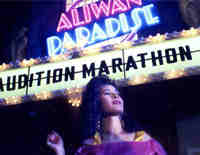 It’s been a while since I’ve seen challenging films. I’ve been watching Hollywood-need-not-think ones because I’ve been thinking too much as it is. But going through my interdisciplinary elective, I am once again exposed to the world of challenging cinema. What struck me most was the Mike de Leon’s Aliwan Paradise, a 1992 short film. I should have seen this before, as an Art Studies major, but surprisingly, I have not. I wish I can get a copy of this short film so I can also expose my student’s to it as well. The issues presented are what struck me most, almost two decades later, we are still facing the same problems. (Look back to my previous blog entry How “Babae sa Septic Tank” ruined my Friday night.)


 The next night, since I failed to inform Estee and Joan that I have already seen Puss in Boots and its the movie that they really do want to see, then, they’ve already bought tickets before I was able to say otherwise. Anyway, why would I deprive them of the laugh trip that I have enjoyed the night before? I was there to be with them more than I wanted to see a movie. So after dinner at Teriyaki Boy, we watched the movie at Gateway (not my favorite cinema but a convenient meeting place), then ended up in
  I said before, the movie lacked depth. But, if you would look closely, it uses most of our favorite nursery rhymes. Puss in Boots, though, because of the Shrek hype, the original story have slipped my mind. You will see








 Portia Placino