
I haven’t blogged in a really long time. I would like to say that I’ve been busy with real life, but that is not necessarily the case. It is more appropriate to say that I have disengaged from reality and lived a fantasy, just for a little while. I went to Europe. I lived with my luggage for 5 weeks traipsing through my dream destinations. Needless to say, it was one of the best times of my life. It was Portia’s time.
I received the call for proposals while in my other conference-related travels (still unblogged). Chances are slim, but, I thought to myself, what the hell? Go for it! I never would have forgiven myself if I didn’t. I was granted a slot to participate in the Learning Place of the Former West Congress to be held in Berlin, Germany on March 18-24, 2013. I received the acceptance January, by then, I had less than 3 months to prepare for the greatest journey of my life.

I learned so much, I still do not have a grasp of everything. Its part of why it took me so long to write about it. But it gets better. What I learned is great, but the people I met are even greater–artists, writers, professors, theoreticians, historians, curators, and everyone that has something to do in the art world from all over the world. I still keep in touch with some of them and I am yet to e-mail some. I know that I will be seeing people who until then I only know thru their books–Homi Bhabha, Boris Groys, etc. But the other speakers and participants are just as awesome. I even visited some of them later in their city (more on that later).
Everything will start at breakfast. By the second day, I never even had an empty table. I’d sit down and soon enough, other participants are joining in for breakfast and conversations. The topic would range from the conference to research projects, school, travels, and life in general. By the time they left and I stayed on for the “backpacking” part of my journey, I couldn’t stand the thought of a solitary meal in the hostel’s breakfast room. From 8-9 a.m. until about midnight for a week, life became an endless mix of meaningful conversations, lectures, discussions, activities, and ART. It was exhausting in the best possible way.

The most down time I’ve had is when we took a little trip to see the galleries of Berlin. Okay, we were supposed to be in a lecture, but we were exhausted, so we explored instead. Tiffany, Nonto, Alberto and I started in Alexanderplatz and went from there. From the gallery cards I’ve gathered, we ended up in parts of Kreuzberg, Mitte, and Postdamer Platz. Then, I was taught how to navigate Tiergarten. I’ve always wanted to go inside it but I was afraid of getting lost in the snow. The Tiergarten became my favorite spot in all of Berlin. When they all left, I’ve taken many solitary hours walking and exploring. I was given clues on what to find where, but I know I’ve only scratched the surface. (Details later.)

I have endless stories to tell. As I said, I even have a backlog of unblogged trips. I think I wouldn’t be able to tell half of it, but I would certainly try to tell all that I can. I leave this here for now. It’s a story of a girl, a make-believe princess, who took her bag and went for her dreams and fantasy. I haven’t unearthed thousands of photographs from my camera yet, it’s proof that this really happened–Berlin, Paris, Barcelona, Bilbao, Madrid, Pisa, Florence, Venice, Milan, Rome, and back to Berlin.
If there’s someone out there who wants to converse about travels, I’d certainly appreciate it. What I miss most are the conversations.
Related articles
- Day 1 – Berlin (mrh2013memoir.wordpress.com)
- May I…? (catsandkiwi.wordpress.com)
- Days 8-10 (errantschwa.wordpress.com)
- Berlin in 48HRS (mtem212.wordpress.com)
- When Odessa Meets Rio for Coffee in Berlin… (theflowgermany.wordpress.com)
- B.E.R.L.I.N – Discover Part I (gethomeless.wordpress.com)
- The Berlin Experts: Linda Berlin (iheartberlin.de)
- Tiergarten Evolution (tobe013.wordpress.com)


 And when things are really much too much, there is a Starbucks a block away. Soy caramel macchiato anyone?
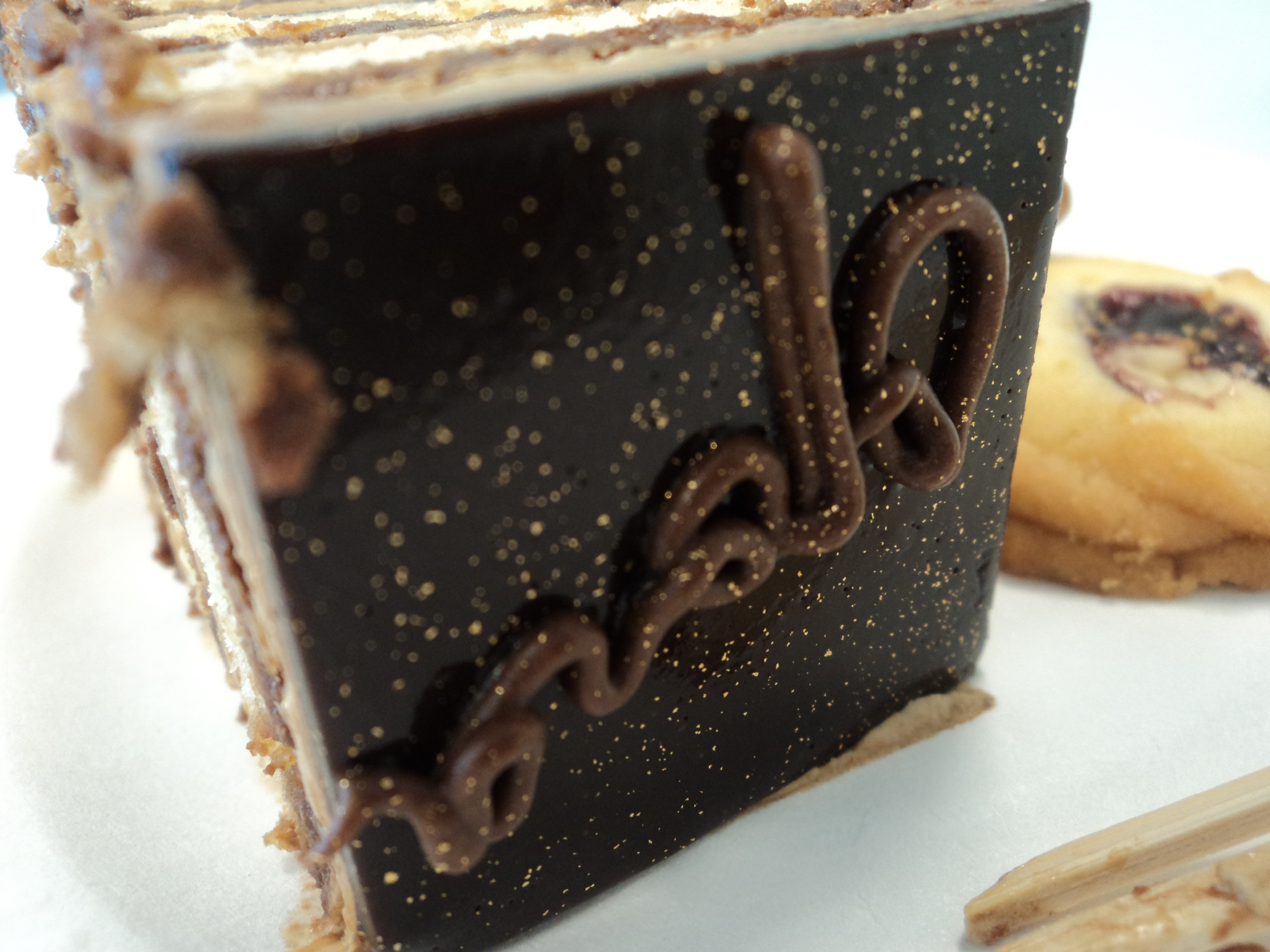
 And perhaps a pastry?
 Due to the lack of time or the constant rush for it, I never got to buy a bread from this bakery. And it just looks so yummy from the outside! Oh well… And more coffee and cakes stories to come. Seriously. This is just day three.
 It was an incredibly gloomy and rainy day. It sets the stage for the gray walls of the museum.
 You literally have to pass through a claustrophobic inducing structure, mimicking the experience of political prisoners of the Taiwanese dictatorship.
 The former barracks were recreated to serve as a briefing room. Here, the guide would retell the story of the Taiwanese period of dictatorship and the
  The bare grey walls speak for itself. I am not a Taiwanese, but the story of dictatorship is also my story as a Filipino.
 On top of the highest grey walls are dove sculptures. Until now, I think we are still fighting for our flight towards freedom.
 This entire complex was created for the sole purpose of holding political prisoners.
 Still, a mythical figure looks on. I truly wonder how they felt about this.
 Irony of all ironies, this prison also holds a
  The museum showed how communications were monitored at the time.
 Even phone conversations. Lifting those phones, you can hear the conversations that the political prisoners had. I don’t speak Chinese, but it gives a sense of loneliness, isolation, and fear. Maybe it is the context that I am viewing it from, as I have absolutely no idea of what is being said.
 An opening to the prison cell.
 No conversation is allowed in the small exercise yard below.
 The story is painful for the to tell, but they tell it anyway. It is the subject of endless debates. Is it right to represent something that cannot be fully conveyed? By doing this, do you prevent the people from moving forward?
 Is it a valid point, to keep on telling the story so they may heal? So that they always remember, and through collective remembrance, learn.
 They invited one of the former political prisoners to speak with us. He does not appear to be a sad man, even if he did went through so much pain. He believes in the museum and what it aims to do. The museum tells a story of terror. And through that terror, a story of freedom.
 It leads me to thinking about our own struggles as Filipino people. Why are we so intent to forget? We don’t try to remember. We forget and let go of our past hurts and terrors, but we don’t learn the lessons. In forgetting, one generation may heal from it, but the coming generation forgets.
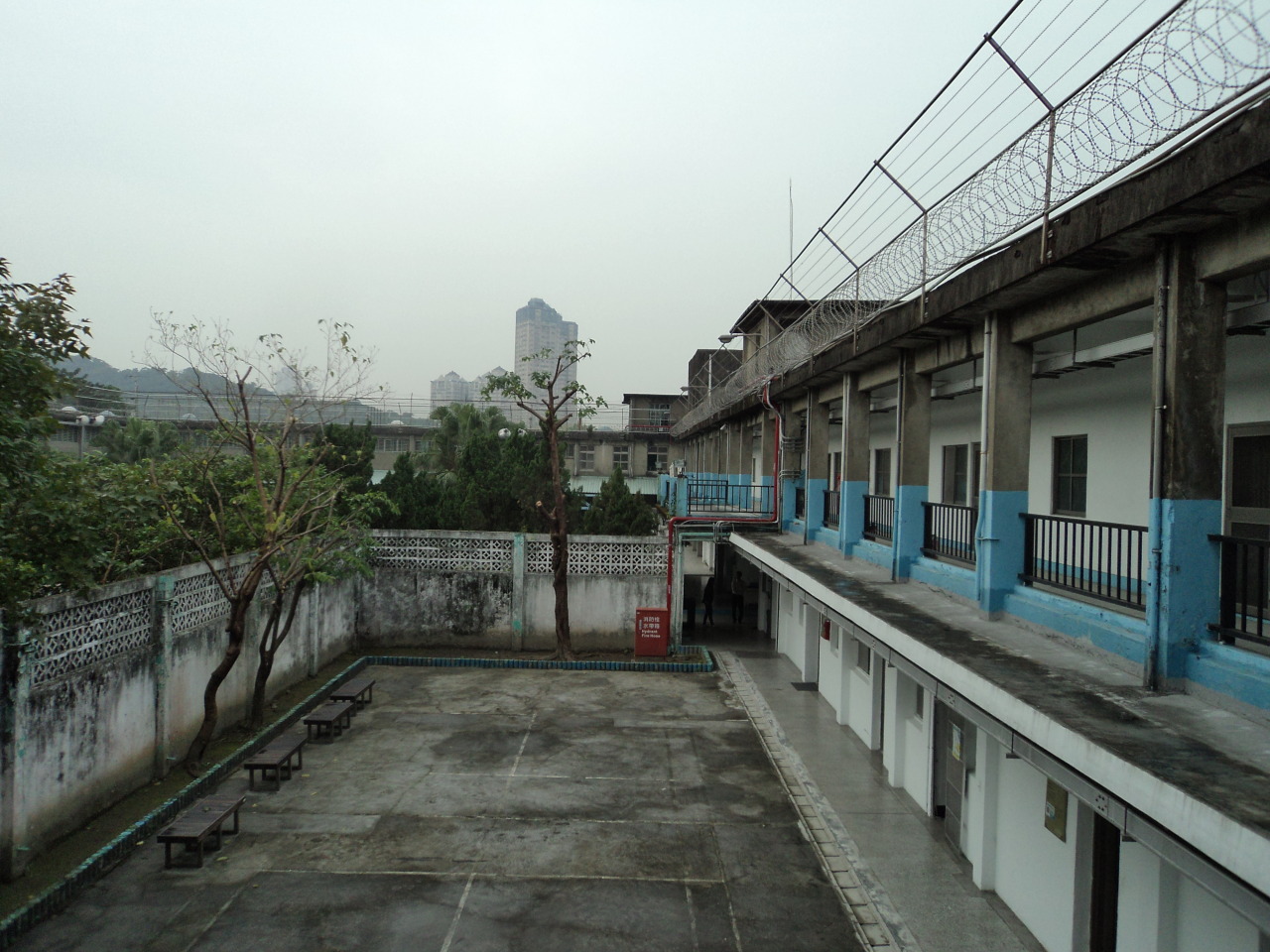 This place feels bleak. You will leave with a pain in your heart and a disturbed mind. But still, they teach a lesson. They don’t forget. They teach a lesson to always fight for the freedom that they earned. They grow from that belief. Taipei is rising around these walls, but these walls still stand.
 I wonder how I can carry this home. How can we remember the pain? So we may never allow such terrors again. I still have no answer.
 It was indeed a performance. Lights, sounds, everything. I even got shouted at for talking to my friend. Hey, they weren’t even starting yet, at the time. But then again, this is Taipei. It took a while for them to even let the audience near the band. Everyone was just sitting down.
 I even got to use Sigur Ros as a tool to teach John Dewey’s Art as Expression, particularly on the chapter Art as Expressive Object.
  Now that I am indeed remembering, we are not supposed to take photographs. But I took a few snapshots anyway. I’m not a big concert anyway, as concerts are usually out of my budget.
 I really can’t get over the discipline of this crowd. I mean, just look at them! Still, at least I got to experience a night in Taipei, with no fear of getting crushed. I went home with a cd too. Something to listen to as I expand my horizon.
 This tube of paint installation is something that can be found near the Shida night market. We ran into this on the very first day. I felt like a child again, admiring this piece.
 Outside the National Taiwan Normal University is a line-up of painted tiles. Looking closely, it is of street vendors selling street food! Very suited as it is in the Shida district.
 This could make you hungry of a quick fried snack, similar to what we have at home.
 I particularly like this one as it appears like he is selling bread. I have come to discover that Taipei has the best breads and pastries. There are shops everywhere with the yummiest window displays! Something that I totally did not expect when traveling to this country.
 I even liked this window display. I want to tell the bear, “Yes, I feel lost Sir. Can you help me?” It reminds me of this kid’s show that I adored, Bear in the Big Blue House. If I get to own a house, I would also want it to have a blue door.
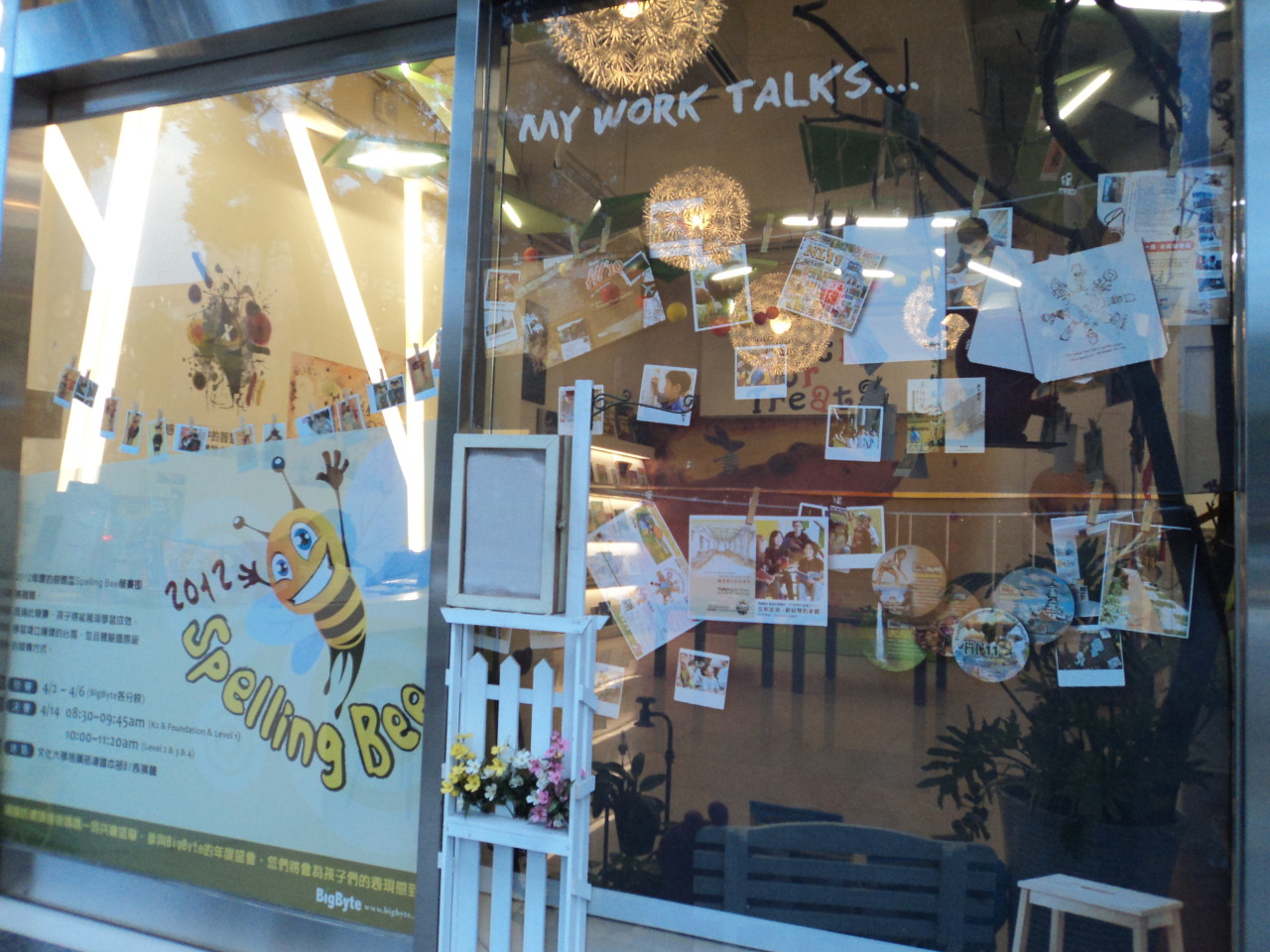 Yes, your work talks. Art talks. Everywhere. It is just a matter of engaging in the conversation, isn’t it? 🙂
 Part I was actually my previous post, the Petit Louvre. As I said, we got to visit the museum at night, which is a very rare opportunity. Unfortunately, we only had until 9 p.m. to walk through everything. From the Petit Louvre, we go on to the more traditional aspect of the National Museum of History.
 My favorite part of their exhibition are the scrolls. I really wish I had more time to take it all in. I even bought a book of modern brush painting from the museum shop. I would review that here when I get the time.
 As expected, the lighting was low. People usually assume that scrolls and brush paintings are old. The National Museum of History subverts that expectation as part of their collection are modern scrolls and brush paintings.
 I can only guess at what they mean. Some are translated, but a lot are not. It doesn’t make this scroll any less beautiful though.
 With the time crunch, we really didn’t have much time to savor the viewing of each artifact. But there is something quite magnificent about museums at night. You are there for the experience more than anything else.
 We were also lucky enough to see some works that are normally inaccessible to the public. This collection is only there to celebrate its 20th anniversary.
 The details found in the jades and other stones are extraordinary.
 The more you experience these things, the wider you are aware of your knowledge gap. I wish to know more, but with the reality that you cannot know all. Maybe little by little, in time.
 Petit Louvre is a special exhibition of the National Museum of History in Taipei. Basically, its goal is to make exhibits that are proportional to children, ideally to remove the distance and fear in viewing art works.
  See the grand pyramid? Yep, it’s like that, it is made to scale for the young audience of the museum. The basic goal is that children should not be intimidated when viewing artworks.
 Children should be able to view the artworks in the scale that adults can view them. The frames are also lowered so that it would be easier on the children’s eyes. Not all of the works from the Louvre are replicated, only key works, such as that of Venus de Milo.
 There are also three-dimensional representations of paintings. It has cut-outs in them that children can look into.
 There is also a part where the artworks were represented in cartoon form. The room is filled from top to bottom of replication. Such replication would help familiarize children in viewing artworks without fear, as opposed to works that they cannot touch or go too near to.
 Details like these are also present. Though it might need some explaining to young children, they will view it with no malice if seen within the context of art and the museum. Something that I feel is lacking in my home country.
 Some replication are an artwork by themselves. Exhibitions aimed at training young children in viewing artworks are something that is badly needed back at home. Familiarization instead of intimidation should be ingrained as they are growing up, perhaps nurturing the love for the arts.
 One of the most interesting presentation of art history I have seen in recent memory is the Museum of Taipei University of Education‘s modern art timeline.
 Basically, they have a linear timeline, interspersed with artist’s names. Walking through the timeline, you can see replicas of the artworks.
 This approach basically gives a visual feel of the movements. It also gives a three-dimensional analysis of their modern art history, cluing in on how certain artists and they work may have related to one another at certain periods.
 Walking through the exhibition feels like walking through a story of their art. On the floor, once can see moments certain moments of their history that are related to the work. The problem is that it is in Chinese, a script that I can’t read. But for locals, this information must be invaluable.
 The space also includes the nature outside, giving a breathable feel while going around the exhibition. You do not feel suffocated as you try to make sense of their art history. It is quite a journey.
 You can also view the exhibition from above, again lending itself well to analysis of their modern art movement.
 There are also replicas of sculpture on the second level space. This exhibit also shows the value of replicas. Though devoid of “aura”, such replicas are not so sensitive to human exposure. It can be touched and breathed on, without fear of contamination. It gives itself to experience and is free to be used unique ways without fear.
 What is a socially purposeful museum? More importantly, how do we make one? How do we involve the people in this creation?
 Keynote speakers from various countries try to explain that.
 The more interactive part is the plenary sessions where participants are divided into smaller groups, you can go to where you want to. There are several points of interests and specializations for the each of the plenary sessions.
 When your mind is too full, you just cannot complain with the coffee break refreshments. I have mentioned this before, Taipei has the best cakes. Unexpected. But very true. I ate so much cake the week I was staying there.
 There was also a small exhibit going on in the venue. This provides some visual stimulation from an intellectually enriching, yet challenging day.
 It can get frustrating that I cannot read the exhibition notes, as they are in Chinese. But it does not lessen the interest that the exhibit can provoke.
 I almost want to deconstruct this one.
 What does this remind you of?
 Portia Placino